Profile view of a bearded man wearing a dark green baseball cap and a dark gray T-shirt against a plain light background.

Best boiler temperature for a Wisconsin winter

Step 1 of 3: Equipment

What's the best boiler temperature for a Wisconsin winter?

You're probably looking at the dial on your boiler or the thermostat and wondering if it's set right for the cold months here. Maybe the house feels colder than it should, or your gas bill last January made you want to check. There's a number that works for most Wisconsin homes, and a reason it's set where it is rather than higher.

Set the boiler's water temperature around 160 to 180 degrees for winter.

That range gives most radiators and baseboard heaters enough heat to keep up when it's well below freezing outside, without the boiler short-cycling or wasting gas pushing water hotter than the system needs. If your home has radiant floor heat, the right number is much lower, often under 120 degrees, because the pipes run through the floor itself and don't need the higher heat a radiator does. Going above 180 doesn't heat the house faster. It just means the boiler works harder and cycles more often, and with gas prices and expensive power here, that shows up on the bill. A boiler that's been serviced and is running efficiently should hold a steady temperature without you having to push it higher to feel warm air.

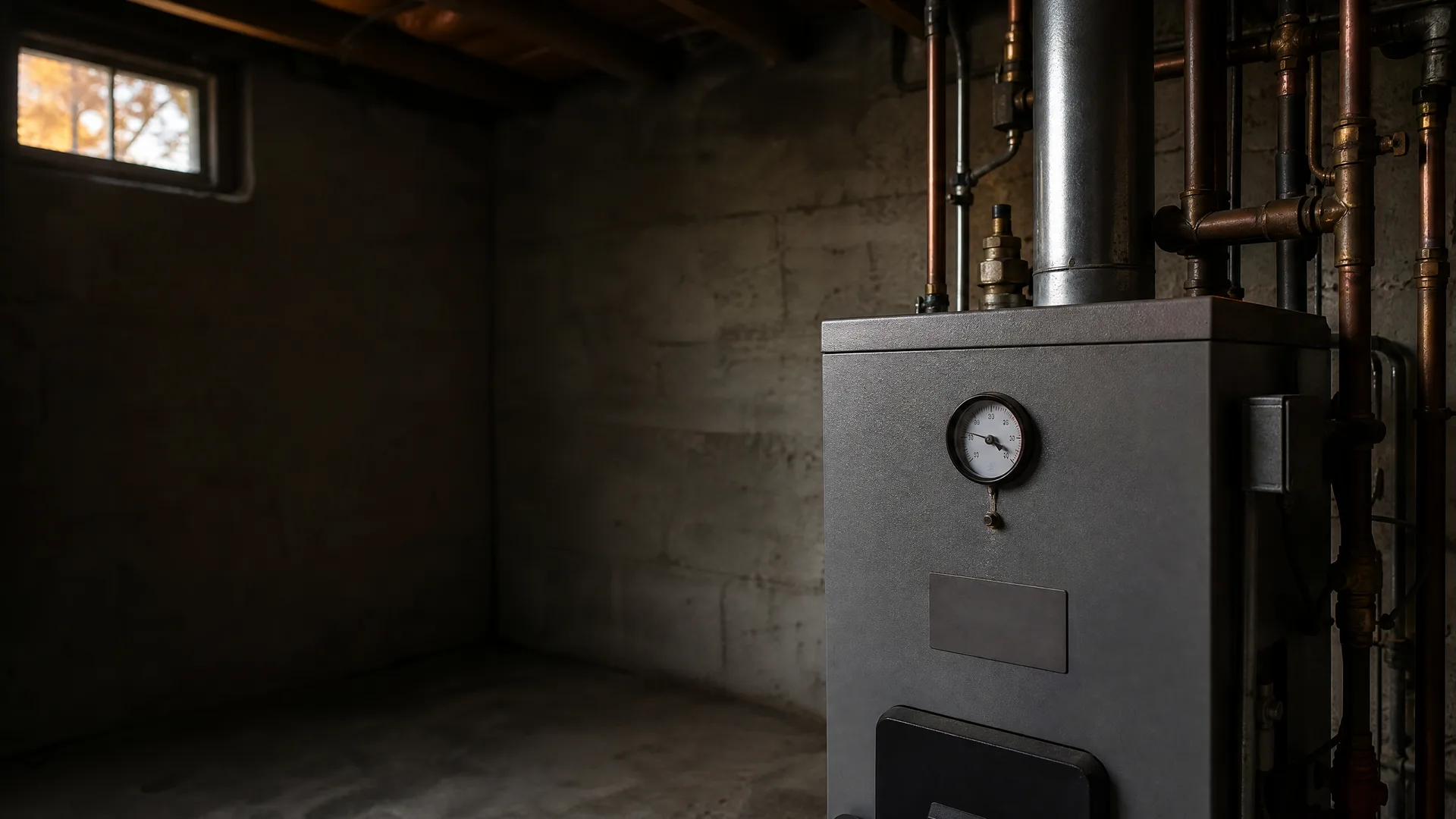
A gray boiler with a round pressure gauge and copper piping stands in a dim concrete basement lit by a small window showing yellow foliage.

You're down in the basement on a gray October afternoon, the first really cold one, checking on things before the weather turns for good. The boiler's running, and you crouch down to look at the pressure gauge out of habit more than worry. The needle sits low, under where it should be. Upstairs the radiators have been lukewarm the past few days, nothing you could quite put a finger on. You tap the glass on the gauge, like that'll change anything. The basement is quiet except for the low hum of the burner. You're doing the math on how many months of Wisconsin winter are still ahead, and whether this thing is going to make it through them.

Setting the Water Temperature by Season

Mild Stretch (30s and 40s)

  • A water temperature around 140°F is usually enough to keep rooms warm without the boiler cycling on and off too fast.
  • Lower water temperature means the boiler runs longer, steadier stretches, which is easier on the igniter and the pump.
  • Radiators or baseboards don't need to be scalding hot to heat a room when it's 35°F outside.
  • You'll likely notice a smaller gas bill in November and March than you do in January.
  • If the house still feels cold at this setting, the problem is more likely a stuck valve or air in the lines than the temperature itself.

Deep Cold (single digits and below)

  • Wisconsin cold snaps can push the water temperature setting up to 160°F or higher just to keep the same rooms comfortable.
  • At that setting, the boiler fires more often and for longer stretches, which shows up on the gas bill the same month.
  • Rooms farthest from the boiler, like an upstairs bedroom, often need the extra heat to catch up at all.
  • Running this hot for weeks at a time is normal in a Wisconsin January, not a sign something's wrong.
  • If the boiler struggles to hold this temperature, a technician checking the aquastat or the circulator pump during a tune-up can tell you why.
A woman in a cream sweater with her hair in a bun laughs while seated at a stone counter holding a glass of red wine, in a dimly lit interior with a sofa, houseplants and a large window at night.
A woman with long dark hair in a cream knit sweater laughs while looking off to the side, seated in front of a dimly lit kitchen with an island, stools, open shelving and a potted plant, with a glass of red wine in the foreground.
A smiling woman with long dark wavy hair in a light knit sweater sits at a marble counter with a glass of red wine, with a dimly lit living room and kitchen in the background.
A smiling woman with long wavy brown hair in a beige sweater sits at a white marble counter with a glass of red wine, with a living room, dining table and kitchen cabinets behind her.
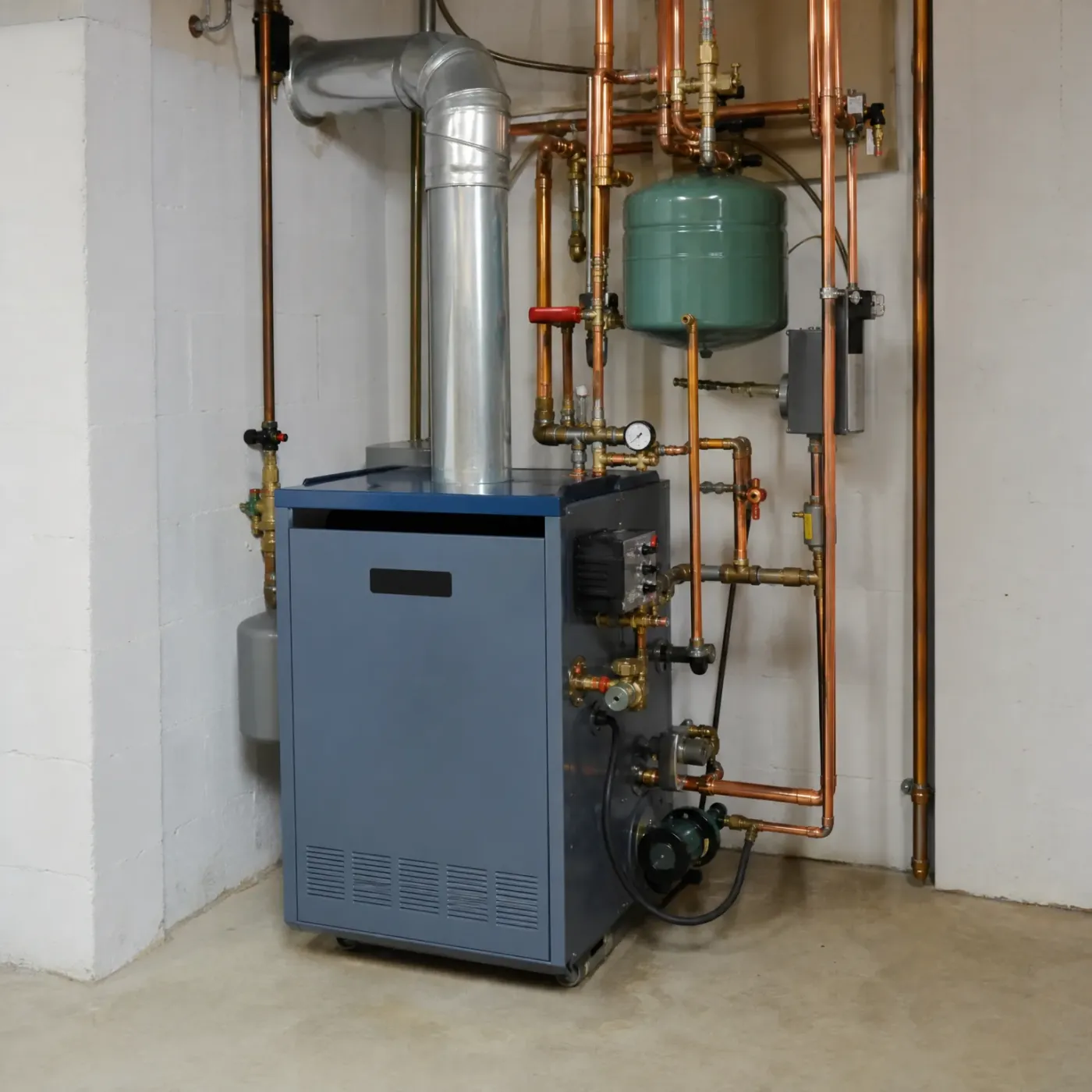
A blue-gray residential boiler in a basement corner, connected to copper piping, a green expansion tank, a circulator pump, gauges, and a metal flue pipe against painted block walls.
A boiler kept up right runs quiet, holds steady pressure, and the pipes stay tight with no sign of a leak anywhere along the line.
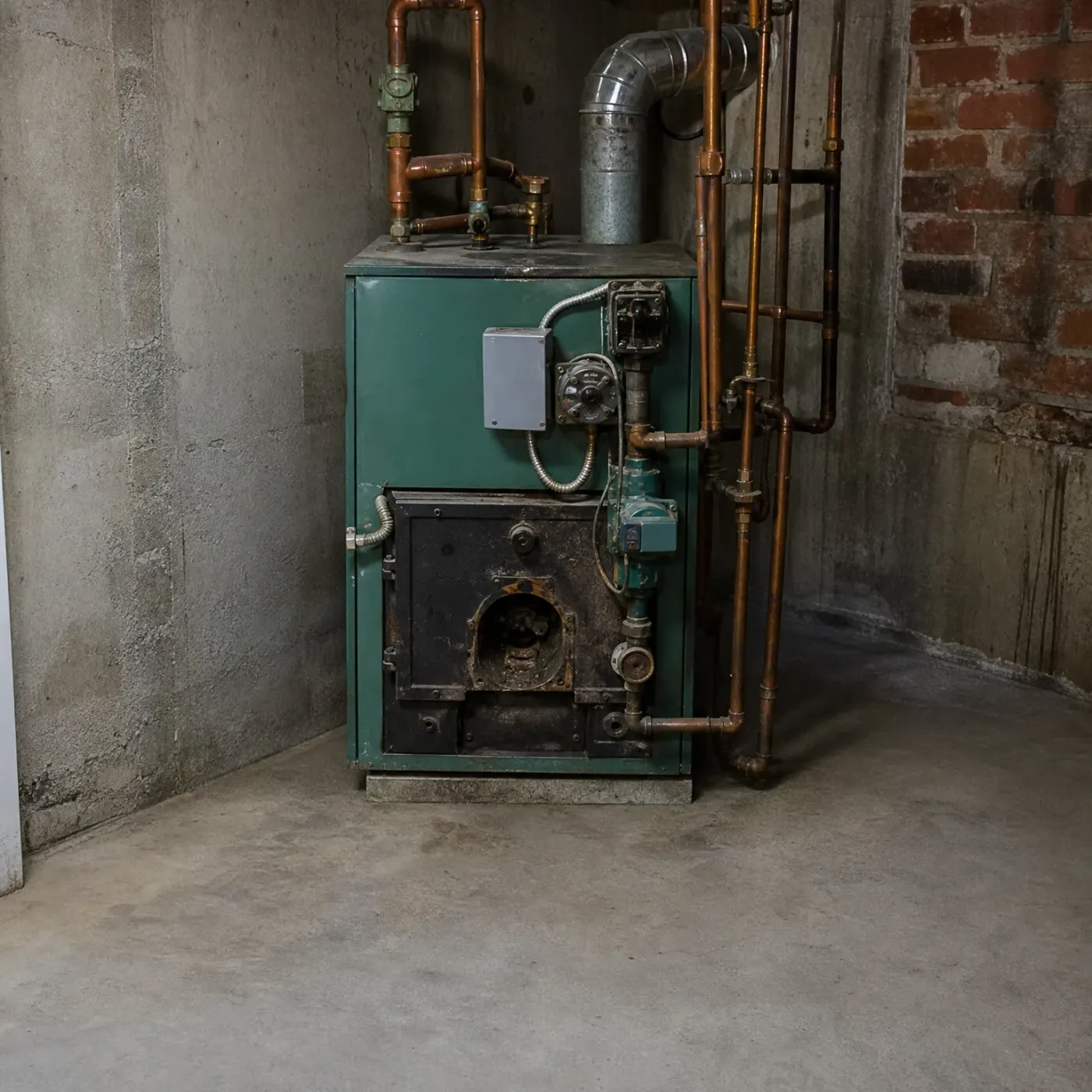
A green cast-iron boiler with a soot-stained front door, copper piping and a metal flue, standing on a concrete floor in a basement corner with concrete and brick walls.
Corrosion like this in the firebox means heat isn't transferring the way it should, and the boiler works harder to make up for it.

How Your Boiler Actually Sets Heat

  • Your boiler's aquastat controls water temperature, while the thermostat on the wall only tells it when to fire, not how hot to run.
  • Outdoor reset is a setting some boilers have that raises water temperature automatically as it gets colder outside, instead of running one fixed number all winter.
  • Short cycling happens when the water temperature is set too high for the day, so the boiler hits its limit and shuts off before it's run long enough to warm the house evenly.
  • Cast iron boilers hold heat differently than the newer high-efficiency models, so the right water temperature on one can run a radiator cold on the other.
  • The circulator pump moves water at the same rate no matter the temperature setting, which is why a lower setting run longer still heats rooms evenly.
  • Condensing boilers lose efficiency if the return water comes back too hot, so running them a little cooler on mild days is actually how they're designed to work.

The thermostat on your wall and the aquastat inside the boiler do two different jobs. The thermostat just calls for heat when the room drops below where you set it. The aquastat is what decides how hot the water gets before it's sent out to the radiators or baseboards. If you've only ever adjusted the thermostat, you've never actually touched the setting that matters most for a Wisconsin winter.

Some boilers have outdoor reset built in, which changes the water temperature on its own as the outdoor temperature changes. On a 35 degree day it might run water at 140°F. On a stretch of single digits, it climbs higher without you doing anything. If your boiler doesn't have this, you're setting one number and leaving it, which works less well across a season that swings from October to February.

Run the water too hot for the day outside and the boiler can short cycle, hitting its limit and shutting off before it's circulated long enough to heat the house evenly. The circulator pump always moves water at the same rate regardless of temperature, so a lower setting run for a longer stretch often heats rooms more evenly than a high setting that cycles on and off.

Cast iron boilers and newer high-efficiency condensing models don't behave the same way at the same setting. A number that works on one can leave radiators lukewarm on the other, and running a condensing boiler too hot on mild days actually works against how it's built to save gas.

A smiling bearded man in a navy crewneck sweater sits at a dinner table with a glass of red wine, plates and glasses in the foreground, in a dimly lit room with a lamp and framed picture behind him.
A woman in a dark gray sweater reclines on a light sofa with eyes closed and a slight smile, under a textured gray blanket with an open book resting on her lap, with a lit table lamp and plant in the background.

One form, no calling around

The pro who reaches out is licensed in Wisconsin.

Asking costs nothing, and the choice to hire stays yours.

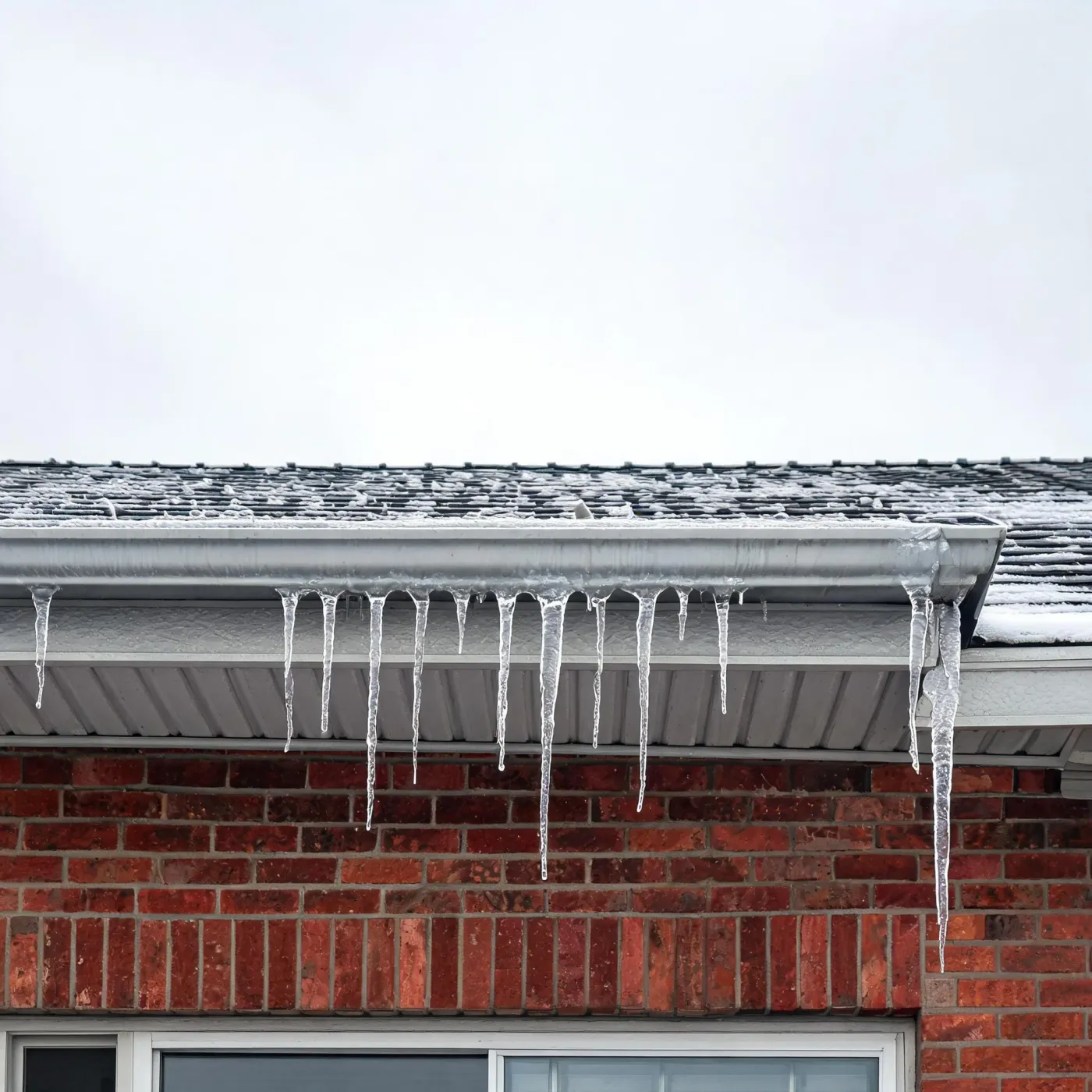
Icicles hang from a metal gutter along the eave of a red brick house with a snow-dusted shingle roof under an overcast white sky.

Winter nights average 13°F statewide, according to NOAA climate data, and that's the stretch where your boiler earns its keep. At that temperature, the house loses heat fast, and the boiler has to run longer cycles to keep the radiators or baseboards hot enough to keep up. You'll notice it most upstairs, where rooms farthest from the boiler take longer to warm and might stay a few degrees cooler no matter where the dial is set. If the water temperature is set too low for nights this cold, the system never quite catches up, and you'll feel it as a house that's warm enough near the boiler but chilly at the edges.

NOAA nClimDiv 1991-2020 county normals weighted by homes

Why does one room never warm up all winter

You notice it most on the coldest nights, when the back bedroom stays cool while the rest of the house feels fine. Maybe a radiator that's warm at the bottom but cold at the top, or one that barely puts out any heat at all. You might hear the boiler short cycling, kicking on and off every few minutes instead of running a long, steady stretch. Or you've started closing the basement door because the boiler room sounds louder than it used to. None of this means the boiler is failing outright, but a system that's out of balance works harder than it needs to, and that shows up on your gas bill before it shows up as a real breakdown. Left alone through a full Wisconsin winter, that strain adds up.

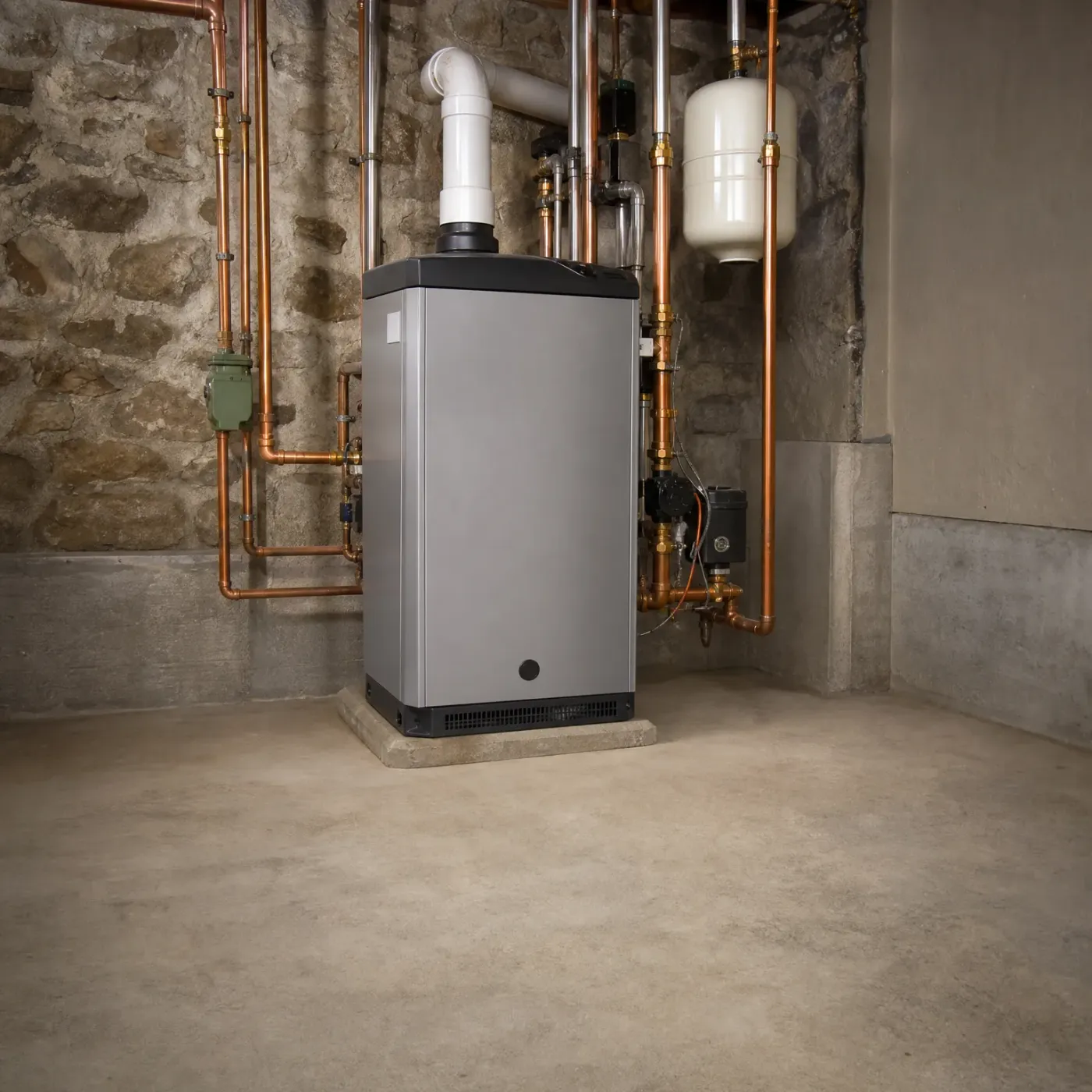
A gray floor-standing boiler on a concrete pad in a basement, connected to copper pipes, a white expansion tank, and a white PVC vent against a stone and concrete wall.

Running Right

This is what a boiler keeping up with a Wisconsin winter looks like. The pipes are tight, the pump turns without noise, and the expansion tank holds pressure steady. A setup like this gets checked once a year, before the cold sets in, so the aquastat and the burner are still doing what they were set to do.

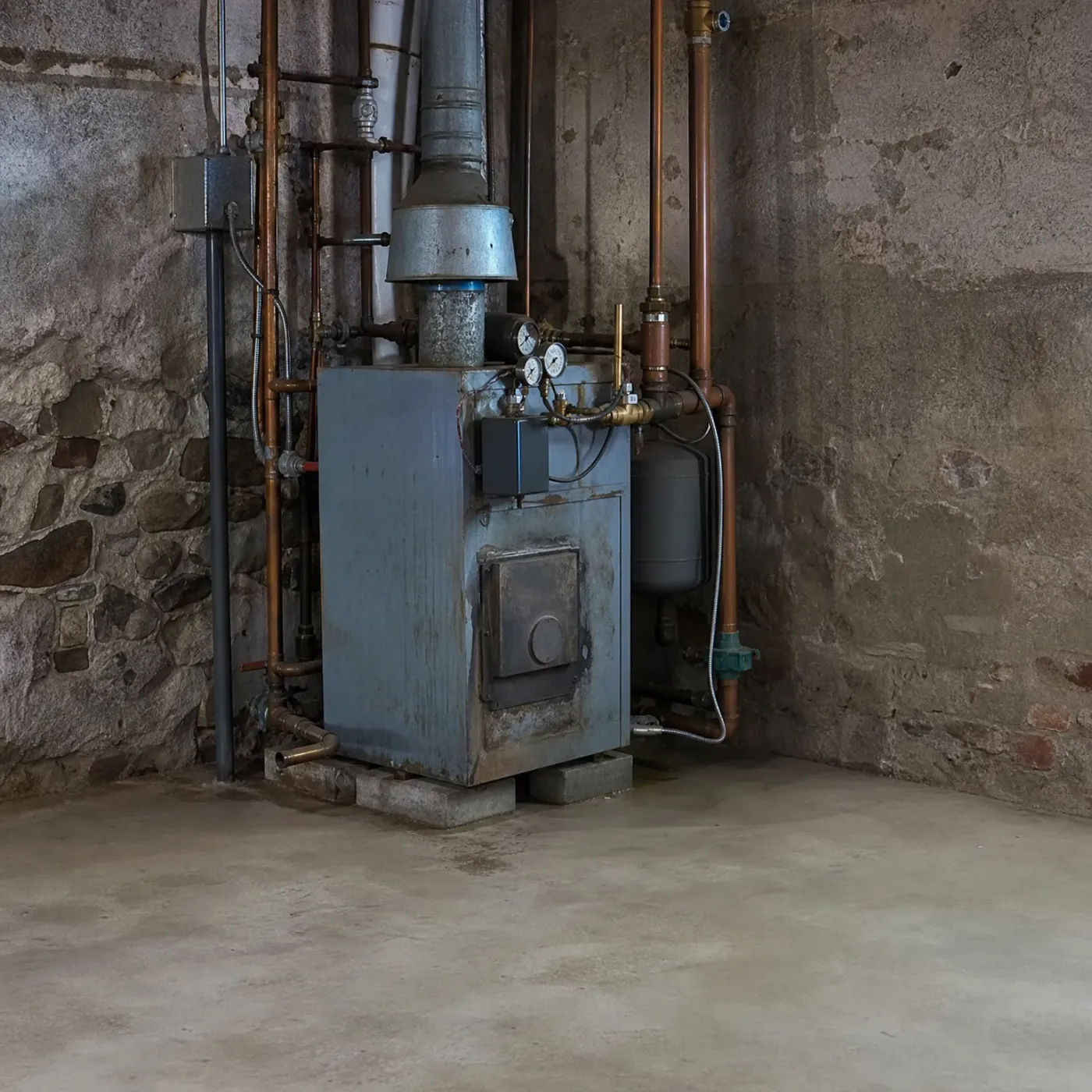
An older gray boiler with a metal flue, copper piping, pressure gauges and an expansion tank sits on concrete blocks in a basement corner with stone and concrete walls.

Falling Behind

An older cast iron boiler like this can still run fine, but years without a look from anyone add up. Scale builds inside, gauges drift, and a flue this size needs a clear path out or the whole thing works harder than it should. Skipped maintenance is usually why the temperature setting stops being the answer.

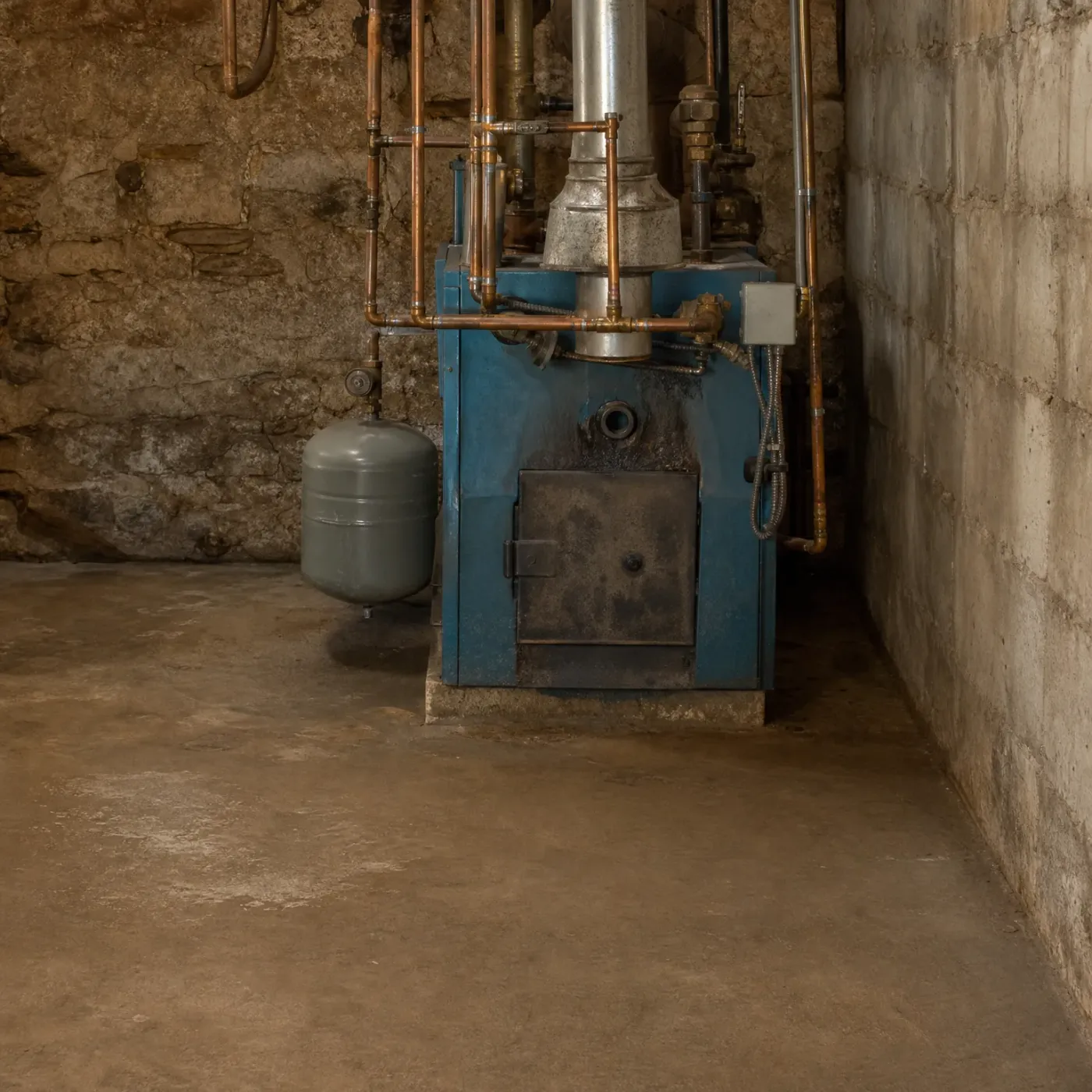
A blue cast-iron boiler with a metal flue pipe and copper piping stands against a stone and concrete block basement wall beside a gray expansion tank on a bare concrete floor.
Before you get your boiler maintenance
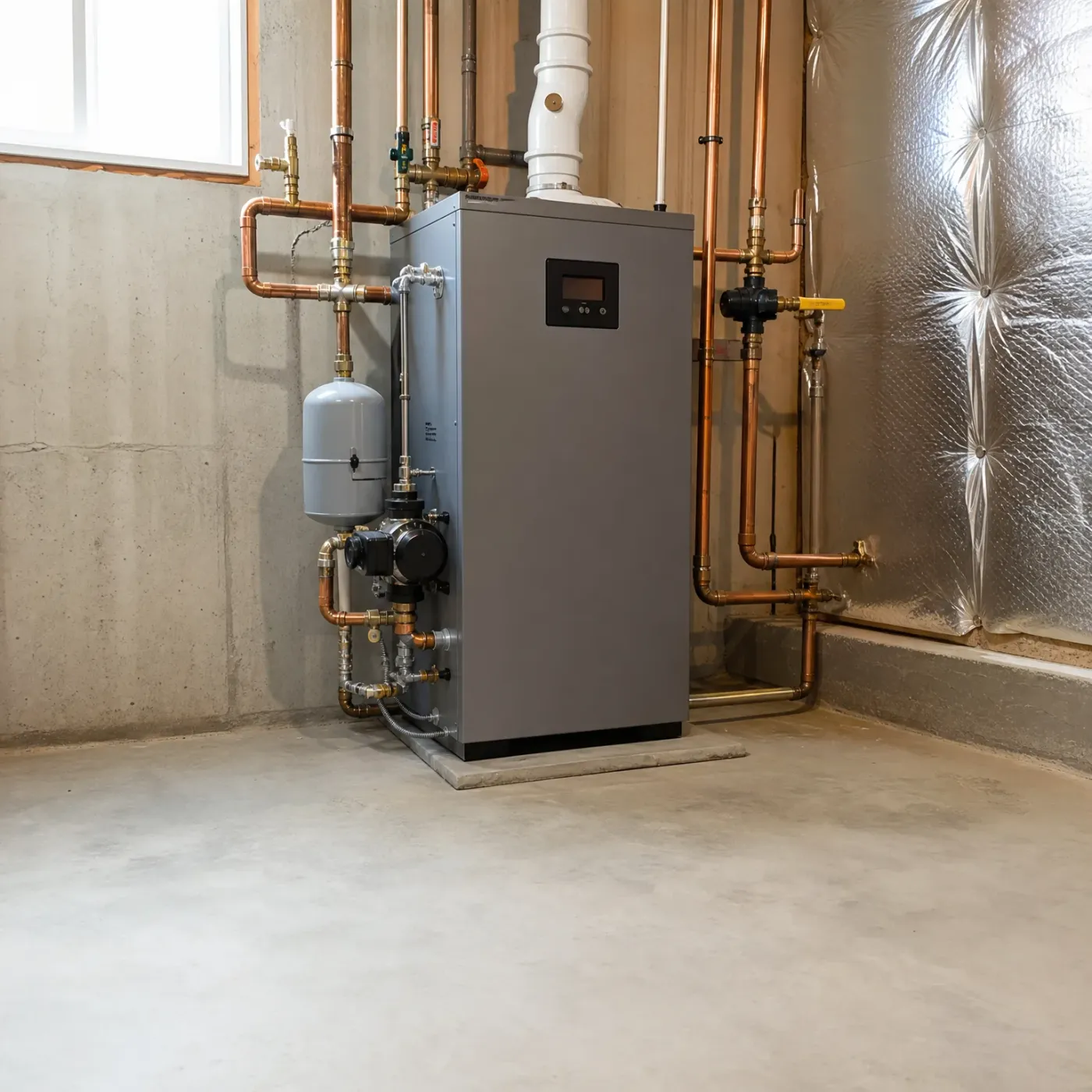
A gray boiler unit with a digital display stands on a concrete basement floor, connected to copper piping, a gas valve, a circulator pump and an expansion tank, beside a concrete wall and foil-faced insulation.
After you get your boiler maintenance

Water heated to 180°F instead of 140°F doesn't make the house warmer any faster. It just costs more to produce and cools slower, so the boiler short cycles instead of running long, even stretches.

Short cycling wears on the igniter and the pump every time it starts, so a boiler set too hot can need more repairs over a winter than one left at a sensible temperature.

Winter nights average 13°F statewide

At 13°F, your boiler isn't just topping off heat loss, it's working against a steady drain all night long. That's the stretch where your aquastat setting matters most, since a water temperature that's fine in November won't keep up once nights settle in this cold.

NOAA nClimDiv 1991-2020 county normals weighted by homes

The right setting is the one that matches the weather outside, not a number you pick once and forget. Somewhere around 140°F to 160°F on the aquastat covers most of a Wisconsin winter, with the higher end doing the work on the nights that drop toward 13°F. A tech who services boilers in this state all season knows which aquastat settings hold up on the coldest nights and which ones leave a house cold by morning, because that's the call they get every January. When you request service through this page, it goes to one licensed local contractor, not a handful of companies competing for your callback, so you explain the problem once and work it out with someone who actually shows up. That's the whole answer: set it for the cold you actually get, have someone who knows these systems check it before the deep cold arrives, and stop guessing at the dial.

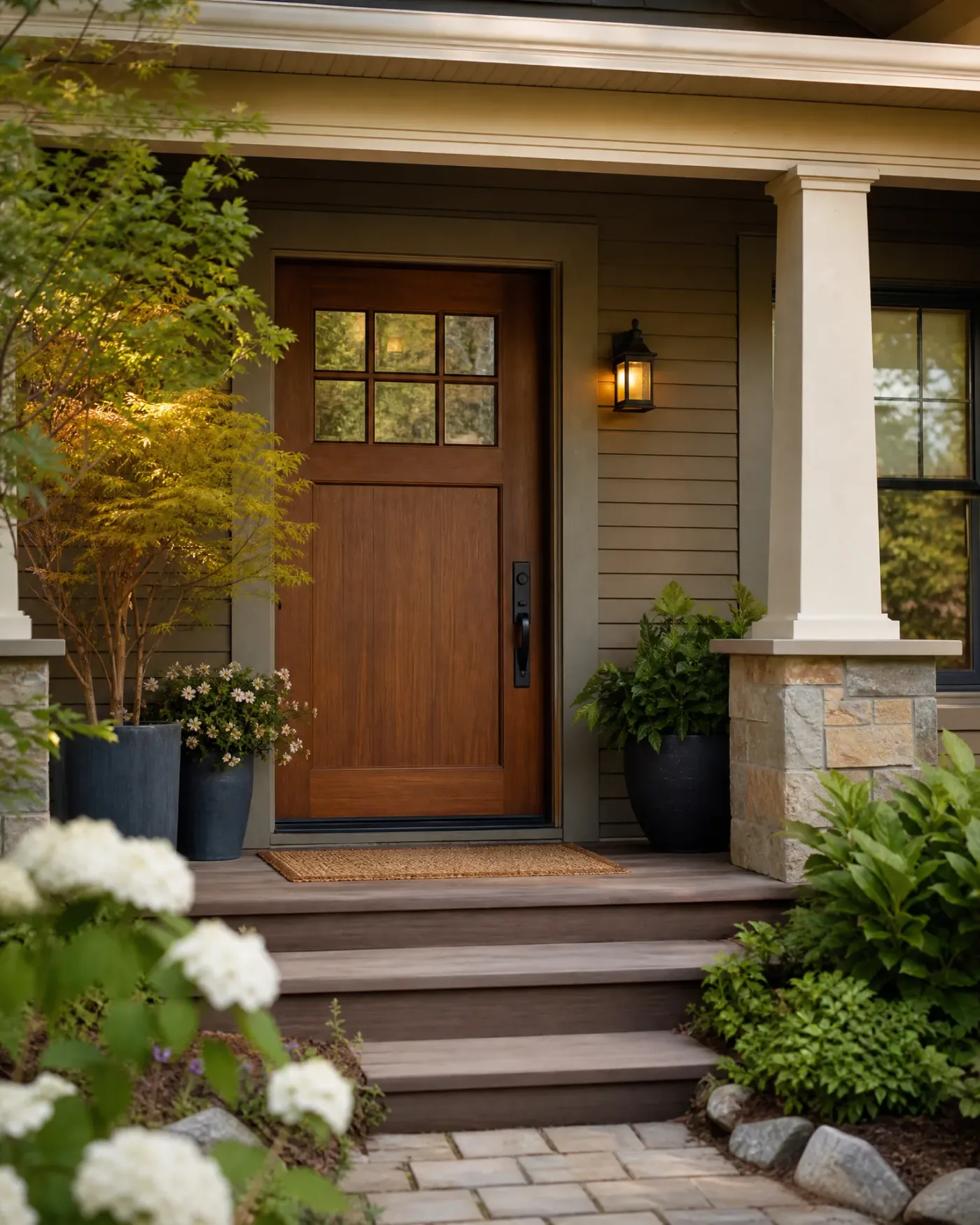
A covered porch with a wood front door with six upper glass panes, a lantern wall sconce, tapered column on a stone base, potted ferns and flowers, a woven doormat, and wide steps leading to a paver walkway bordered by shrubs and white hydrangeas.
A beige upholstered sofa with a cream cushion and chunky knit throw sits beside a white-framed window, with a leafy potted plant in a stone vase against a tan wall.
Sunlit corner of a room with a linen curtain beside a window, built-in shelves holding ceramic vases, wooden bowls, a potted green plant, stacked books and a woven basket, above a textured rug.
A dark wood three-drawer dresser against a pale wall holds a tall ceramic vase with leafy branches, stacked books and a shallow bowl, with a framed print above, a woven basket on the wood floor at left, and an upholstered sofa with a green pillow in the foreground.
A cream upholstered sofa with a textured ivory cushion and a rust-colored cushion sits beside a window with sheer linen curtains, with a potted leafy plant behind it and a wooden bowl on a wood table in the foreground.

Skip the search

Only one pro gets your request, so you hear from one company.

Fill out one form

No fee to send it, and nothing to sign.