Tell us about the job
Takes about a minute. No obligation.
Sizing a boiler for a Lafayette County home is not purely a catalog exercise. The local weather record is part of what a contractor has to read before specifying equipment, because a system installed here will carry that load from its first season. 88 severe weather events were recorded in Lafayette County, Wisconsin between 2015 and 2024. At that rate, severe weather shapes the operating life of a boiler in this county without dominating it, which means installation decisions about output capacity, venting, and pipe runs deserve as much attention as the climate does. A contractor who gets those details wrong on the install creates problems the weather alone would never have caused.
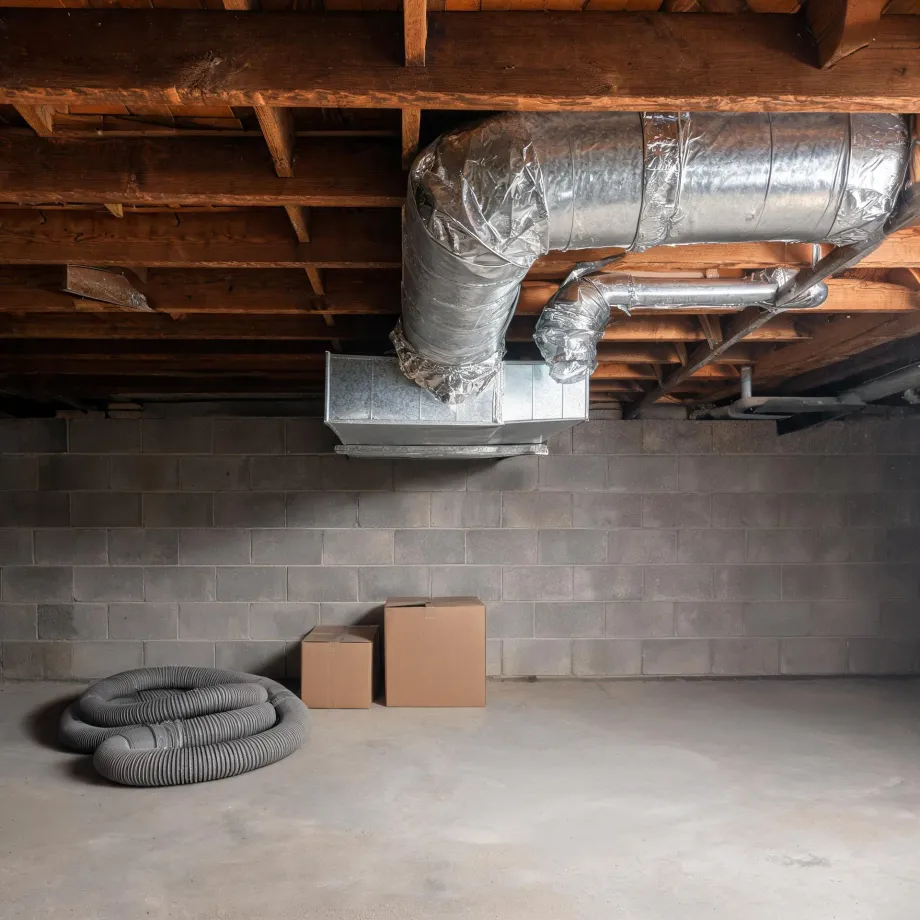
Older distribution systems were sized for what was installed when the house was built, and a modern boiler does not run on the same specifications that original work assumed. Half the homes in Lafayette County, Wisconsin were built in 1966 or earlier (2020-2024 ACS 5-year). A contractor assessing a boiler installation here opens up what is already in the house before pricing anything else, because the existing piping layout and heat distribution infrastructure are the variables that determine scope. Where those systems are undersized or configured for a different load, the installation involves bringing them into alignment with the new unit, and that work can be substantial.
What a Boiler Installation Puts in Your Home
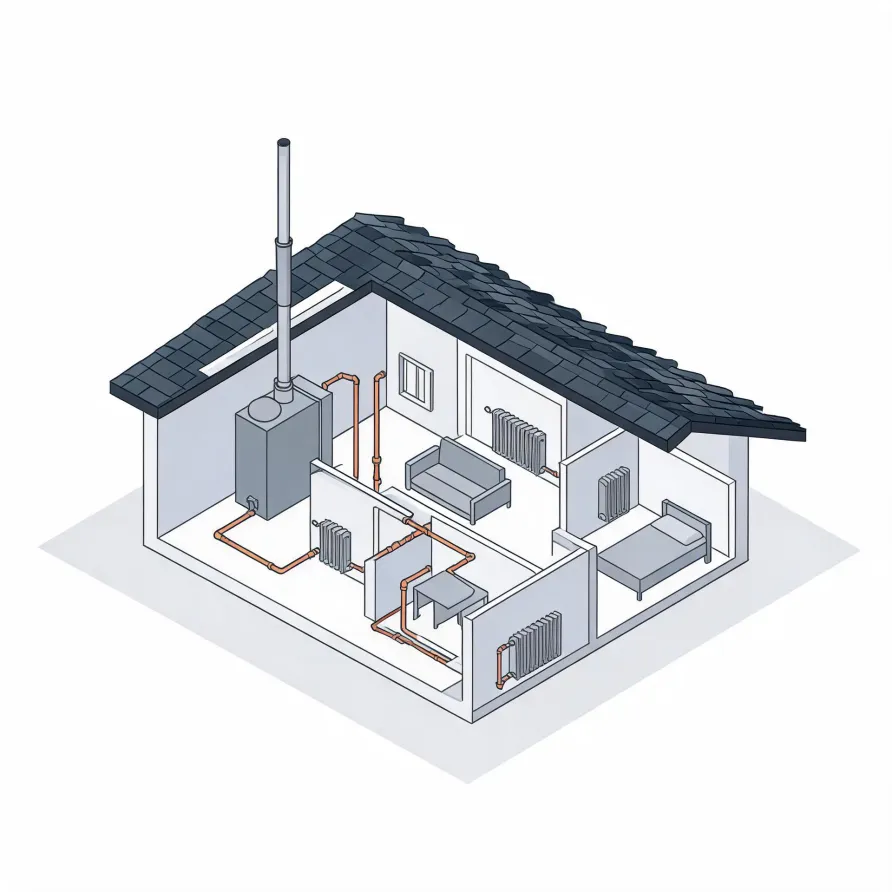
The boiler itself sits in the basement or mechanical room and is the heart of the system, burning fuel to heat water that circulates through the house. Paired with it is the expansion tank, which absorbs pressure changes as the water heats and cools, and sits close by on the same supply line.
Radiators or radiant floor tubing distribute that heated water through the living spaces, each one pulling warmth from the water as it passes through. A circulator pump, mounted at the boiler, keeps the water moving through those distribution points and back again, and a thermostat on the wall ties the whole system to the temperature you set.
The drawing shows a typical layout, and a licensed contractor determines exactly what applies to your home.
Get matched in Lafayette CountyLafayette County, by the numbers
88 severe weather events were recorded in Lafayette County, Wisconsin between 2015 and 2024.
NOAA National Centers for Environmental Information, Storm Events Database, bulk CSV export, events 2015-01-01 through 2024-12-31.Half the homes in Lafayette County, Wisconsin were built in 1966 or earlier (2020-2024 ACS 5-year).
U.S. Census Bureau, 2020-2024 American Community Survey 5-Year EstimatesLafayette County, Wisconsin holds 7,234 housing units (2020-2024 ACS 5-year).
U.S. Census Bureau, 2020-2024 American Community Survey 5-Year EstimatesOwners occupy 80.2% of the occupied homes in Lafayette County, Wisconsin (2020-2024 ACS 5-year).
U.S. Census Bureau, 2020-2024 American Community Survey 5-Year EstimatesBoiler Installation Rules on the Books for Lafayette County, Wisconsin2 sourced codes and standards
Licensing and Legal Requirements in Lafayette County, Wisconsin
A Wisconsin business that employs a certified HVAC qualifier is a certified HVAC business, and no city or county may require it to hold a local certification or licence on top of that.
Wisconsin requires a state HVAC contractor registration: no person or business may install or service heating, ventilating or air conditioning equipment, or offer to, without one.
Weather Stress on HVAC Equipment in Lafayette County
Boiler systems in Lafayette County carry a workload shaped by local weather. Storms, cold snaps, and sharp swings in outdoor conditions push heating equipment harder and shorten the margin for an undersized or aging installation.
88 severe weather events, 2015–2024. Source: NOAA National Centers for Environmental Information, Storm Events Database.