Wisconsin Boiler Works
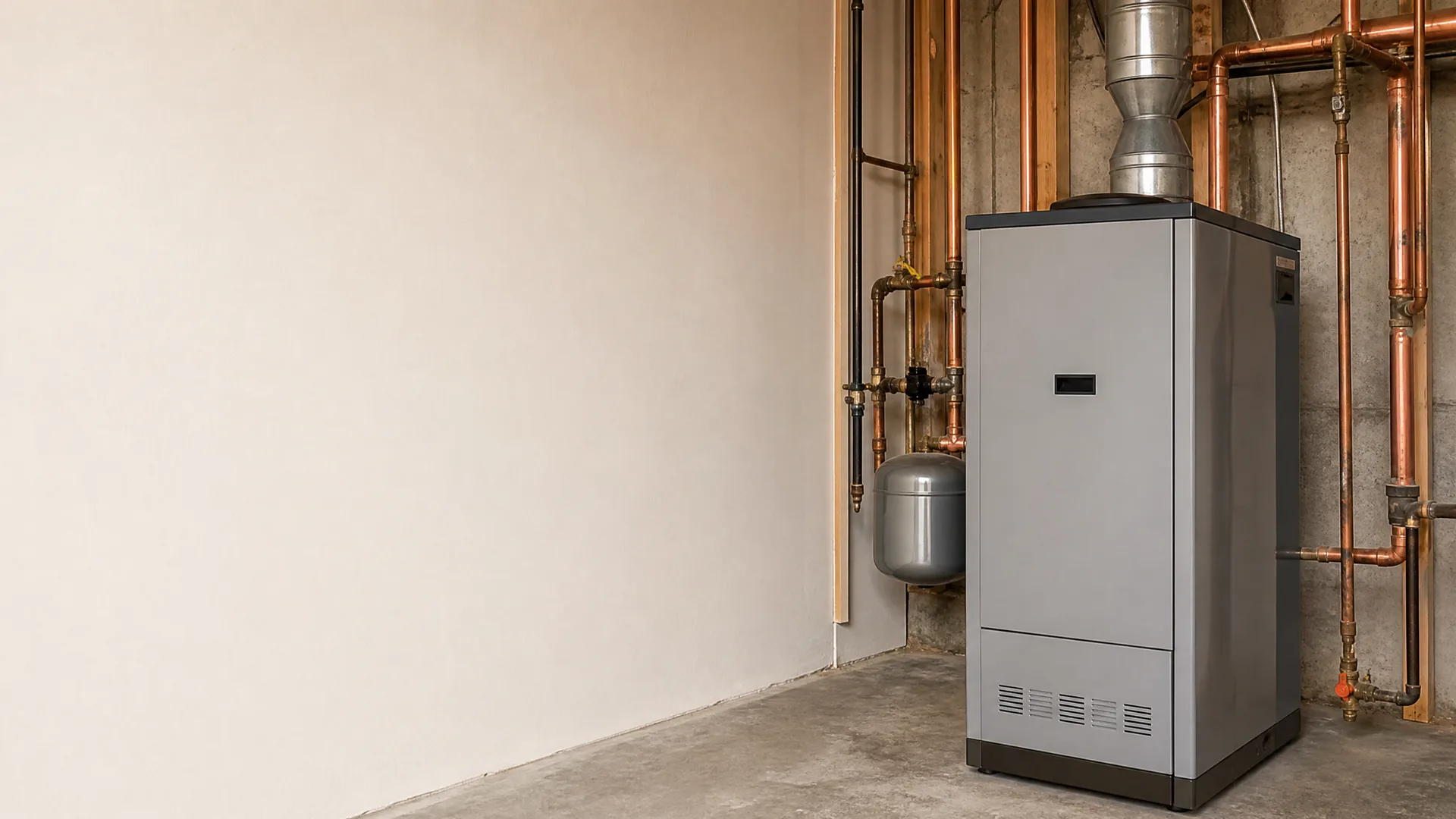
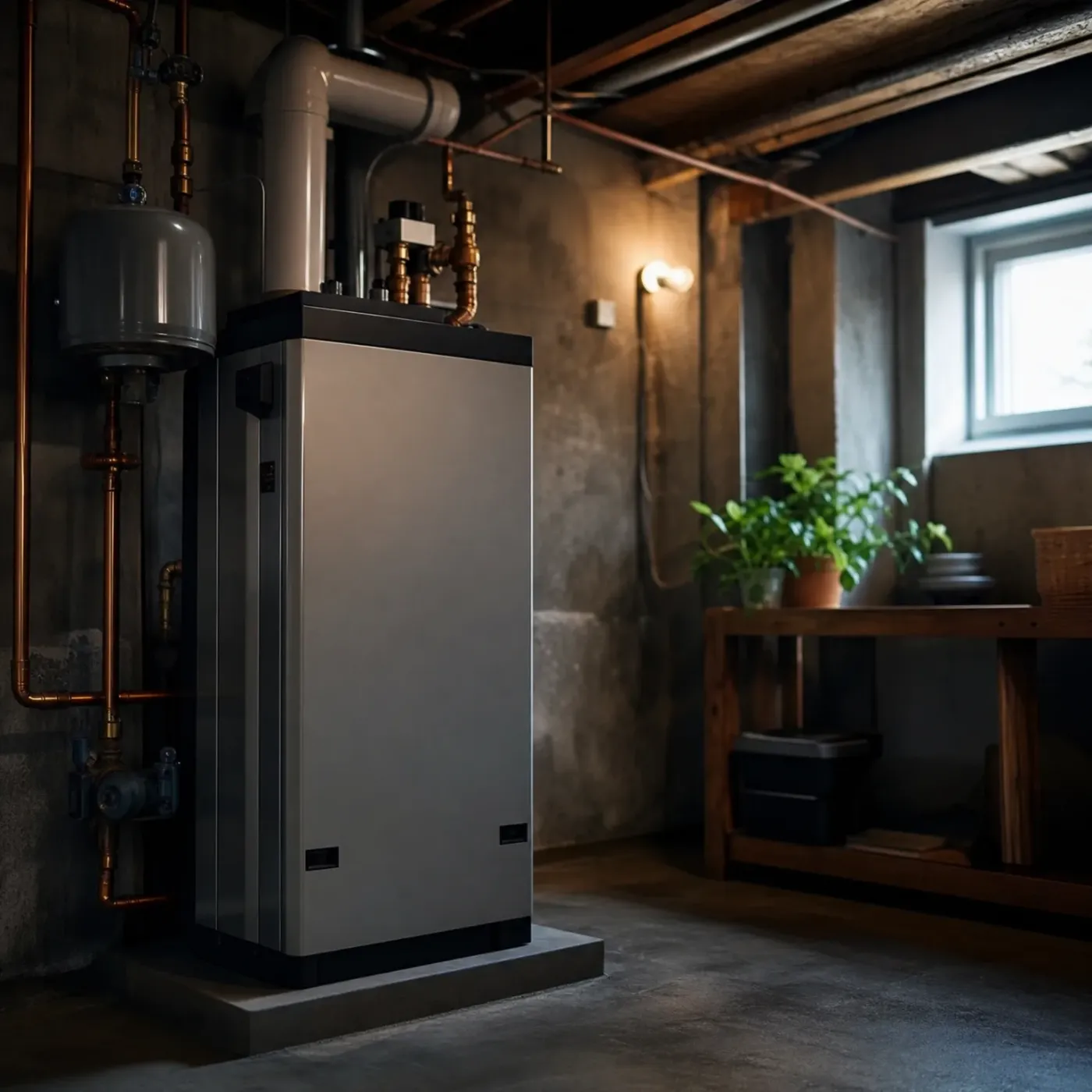
A floor-standing gray boiler unit on a concrete plinth in a basement, with copper pipes, an expansion tank, and a flue pipe above, a wall light, a small potted plant on a wooden shelf, and a window in the background.

Done looking for a boiler pro

How long a boiler lasts in Wisconsin

Boilers in Wisconsin run a lot of months out of the year, and a gas boiler that's maintained can last a couple decades or more. But age alone doesn't tell you if yours is on its way out. Below is what actually shortens or extends a boiler's life here, and what to do once you've decided it's time to replace it. Send the details once and let a local contractor who knows this equipment take it from there.

Hand off my installation

A gas boiler in Wisconsin typically lasts 15 to 20 years, sometimes longer if it's been looked after. Yours is working hard most of the year here, with winters that keep it running for months straight, and that steady load is what wears down a heat exchanger or a circulator pump over time, not just the calendar. A boiler that's maintained, with the burner cleaned and the system properly vented, tends to hit the higher end of that range. One that's been ignored, or that's been short-cycling for years, often fails earlier. If yours is past 15 years, it's worth having someone qualified look at it before a cold snap forces the decision for you. Replacing it on your schedule, with a system sized and installed correctly for your home, costs you a lot less than scrambling for a fix in January.

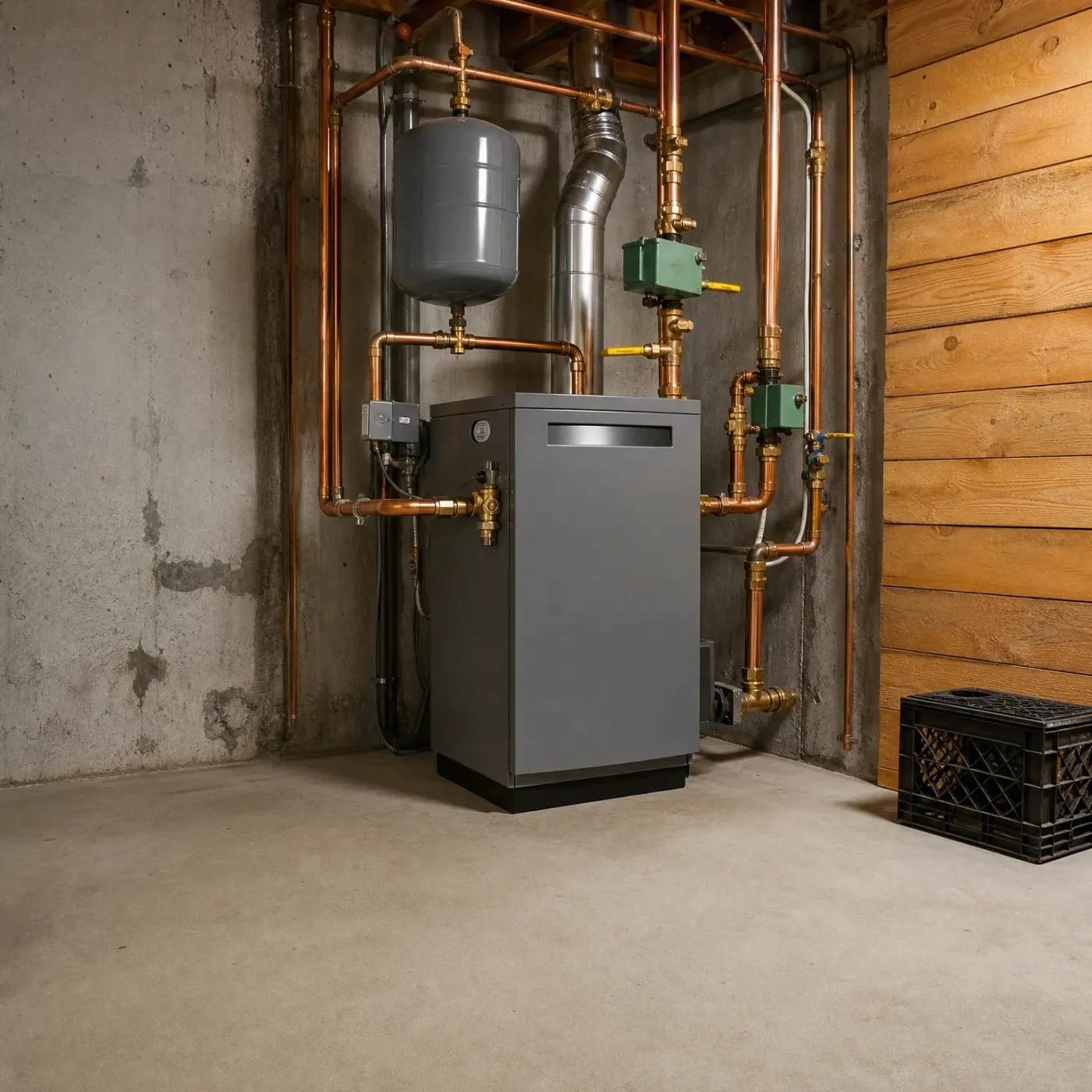
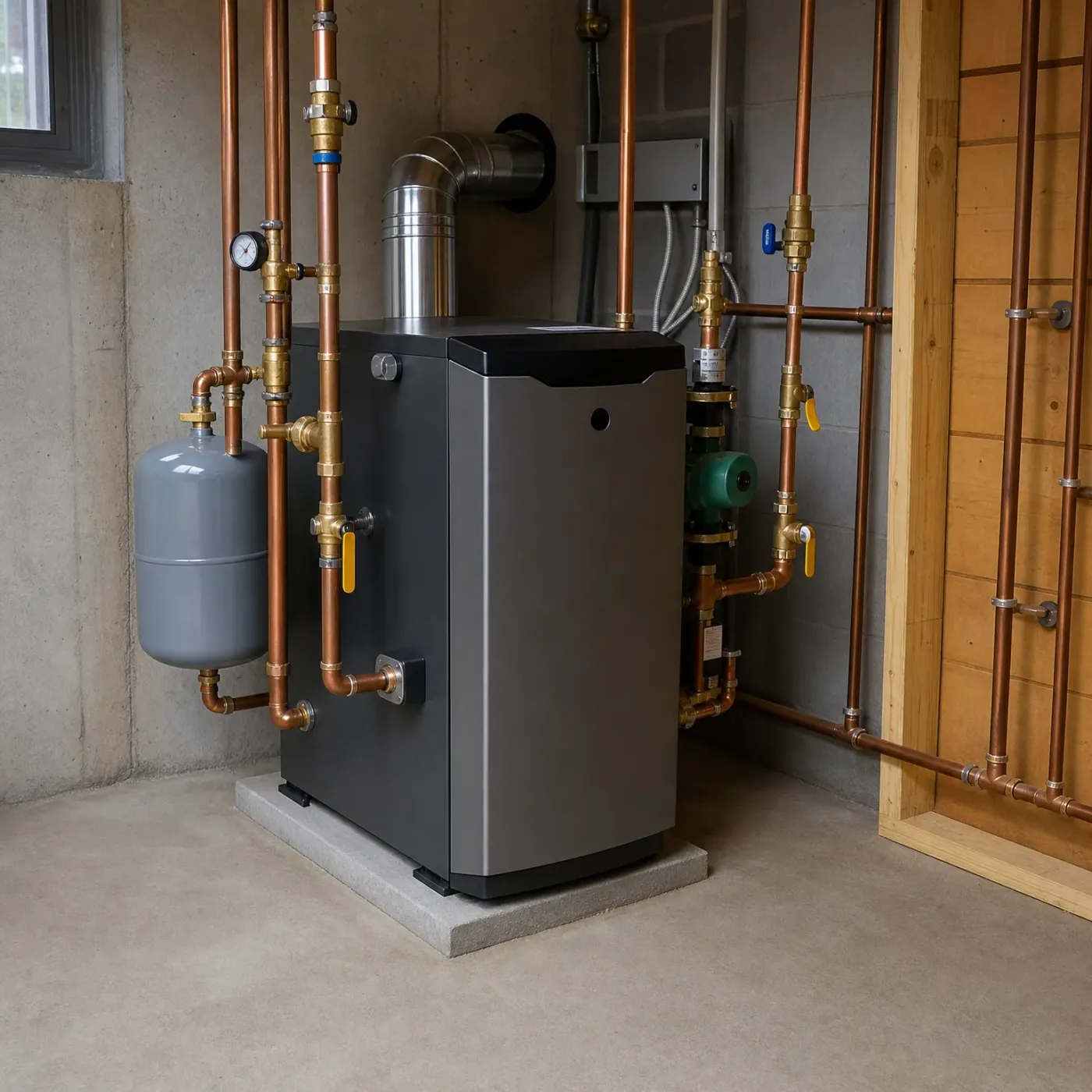
A dark gray floor-standing boiler on a concrete pad in a basement, surrounded by copper piping, brass valves, a gray expansion tank, a circulator pump, and a metal flue pipe against concrete block walls.

Running the way it should

A boiler like this is getting proper care. The circulation pump, the expansion tank, the valves, all in place and the pressure gauge holding steady. A system kept this clean and this organized is one that's had regular attention, and that's what carries a boiler past 20 years here.
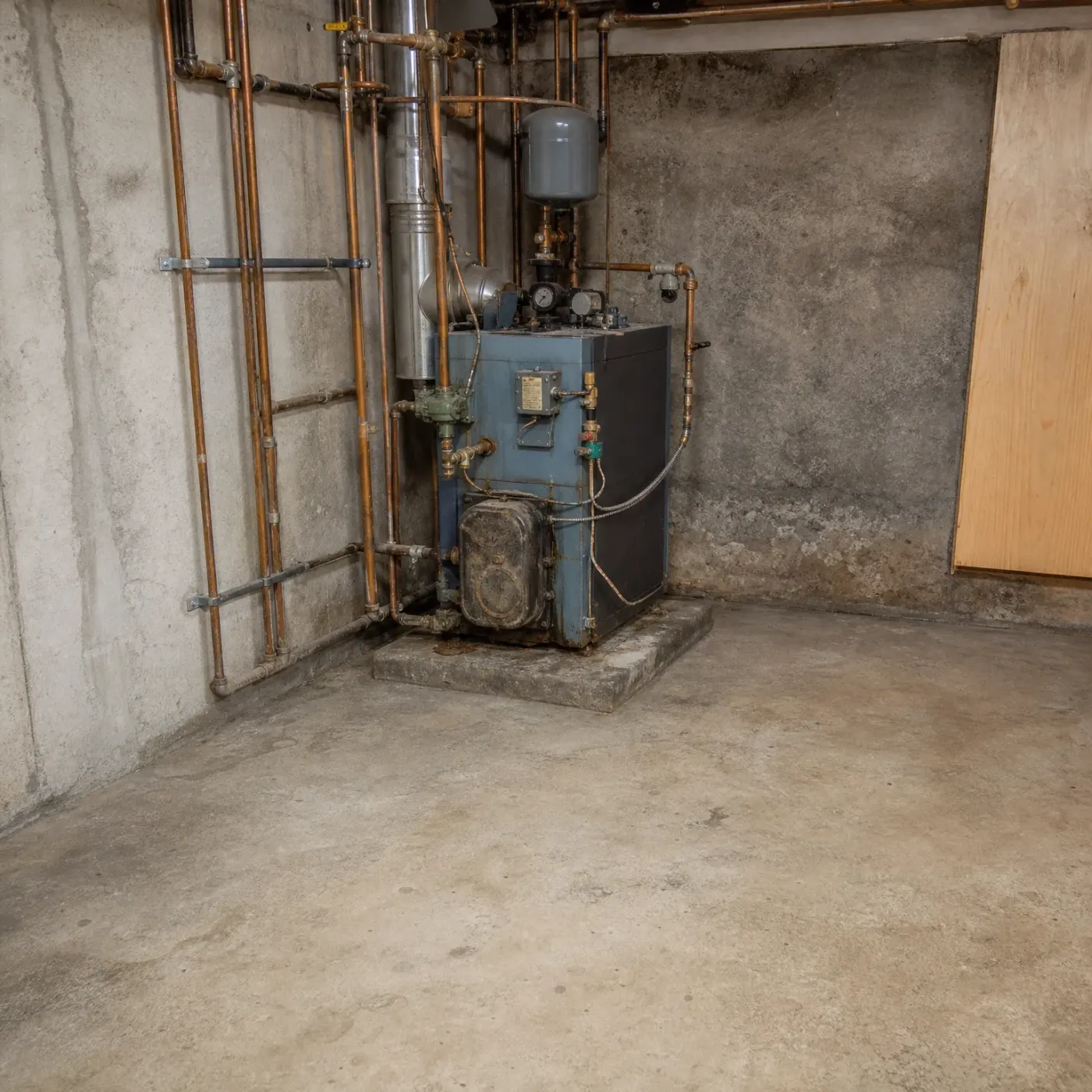
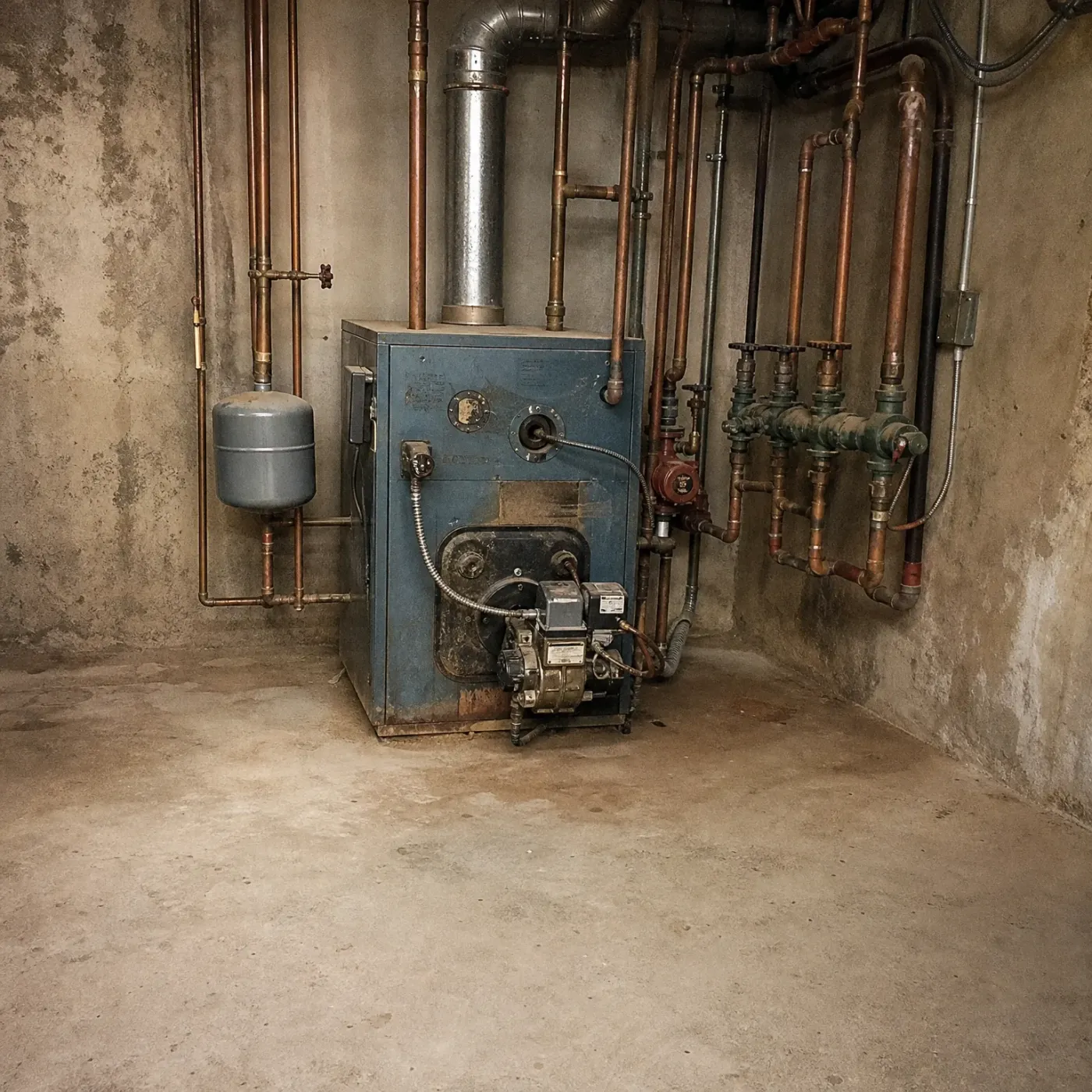
A blue boiler on a raised concrete pad in a basement corner, with copper and steel pipes, a gauge cluster, an expansion tank, and a metal flue running up the bare concrete walls.

On its way out

An older unit on a bare concrete pad, carrying rust and age on the casing. Boilers like this have usually gone years without a real checkup, and in a Wisconsin winter that catches up fast. By this point it's working harder to do less, and replacement is worth asking a licensed local pro about.

Is your boiler starting to fail?

You might hear banging or kettling from the tank as it heats up, a sign of mineral buildup inside. Radiators or baseboards that used to warm up fast now take longer, or stay cool in one room while the rest of the house is fine. The pressure gauge drifts low and you find yourself topping it off more than you used to. Water pooling near the base of the unit usually means a leak somewhere inside, not just a loose fitting. You might also notice your gas bill creeping up for the same amount of heat. None of this means replacement is urgent, but a boiler that's leaking or losing pressure on its own is one that can fail outright in the middle of a cold stretch, and that's a bad time to be without heat in Wisconsin.

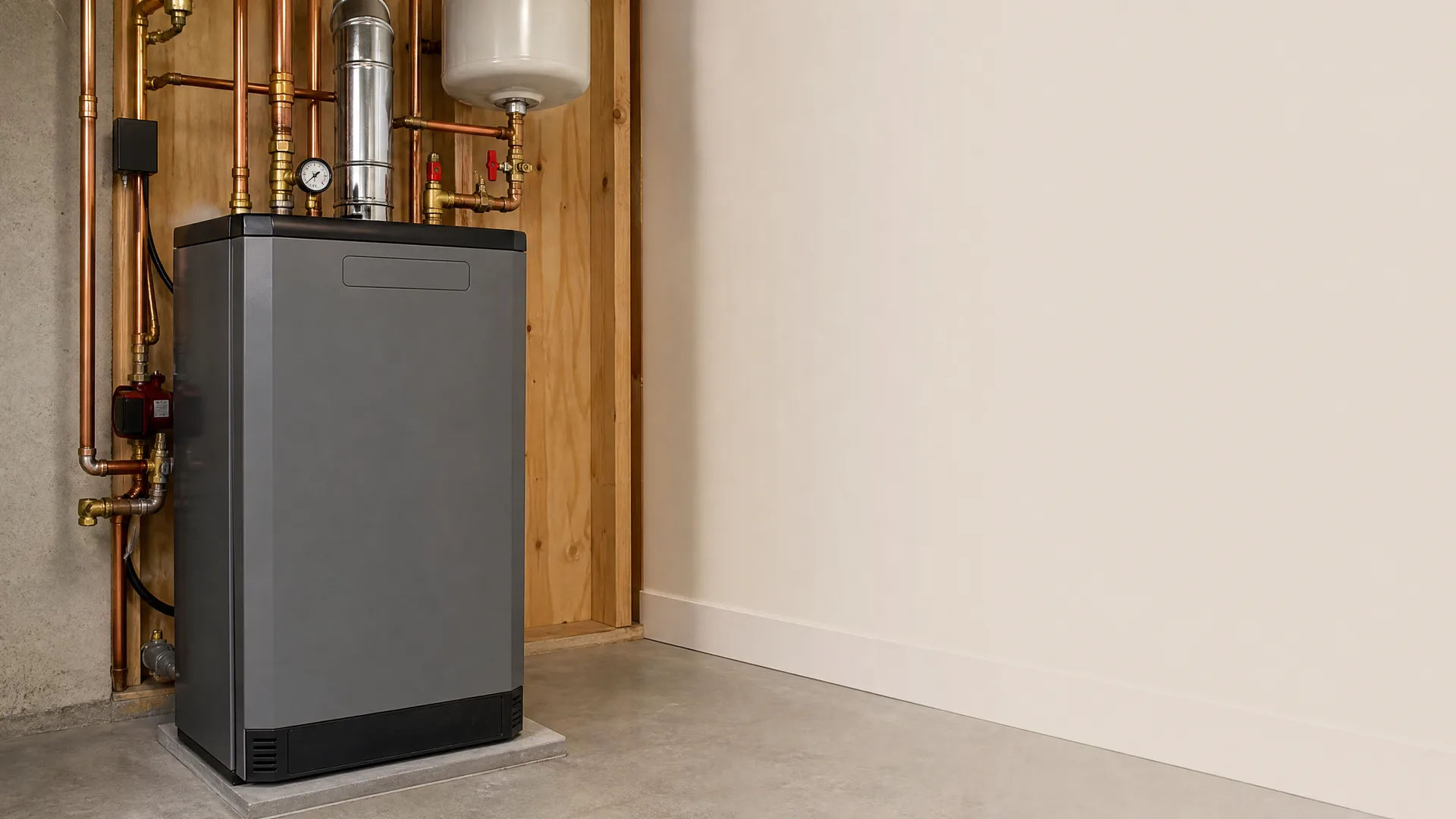
A dark grey floor-standing boiler on a concrete floor in front of a plywood wall, with copper pipes, valves, a pressure gauge, a flue pipe and a white expansion tank above it, beside a plain light-coloured wall.

The heat exchanger takes the wear

Every time your boiler fires, water moves through the heat exchanger and picks up heat from the burners. That metal expands and contracts with every cycle. Over hundreds of winters' worth of cycling, it's the part most likely to crack or develop a leak. Wisconsin winters mean long runs with the burner firing often, not just a few times a day. Keeping water pressure correct and sediment out of the system is what slows that wear down.

A gray boiler unit with a metal flue pipe stands in a basement corner, surrounded by copper piping and an expansion tank against a plain light wall and concrete floor.

Cold water returning strains the system

A boiler built to last runs most efficiently when the water coming back to it isn't too cold. If your system pushes water out hot and gets it back cold, that temperature swing adds stress to the heat exchanger each cycle. Some newer boilers manage this with a mixing valve or a condensing design. Older units don't, and that's often where the first failures show up, well before the 15 to 20 year mark most gas boilers reach.

Why does my boiler make a banging noise sometimes?

You hear it most on a cold morning when the boiler first fires, a banging or rattling from inside the tank that wasn't there before. It's loud enough to make you wonder if something's about to break. Before you shut it off or call anyone, it helps to know what's actually making that noise and whether it means your boiler is nearing the end.

It's called kettling, and it means mineral scale has built up inside the heat exchanger

Wisconsin's water runs hard in a lot of places, and over years of heating cycles, the minerals in it settle out as scale on the inside of the heat exchanger. That layer traps pockets of water against the hot metal. The water in those pockets flashes to steam faster than it can escape, and the popping of those steam pockets is the banging you hear. It's not dangerous in the moment, but it means the heat exchanger is working harder to move heat into the water than it used to. Left alone, that scale keeps building, and the banging usually gets worse before it stops on its own, which it won't.

A gray boiler unit in a basement corner with copper piping, brass valves, a gray expansion tank, a metal flue duct, concrete walls and a wood-paneled wall, with a black plastic crate on the floor at right.

What a cared-for system looks like

The pipes are organized, the valves are labeled or at least reachable, and the zone controls are mounted clean on the wall. A room kept like this is one somebody's been into regularly, not just when something broke.

An older blue boiler with a burner unit stands in a concrete basement corner, connected to copper and steel piping, valves and a gray expansion tank on the wall.

What a system on its way out looks like

Galvanized pipe instead of copper, an old flue running straight up through the ceiling, valves and circulators crowded onto one manifold. Nothing about this room tells you when it was last checked, and that's the problem.

A man with grey hair and stubble in a dark sweater sits on a grey sofa indoors, looking off to the side, with a potted plant and a sunlit window behind him.
A man with gray hair, a beard and glasses, wearing a dark green sweater, sits on a gray sofa in a sunlit living room with a potted plant, table lamp and wooden sideboard behind him.
A middle-aged man with graying hair and a short beard sits on a blue sofa in a living room, looking toward a window, with a bookshelf, lamp and framed picture in the background.
A man with graying curly hair and a dark green sweater sits on a gray sofa in a sunlit living room, looking off to the side, with a framed picture, shelving, an armchair and a window with sheer curtains behind him.

It's off your list after this

One installer gets your project, so there's no bidding war over it.

No charge to send it. You decide if you hire them.

Replace it, or repair it again

A boiler past 15 years that needs a new circulator pump or a new control board is at a point worth stopping and thinking about. That part will likely hold for a few more years. But the heat exchanger underneath it has put in the same years of cycling, and a repair doesn't touch that. You could pay for the part and still be looking at a bigger failure a winter or two later. Replacing it now means a system sized and installed for how your house actually uses heat, not a patch on something already most of the way through its life.

A new boiler installed right

Installation is where a lot of a boiler's lifespan actually gets decided. The unit itself matters less than whether it's sized correctly for your house, piped so the water moves the way it should, and set up so the pressure and venting are right from day one. A boiler put in by someone who installs and services them all winter long in Wisconsin knows what the local gas lines and venting usually need, and what tends to go wrong when a system's put in wrong. Get that part right and the 15 to 20 years you're expecting starts from a solid place, not a guess.

Winter nights average 13°F statewide

Thirteen degrees is the average overnight low here in December, January and February, and that's what your boiler is up against most nights of the week. It fires and holds that burn far longer than it would somewhere milder, and that steady demand is what puts the miles on a heat exchanger over the years.

NOAA nClimDiv 1991-2020 county normals weighted by homes

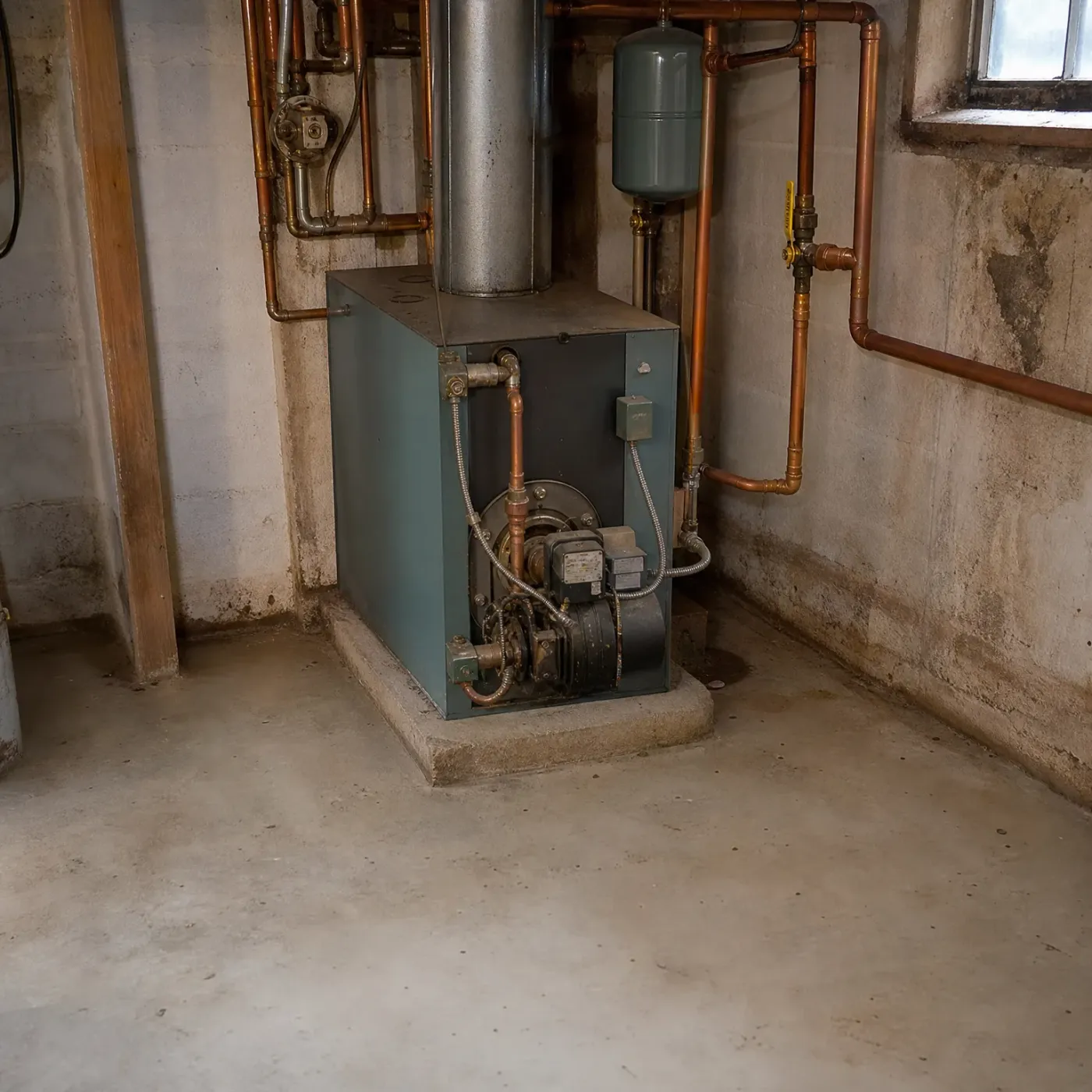
A green oil-fired boiler with a flue pipe, burner and circulator pumps sits on a concrete pad in a basement corner, surrounded by copper piping and an expansion tank against concrete walls.
Before you get your boiler installation
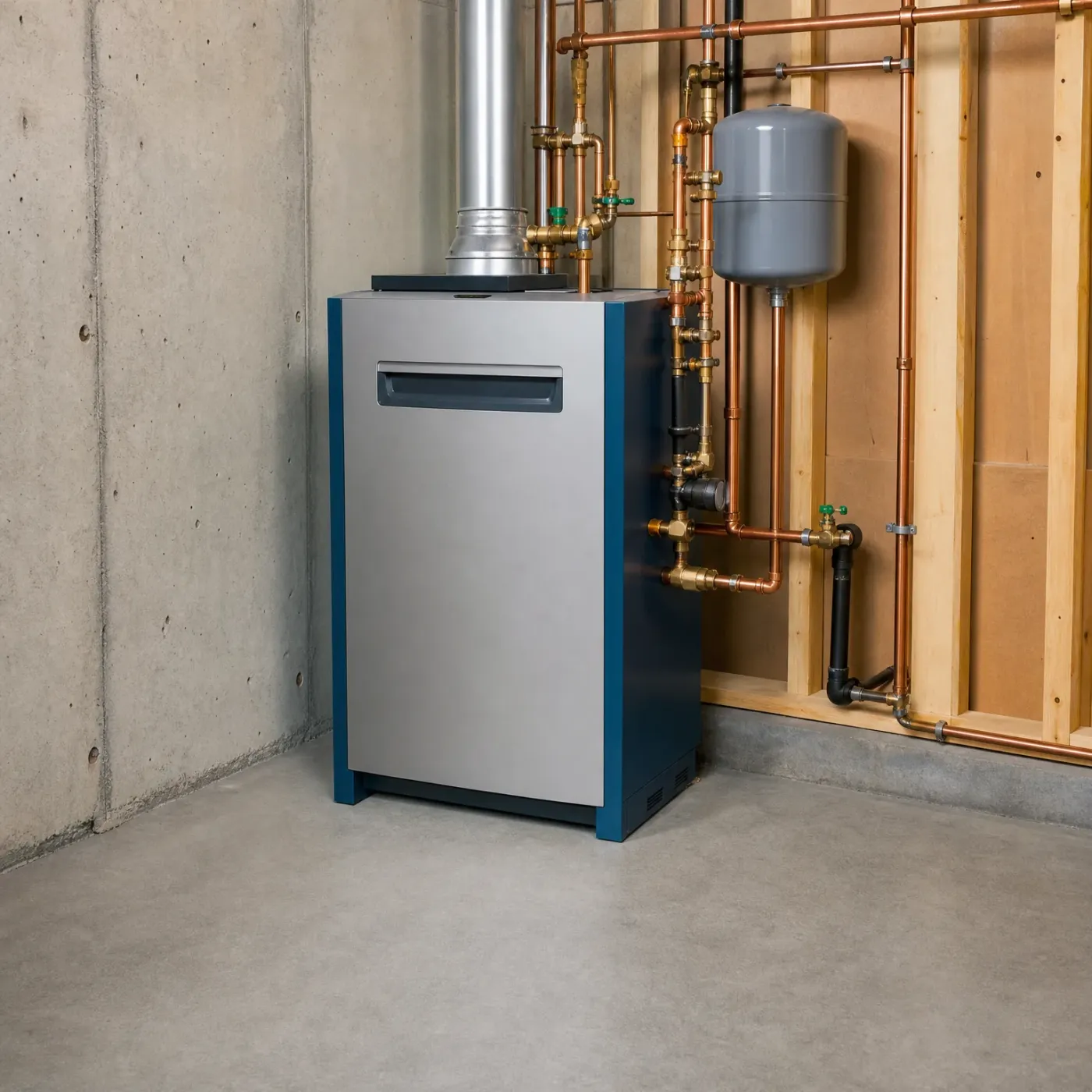
A gray and blue floor-standing boiler in a basement corner, with a metal flue pipe and copper and black piping, valves, and a gray expansion tank mounted on an unfinished wood-framed wall beside a concrete wall.
After you get your boiler installation
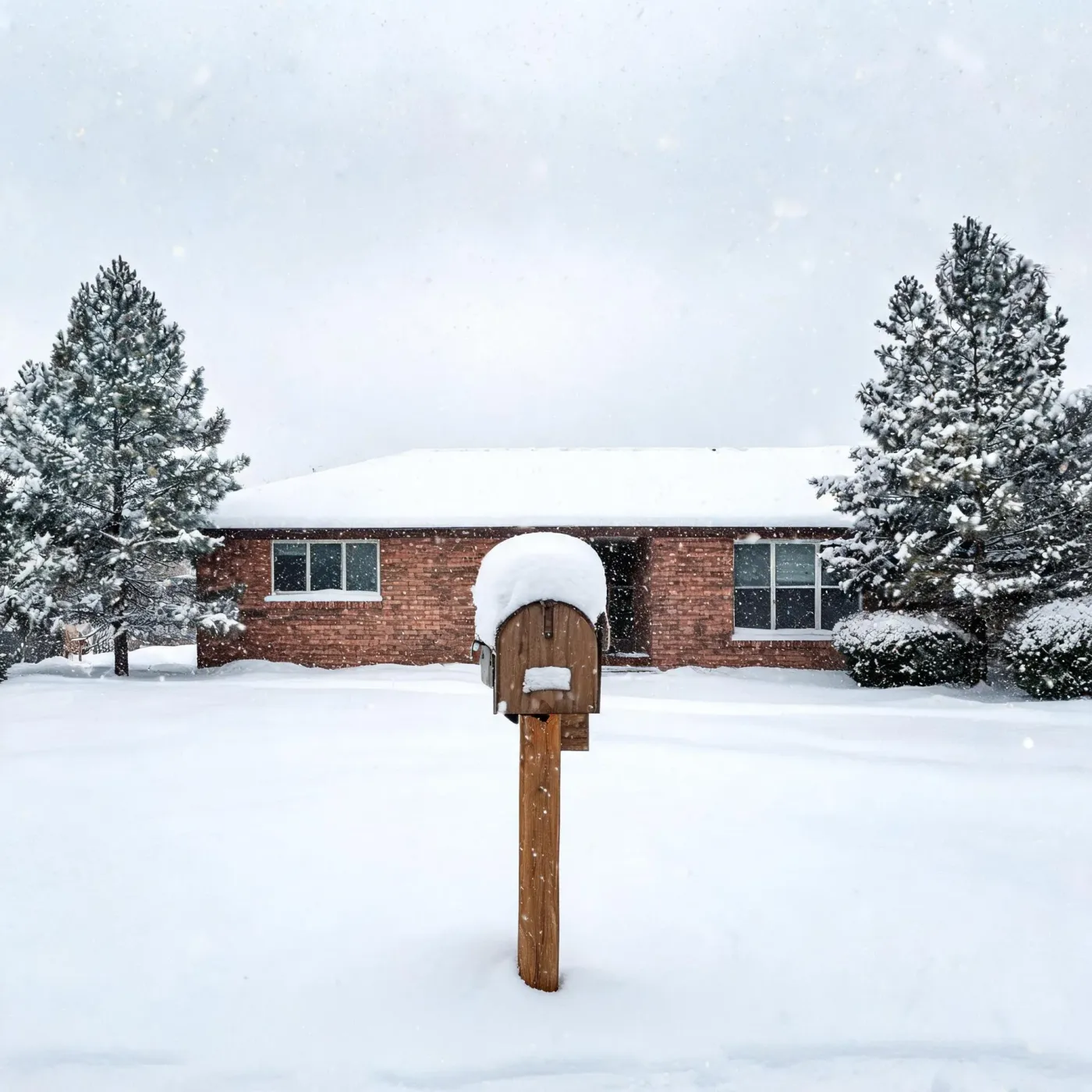
A snow-covered wooden mailbox on a post stands in a deep snowy yard in front of a single-story brick house flanked by snow-laden pine trees during falling snow.

On a statewide average, winter nights sit at 13°F. That's the kind of cold that keeps a boiler cycling on and off most of the night instead of firing once and holding steady. Each cycle pushes water through the heat exchanger and back, and the metal heats and cools with it. A mild winter gives that part a break. A Wisconsin winter doesn't. You'd notice it less in how the house feels and more in how often the burner kicks on, especially overnight, and in how the unit sounds doing it. Source: National Weather Service.

NOAA nClimDiv 1991-2020 county normals weighted by homes

Replace Now or Hold Off

Old boiler, new one needed

  • A boiler past 18 or 20 years is running on a heat exchanger that's seen thousands of cold Wisconsin nights, and that part doesn't get better with age.
  • Gas prices and boiler efficiency have both moved since an old unit was installed, so a new one can cut what you're paying to heat the same rooms.
  • Installing it right means sizing it to your house, setting up the zones correctly, and getting the venting done to code, work that affects how the system runs for the next 20 years.
  • A licensed local installer who works on boilers all winter knows which models hold up to Wisconsin winters and which ones struggle.
  • Once it's in, you stop guessing at every bang or cold radiator whether tonight's the night it quits on you.
  • A new install comes with a warranty on the equipment, something an aging unit patched together with old parts doesn't have.

Keep the one you have

  • A boiler that's cycling fine, holding pressure, and heating every room evenly doesn't need to be replaced just because of its age.
  • If yours has had regular service and the heat exchanger hasn't shown rust or leaks, it may still have years left in it.
  • Replacing a working system means paying for equipment and labor now instead of spreading that cost out over whatever life is left in the one you have.
  • A boiler under 15 years old with a solid maintenance history is usually still within its expected range for gas units in this climate.
  • Smaller repairs, a new circulator pump or a thermostat, can keep an otherwise sound system going without a full install.
  • The decision changes fast if the heat exchanger itself is failing, since that's the one part that makes the rest of the boiler not worth saving.
A woman with shoulder-length brown hair wearing a beige knit cardigan sits in a gray upholstered armchair near a window, looking off to the side with a slight smile, with bookshelves blurred in the background.
A woman and a sleeping child wrapped together in a cream knitted blanket on a couch, with a potted plant, framed photo and lit lamp in the background.

What you know now about your boiler

  • A gas boiler in Wisconsin typically runs 15 to 20 years, longer if it's been kept up through the winters it's seen.
  • Banging from the tank, radiators that take longer to warm, or a circulator pump that's already been replaced once all point to a system nearing the end.
  • A boiler past 18 to 20 years is working with a heat exchanger that's cycled through thousands of cold nights and won't recover from that wear.
  • A licensed local contractor who services boilers through every Wisconsin winter knows which of these signs mean repair and which mean it's time to replace.
  • Sending the request connects you with one contractor for your area, not a handful of companies competing for the job.
  • Once that's sent, it's no longer on you to track down someone qualified to look at it.

Fifteen to twenty years is the range, and where your boiler falls in it depends on how it's been treated, not just how old it is. A system that's had regular attention, clean connections, a pressure gauge that's been checked, holds up toward the far end of that range. One that hasn't shows it earlier, through the banging tank, the slow radiator, the circulator pump already swapped once. None of that is guesswork. It's the heat exchanger answering for every winter night it's cycled through, and in Wisconsin that's a lot of nights.

Past 18 or 20 years, the question stops being whether to replace and starts being when. A new control board or a new pump on a system that old buys a little time, not a new boiler. The part doing the real work underneath it has already taken the wear that matters, and that doesn't reset.

Getting the right call on repair versus replace, and the right install if it comes to that, is easier with someone who already knows your area's winters and what they do to this equipment. A local licensed contractor who services boilers all season sees this same wear pattern every year and knows which signs are routine and which mean the system's done. Send the request and you're matched with one contractor for your area, not passed around to several. From there, it's their job to look at your system and tell you where it stands. It's no longer yours to go find them.

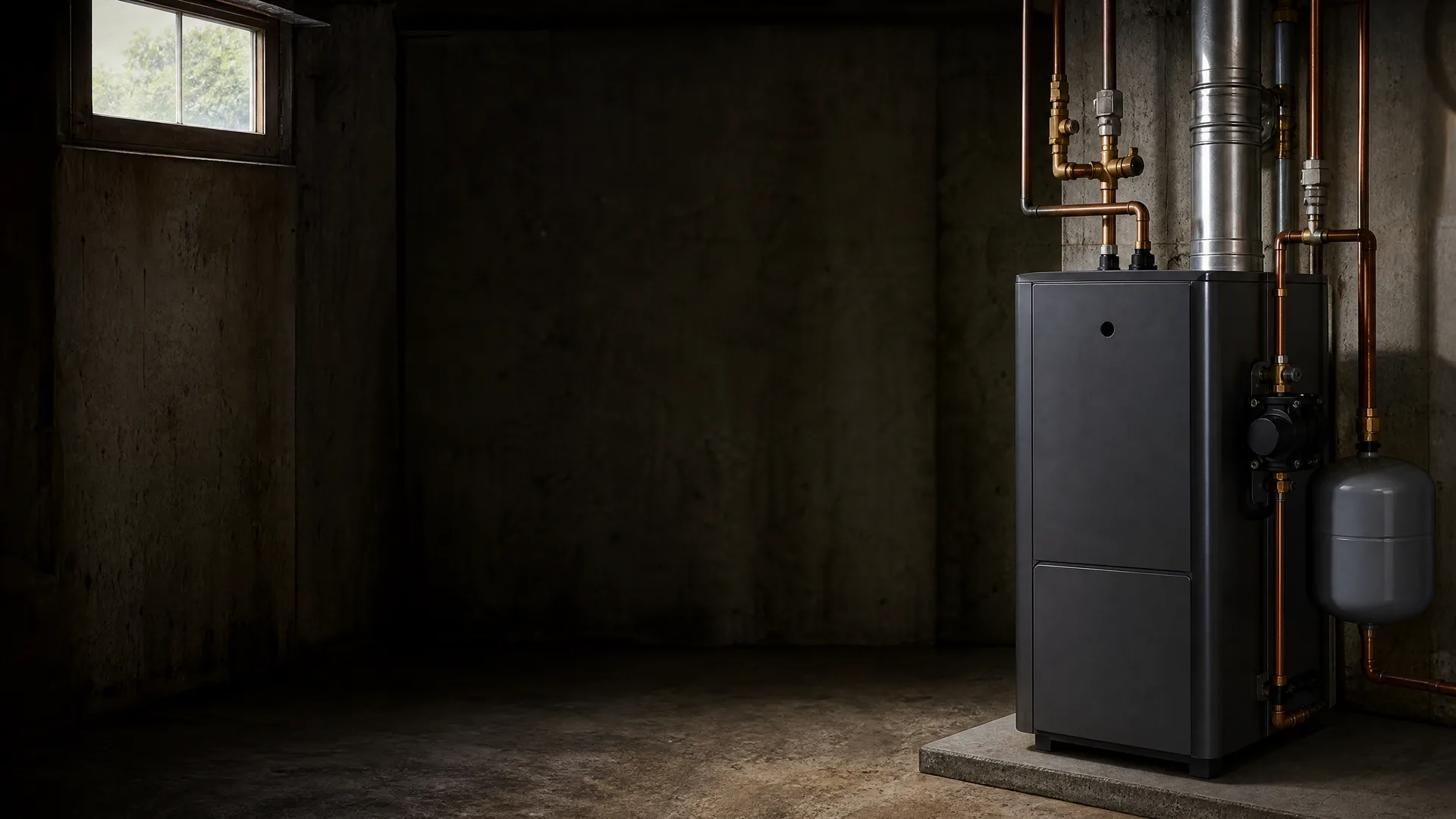
A dark grey boiler unit on a concrete pad in a dim basement, with copper pipes, a metal flue, and a grey expansion tank on the wall, and a small window with daylight on the left.

Stop chasing a boiler pro

Your request goes to one pro, not a list of companies.

Step 1 of 3: Equipment