80% vs. 95%
An old boiler burns 20 cents of every dollar without heating your house. A 95% model turns almost all of it into heat moving through your pipes or ducts.

For most Wisconsin homes, yes. Winters here are long and gas is how most homes heat, so a boiler running at 95% or better instead of the 80% an old one gets is turning less of what you pay into wasted heat for months at a time. A high-efficiency boiler pulls more heat out of the same fuel by condensing the exhaust instead of sending that heat up the flue, and the colder it gets outside, the more that difference runs up the gas meter. The upfront cost is real, and it matters more if your current boiler is only a few years old versus near the end of its life. But if you're replacing it anyway, a season ahead is the right time to decide, not after it fails on the coldest week of January. For a house that heats October through April, the efficiency gap adds up every one of those months.
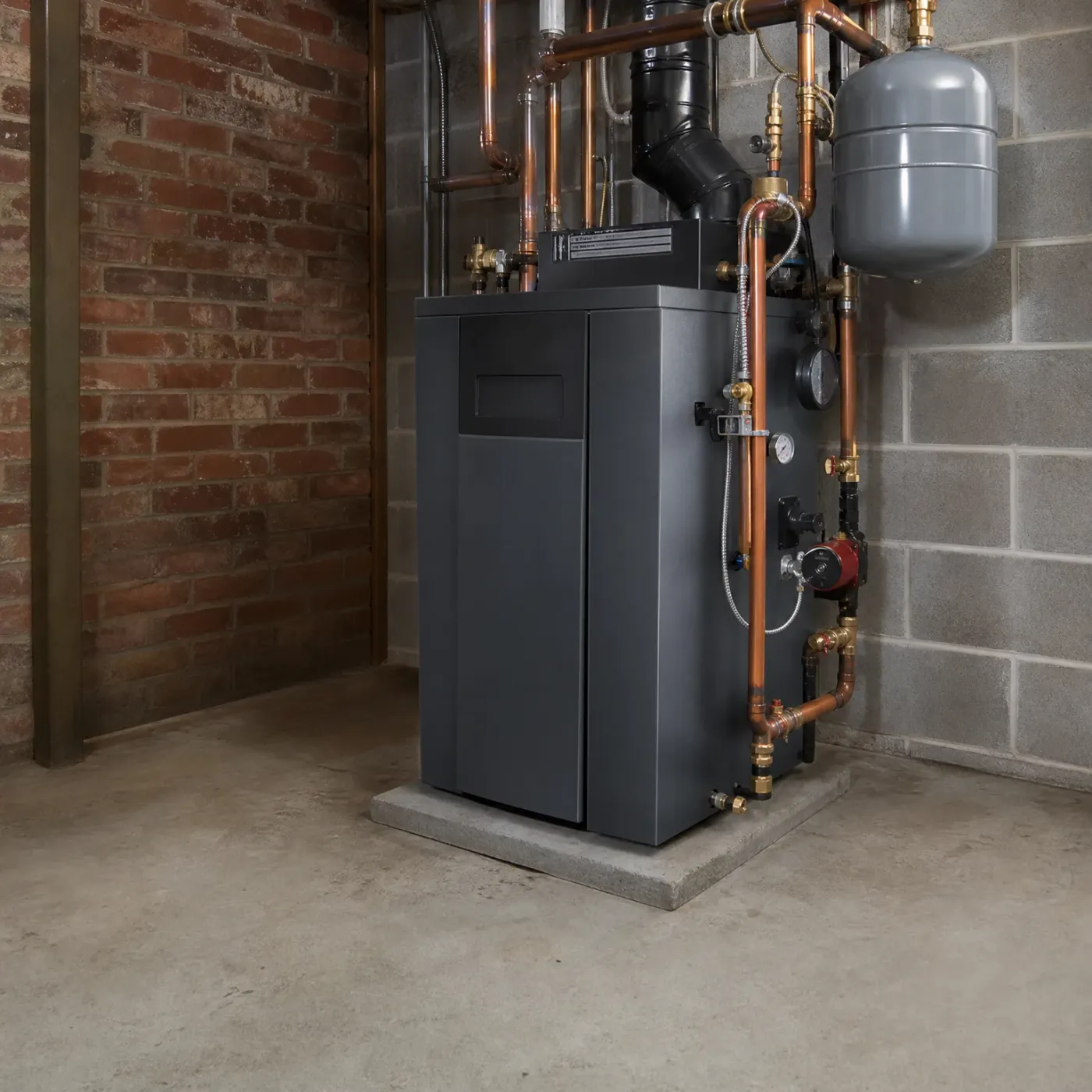
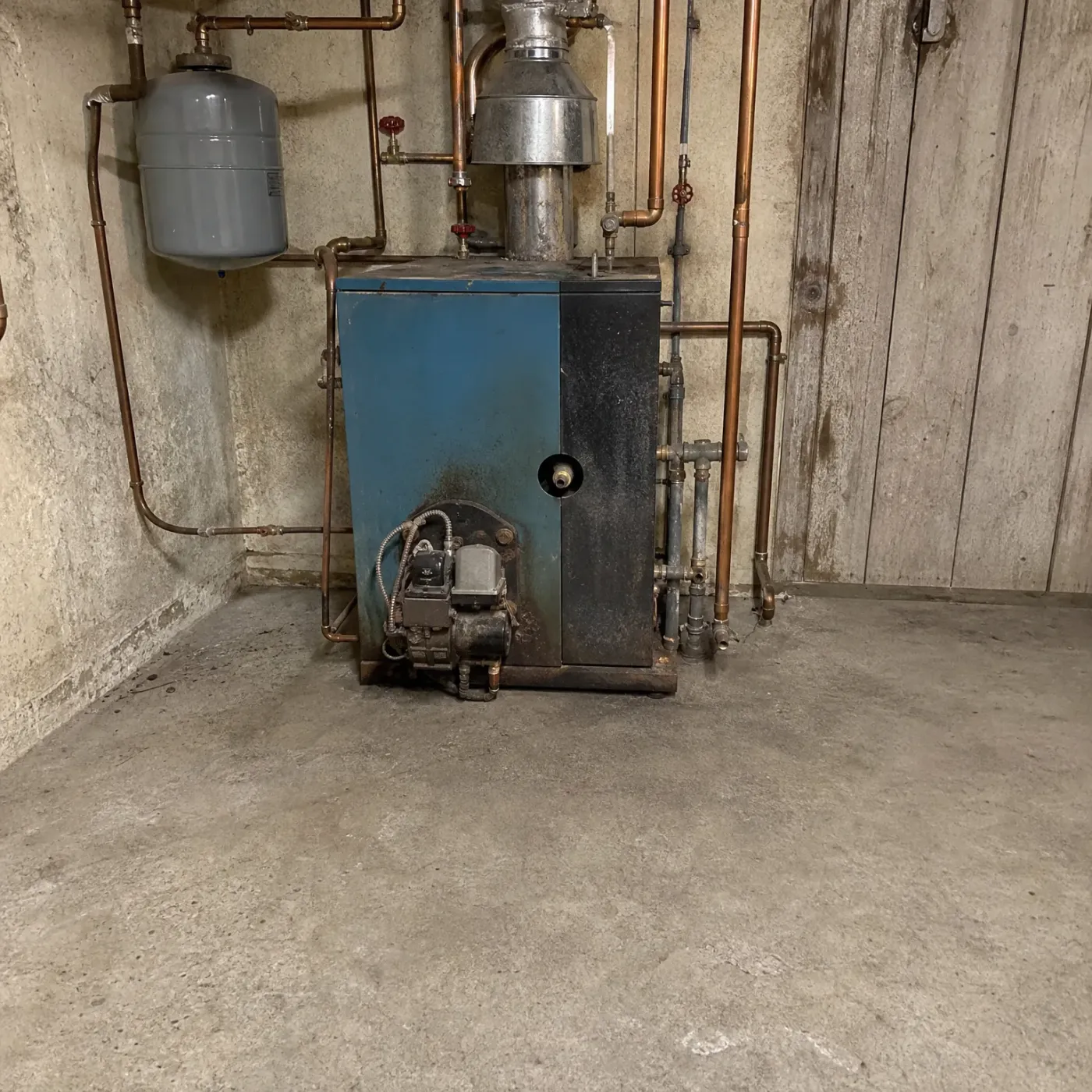
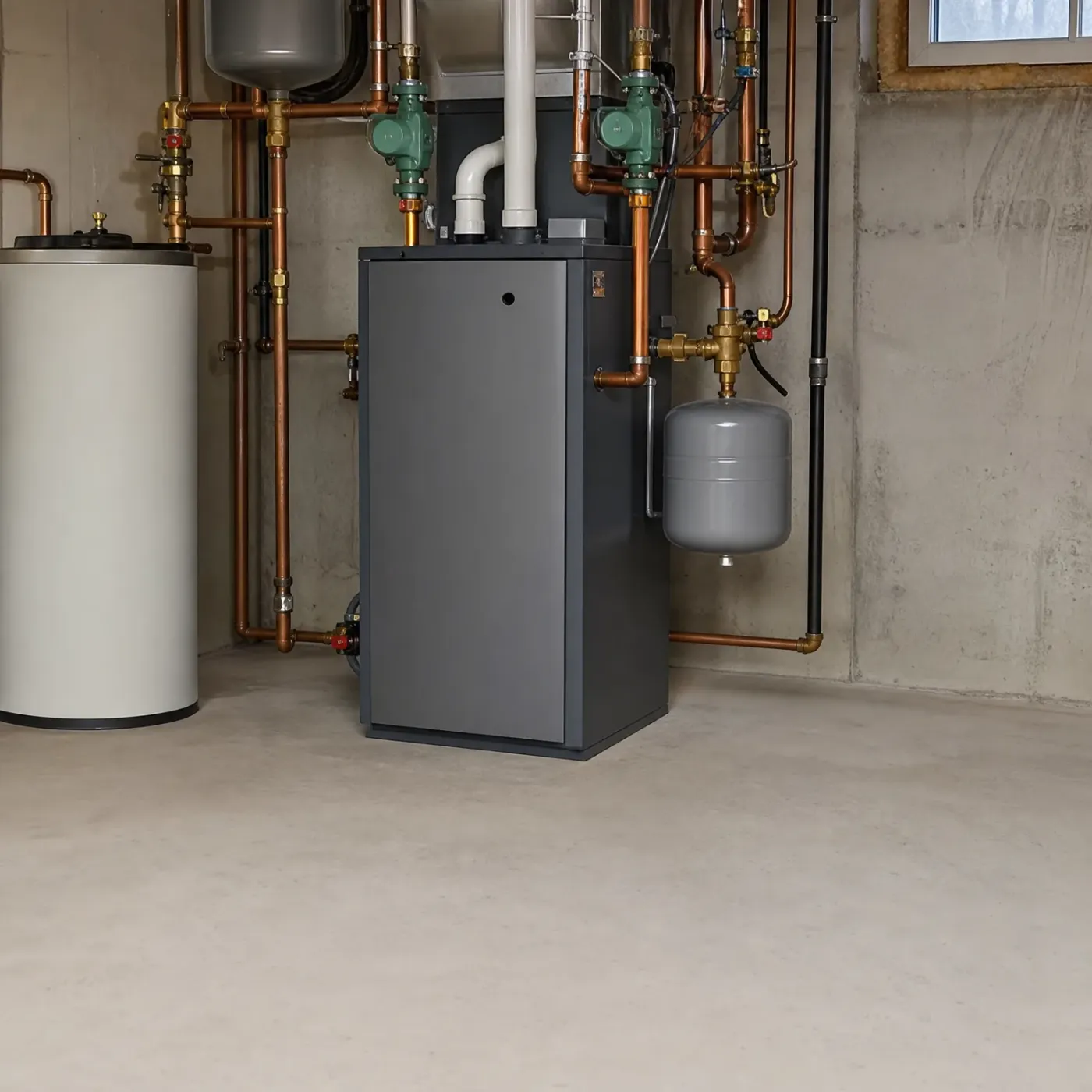
A high-efficiency boiler squeezes more heat out of the same flame by cooling the exhaust before it leaves the building. That's the whole trick. Cooling it that much turns part of the exhaust to water, so the unit needs a drain for condensate, something a cast-iron boiler never had. Because the exhaust runs cool, it goes out through PVC pipe instead of a metal flue, with a small inducer fan pushing it out one pipe while pulling combustion air in through another. Inside, the gas valve modulates, meaning it can fire low on a mild day instead of running full blast and shutting off. Some models carry an outdoor sensor that checks the temperature outside and tells the boiler how hot the water actually needs to be. None of this runs through cast iron anymore. Condensate is mildly acidic, so the heat exchanger is stainless steel or aluminum, built to hold up to it season after season.




An old boiler burns 20 cents of every dollar without heating your house. A 95% model turns almost all of it into heat moving through your pipes or ducts.
A chimney-vented boiler keeps pulling warm basement air up the flue even when it's not firing. A sealed, PVC-vented unit stops that loss for good.
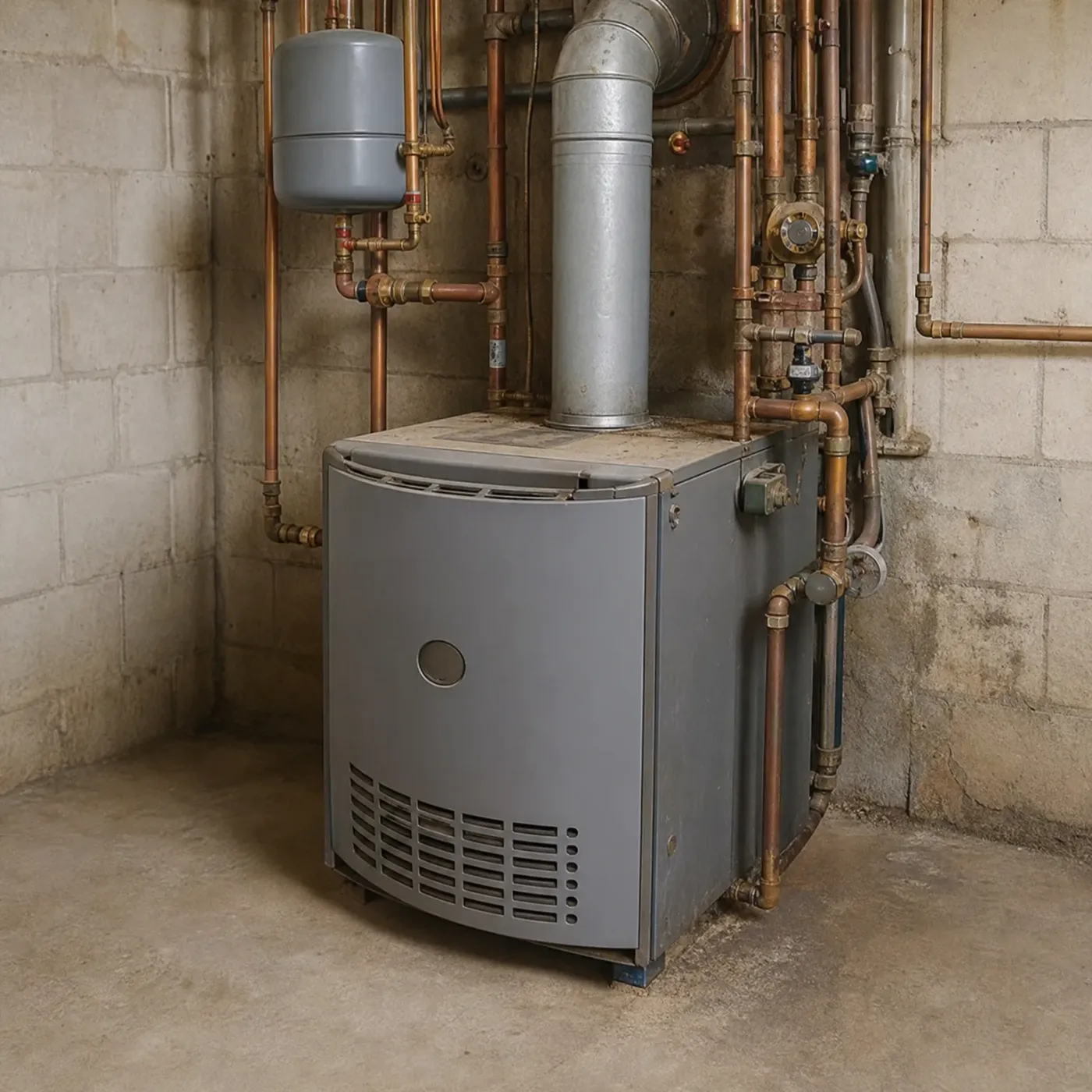
Go stand near your boiler. If it's an old cast-iron unit, you'll likely feel warm air pulling past you toward the chimney, even between cycles. That's heat you paid for leaving the house. You might also notice the basement runs warmer than the rest of the house all winter, or that the flue pipe stays hot to the touch long after the burner shuts off. Check your gas bill against last January's. If it climbed again with no change in how you set the thermostat, the boiler is likely losing more of each therm than it used to. None of this means the boiler is failing. It means a good share of what you're paying for is going up the chimney instead of through your pipes.
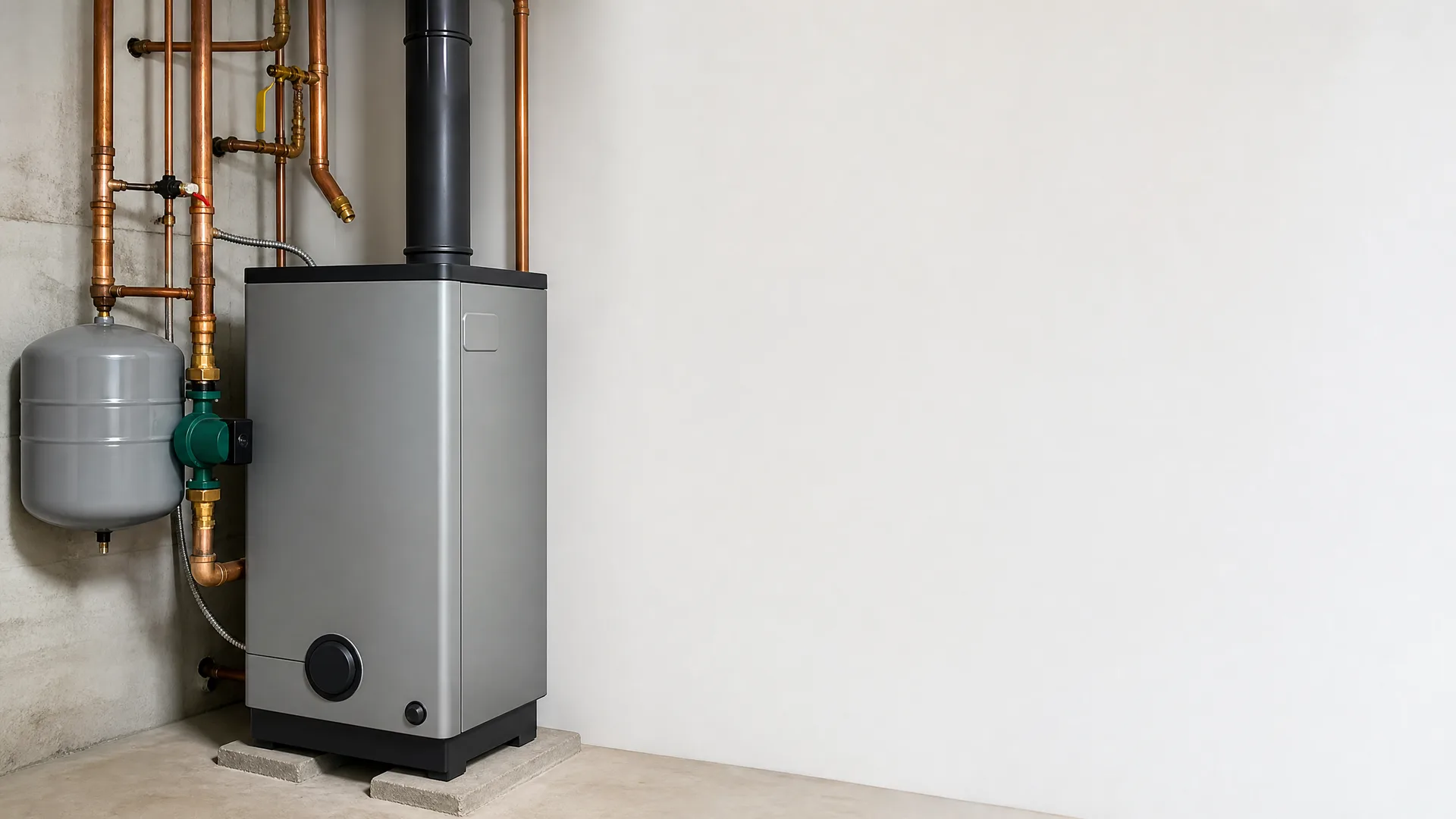
An old cast-iron boiler can run for decades if it's cared for, and plenty of Wisconsin basements still have the original unit doing fine. Nothing forces you to replace it the day it hits 80% efficiency. If the heat exchanger isn't cracked and the contractor servicing it says the iron is sound, you can keep feeding it gas through another winter and decide again next fall.
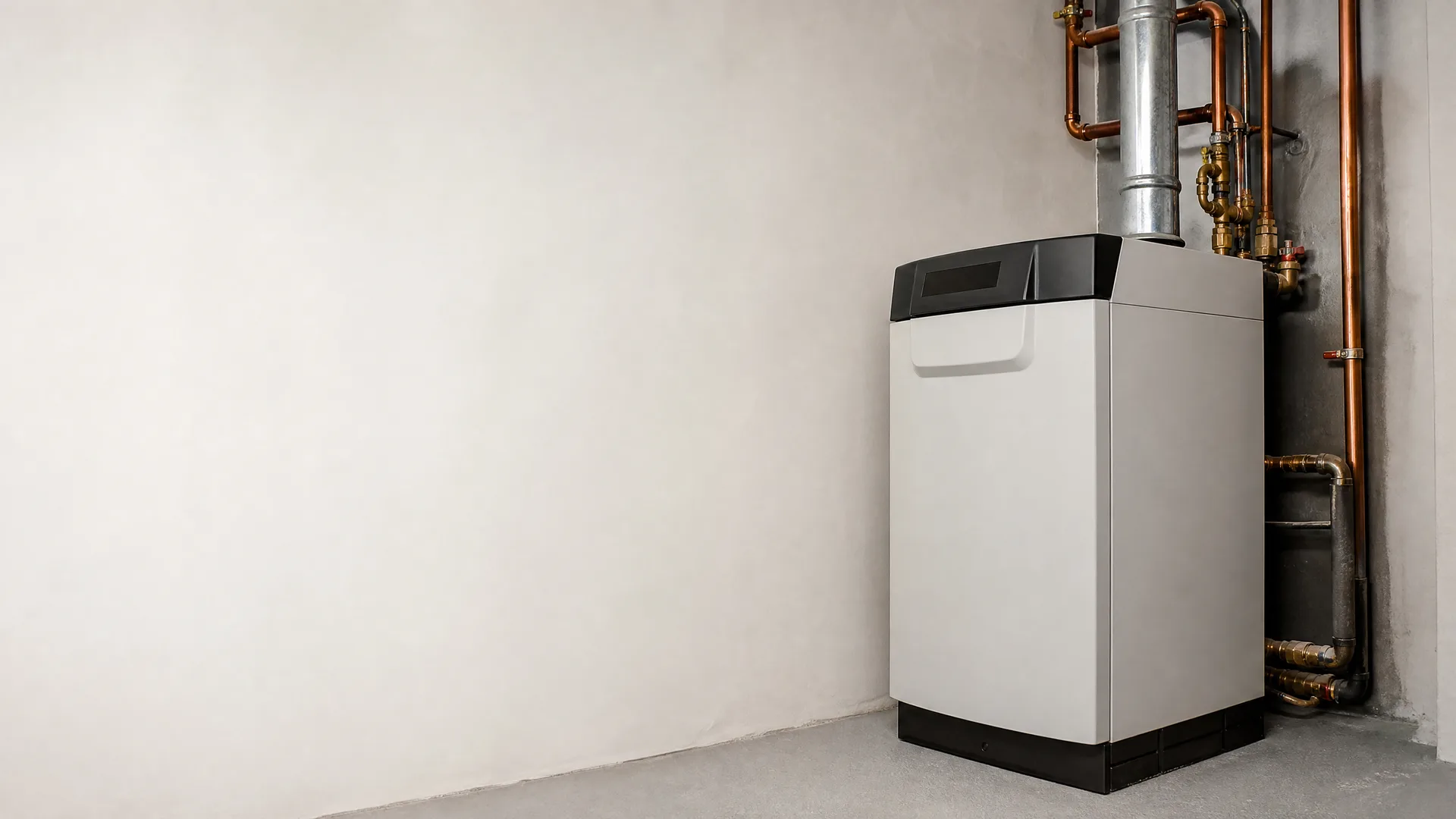
A boiler installed now runs at 95% or better instead of 80%, and that difference shows up every month gas is burned, which in Wisconsin is most of the year. Replacing on your schedule also means you pick the unit and the timing, instead of choosing in February with no heat and whatever's in stock. A local contractor who installs these every season can size it right for your house the first time.
At 13°F, your boiler is cycling on most of the night, not just kicking on now and then. That's a long stretch for a chimney-vented unit to be pulling heated basement air up the flue while it runs. A sealed, high-efficiency model loses far less of that heat to the outside air it's burning.
NOAA nClimDiv 1991-2020 county normals weighted by homes
Only one pro gets your request, so you hear from one company.
No charge to send it. You decide if you hire them.
Cold water enters the boiler and splits toward the heat exchanger.
A modulating burner fires and heats water passing through the primary exchanger.
A second, stainless exchanger pulls more heat from the exhaust before it vents.
Cooled exhaust gas condenses into water and drains out through a hose.
You've probably noticed your old boiler only has the one big cast-iron exchanger, so when you hear a high-efficiency model has two, it sounds like extra machinery that could mean extra trouble. It's worth knowing what the second one is actually doing before you decide it's unnecessary complexity.
The first heat exchanger does what your old boiler's single exchanger does: it pulls heat out of the burner flame and into the water. The exhaust leaving that first exchanger is still hot, somewhere around 300 to 350 degrees in a standard boiler, and all of that heat goes straight outside. The second exchanger sits in the path of that exhaust before it reaches the vent pipe and pulls more heat out of it, cooling it down to near 100 degrees. That's the difference between losing 20 cents on the dollar and losing almost none of it. It's also why the exhaust needs PVC pipe instead of metal. Metal flue pipe can't handle exhaust that cool and that wet.
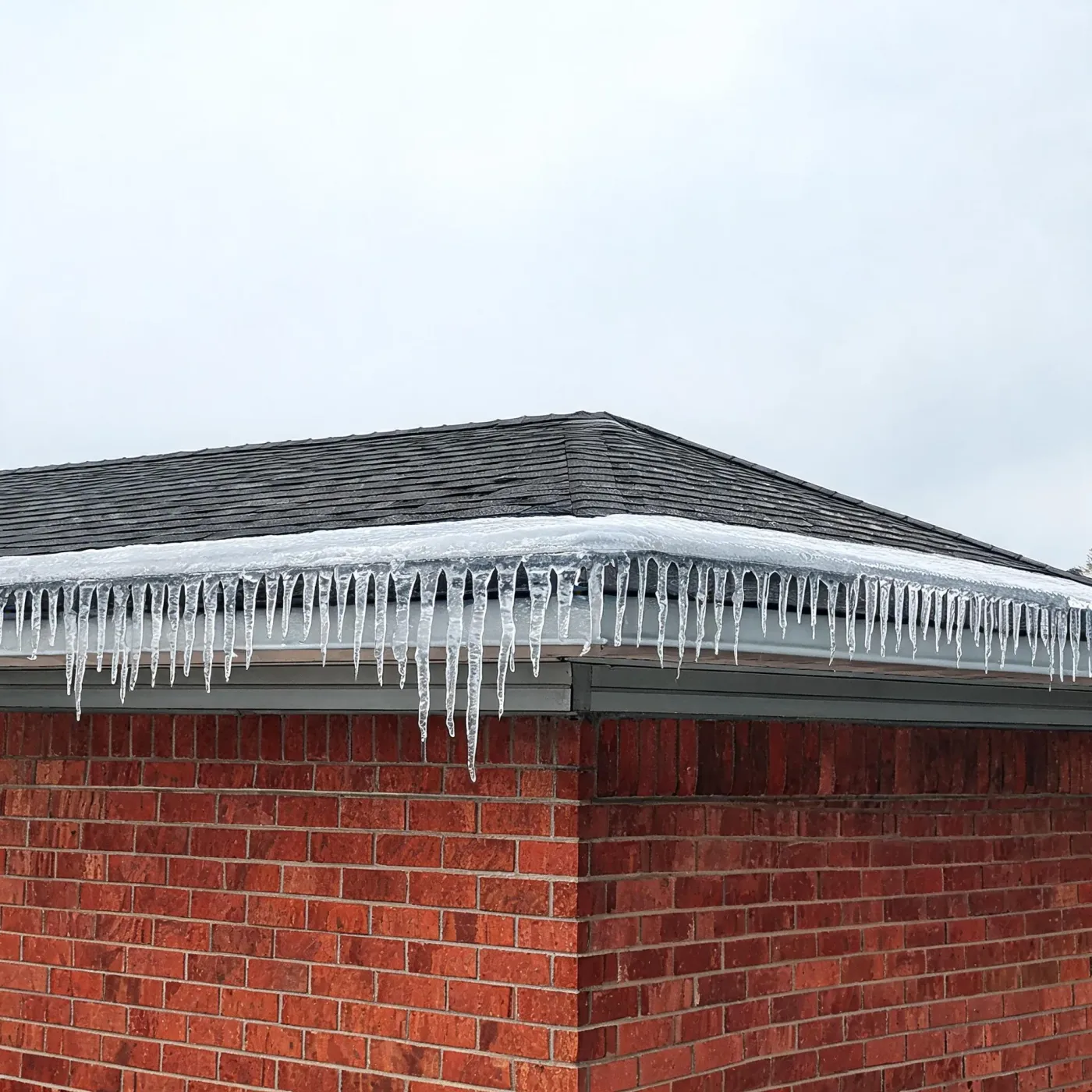
13°F is the average winter night across Wisconsin, and that's the temperature your boiler is working against for hours at a stretch, not just at the coldest point before dawn. At that temperature a boiler doesn't short-cycle, it settles into long, steady runs to hold the house. An old unit pulling combustion air from the basement and venting it up a chimney is losing warmth the whole time it runs, not just when it fires. A sealed, high-efficiency unit holds onto more of that heat on the same cold night. Source: NOAA climate data.
NOAA nClimDiv 1991-2020 county normals weighted by homes


A high-efficiency boiler is worth it for most Wisconsin homes, because most homes here burn gas all winter and that's where the 80% to 95% difference adds up. You won't see that number on the unit. You'll see it in a basement that doesn't run warm near the boiler anymore and a flue that isn't pulling heated air up the chimney between cycles. None of that means the old boiler has to go today. If the cast iron is sound and the water chemistry has been decent, it can keep running, and nothing about hitting 80% efficiency forces a decision on its own. What usually forces it is the exchanger cracking, and at that point almost every home here replaces with a high-efficiency model rather than another cast-iron unit, because the cast-iron ones are getting harder to source and the payoff on the new one is already proven. The part that's harder to judge from your side of it is whether your boiler is actually close to that point or has years left. That's where a local contractor earns the call, someone who's been inside Wisconsin basements all winter and has seen enough old boilers to know which cracks mean patch it and which mean it's done. Send one request and one contractor looks at your system, checks the exchanger and the venting, and tells you straight which side of that line you're on. No guessing from a basement photo, no competing bids pulling you five directions before you've even decided what you need.

There's no charge for the request.
Every cold night your old boiler spends pulling heated air up the chimney is money you won't get back. Sending the request costs you nothing, and once it's in, finding the right local contractor stops being something you have to chase down yourself.