Explain it one time
What your boiler pressure should be in Wisconsin
Most boilers want 12 to 15 psi cold, and that number creeps up once the system's running. If your gauge is sitting outside that range, this page walks through what it should read and why it moves. Skip the search for a boiler tech in your area, the back and forth calls, and the quote comparing. One licensed Wisconsin contractor who services boilers all winter can take it from here.
Start one formA cold boiler should read 12 to 15 psi on the gauge. Once it fires up and the water heats, that number climbs a bit, usually to somewhere between 15 and 20 psi, because heated water expands and pushes the needle up. If your boiler sits well below 12 when cold, it's lost water somewhere or the feed valve isn't doing its job, and you'll likely hear banging in the pipes or find rooms that won't get warm. If it sits above 20 even when the system first kicks on, the pressure relief valve may start venting water on its own. In a Wisconsin winter, a boiler running low on pressure struggles to push hot water through every radiator in the house, and the rooms furthest from the boiler feel it first. Checking the gauge every so often during the cold months tells you whether the system is holding steady or slowly losing ground.




The gauge has two needles on most boilers, one fixed and one that moves. The fixed one gets set to show the correct cold pressure, so you can glance at it and see right away if the moving needle has drifted off where it should sit.
Pressure that keeps dropping below 12 usually means water is leaving the system somewhere, through a valve, a fitting, or the expansion tank, and it won't fix itself by adding water back in every week.


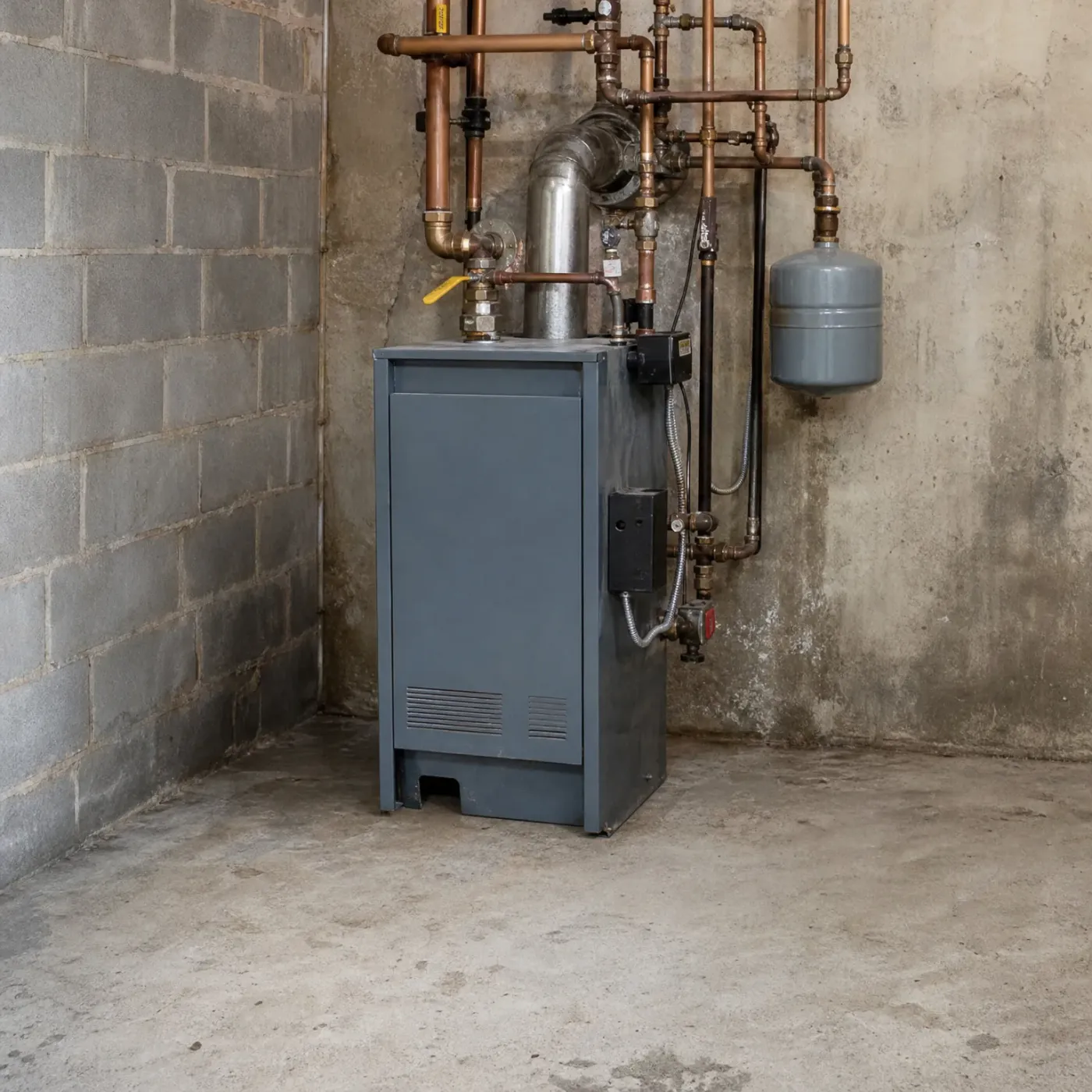
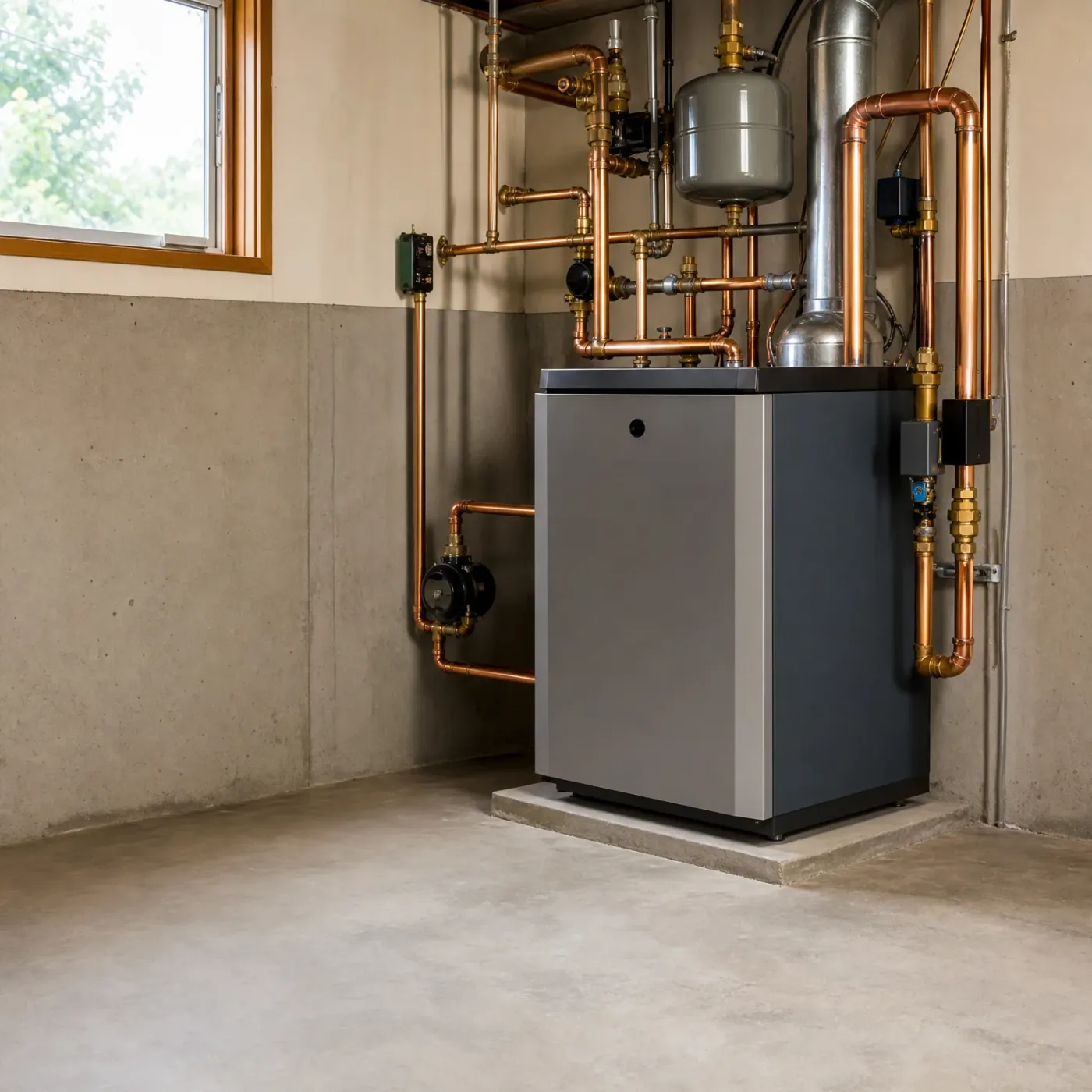
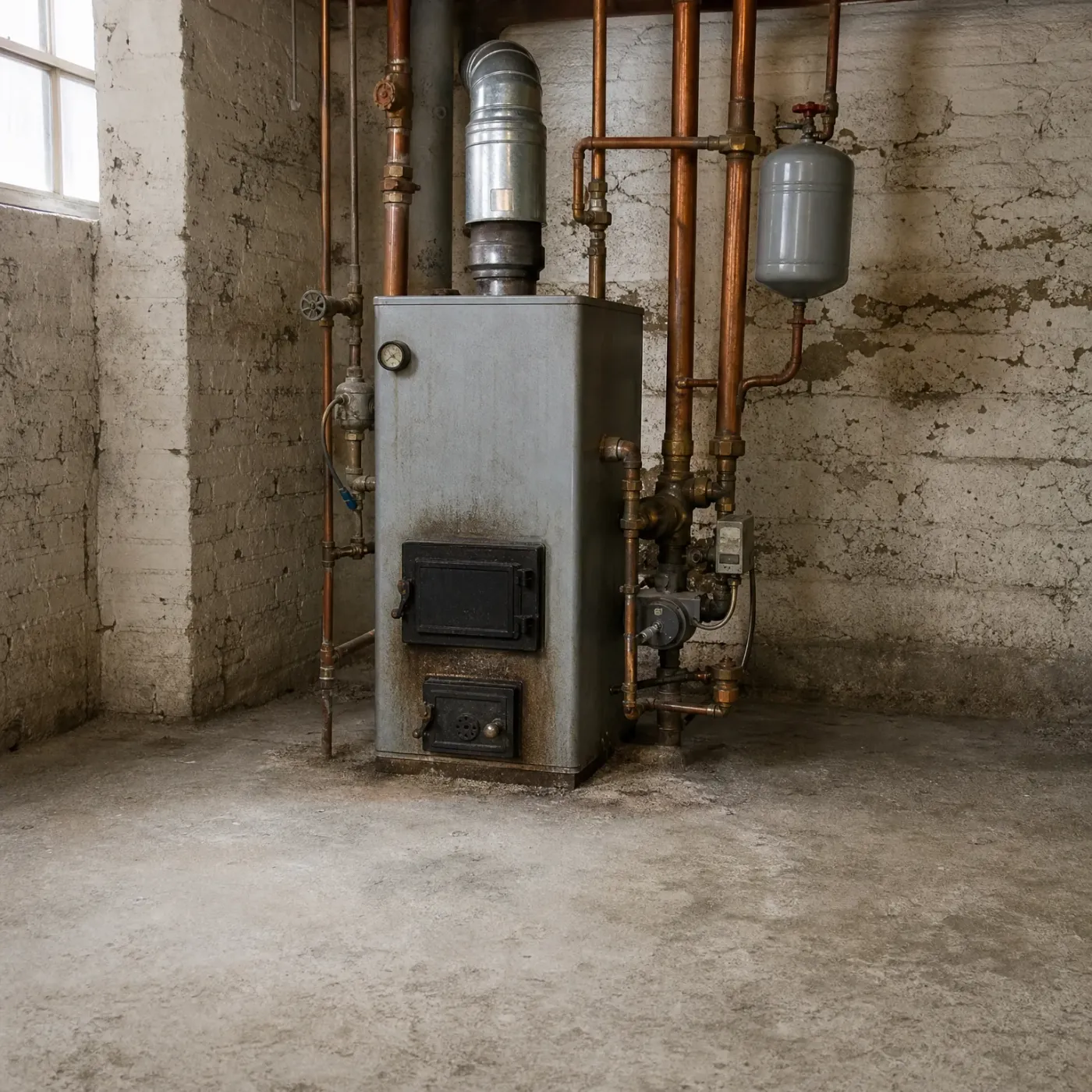
The expansion tank is doing most of the work you don't see. It's a small tank near the boiler, usually mounted on a pipe overhead, with a bladder inside that holds air. As heated water expands, it pushes into that tank instead of spiking the pressure on your gauge. When the bladder fails, that cushion is gone, and pressure starts climbing or won't hold where it should. The relief valve is the backup behind that. It's built to open on its own around 30 psi, and if you find water near it or dripping from the pipe below, something upstream pushed the system past where it should sit. On the other end, the automatic fill valve brings pressure back up after you bleed a radiator or drain a zone for service. That's normal and expected. What's not normal is pressure that drops on its own over a week or two with nobody touching a valve. That points to a slow leak in the piping somewhere, not a faulty gauge.
What's Behind the Gauge
- The expansion tank, usually a small tank near the boiler, holds air that compresses as heated water expands so pressure doesn't spike.
- A bladder failure inside the expansion tank is one of the more common reasons pressure climbs too high or won't hold steady.
- The pressure relief valve opens on its own around 30 psi to protect the system, and water out of it means something upstream is off.
- Feed valve shut, and the automatic fill valve is what brings pressure back up after you bleed a radiator or drain a zone.
- A boiler that loses pressure over a week or two usually has a slow leak somewhere in the piping, not a bad gauge.
- Bleeding air from radiators drops pressure slightly each time, so a system with several zones may need small top-offs more often.
Skip the calls to every shop
A boiler that won't hold the right pressure usually needs a hand, not a guess. Figuring out whether it's the expansion tank, a worn valve, or a slow leak somewhere in the lines means someone who has opened up boilers like yours before and knows what tends to go first. Finding that person yourself means searching, calling a few places, explaining the same gauge readings over and over, then weighing quotes against each other while your heat sits there running low or high all winter. That search ends here. One request connects you to a licensed Wisconsin contractor who works on boilers all season, not five companies competing for your callback. With gas heat common here and power costing what it does, a boiler running at the wrong pressure wastes money quietly, month after month, until someone checks it. Hand off the search and get back to a system that holds the pressure it's supposed to.
What Bad Pressure Costs You
- A boiler running low on pressure will shut itself off instead of pushing hot water through the radiators.
- That means cold rooms on a January morning while you figure out why the heat isn't coming up.
- Pressure too high can push water out through the relief valve, and you'll find a small puddle near the boiler.
- Letting it ride at the wrong pressure wears down the valve itself, so a fix today can mean a bigger repair later.
- With gas prices what they are in Wisconsin, a boiler cycling on and off from bad pressure is burning fuel for heat you're not getting.
- A quiet hiss or a damp patch on the floor near the boiler is often pressure trying to tell you something before the gauge does.
Low pressure trips the boiler's safety switch. It shuts down rather than run dry, which protects the heat exchanger, but it also means no heat until someone resets it or finds why the pressure dropped. On a cold Wisconsin morning that's not a small thing. You're checking radiators, listening for the burner, wondering if today's the day it needs a real repair. High pressure takes a different path. It forces water out through the relief valve, and that valve drains to a pipe near the boiler, so what you'll see is a puddle or a wet spot on the floor nearby. Some of that pressure trouble announces itself with a hiss you can hear if you're standing near the boiler when it happens. Ignore either problem long enough and the relief valve itself wears out from constant use, turning a pressure check into a valve replacement. There's also the gas bill. A boiler that short-cycles because the pressure is off burns fuel lighting the burner over and over without ever settling into a steady run, and in a state where gas heats most homes and power costs what it does, that adds up over a winter. None of this needs to turn into an emergency. A gauge reading outside 12 to 15 psi cold is something you can catch on a Tuesday evening, before it becomes a Saturday morning with no heat and a call you didn't plan on making.

Cold water fills the system and the gauge reads 12 to 15 psi
The boiler fires and the water inside starts heating up
Heated water expands and pushes against the expansion tank's air cushion
The tank absorbs that expansion so pressure rises only a few psi
Winter nights average 13°F statewide
At 13°F, your boiler is working through most of the night to keep rooms warm, which means more cycles on and off. Each cycle puts a little more strain on the pressure holding steady, so a gauge that's already drifting is more likely to show it on a cold night like that.
NOAA nClimDiv 1991-2020 county normals weighted by homes

12 to 15 psi cold, and a gauge worth a second look
That's the number. Fill cold to 12 to 15 psi, watch it settle higher once the water heats, and know that a reading well outside that range is telling you something before the radiators go cold. You've read the gauge now. What it needs is someone to open the system up and find out why it's sitting where it is.
That's the part that takes evenings you don't have. Searching for a boiler tech who actually works on units like yours, calling two or three companies, explaining the same thing about the gauge and the radiators each time, then sitting with quotes trying to guess who's right. One request here gets you one licensed contractor local to Wisconsin, someone who services boilers through winters like yours every year and knows what a bad expansion tank or a stuck valve usually looks like on the gauge before they've even opened the panel.

Skip calling around
Only one pro gets your request, so you hear from one company.