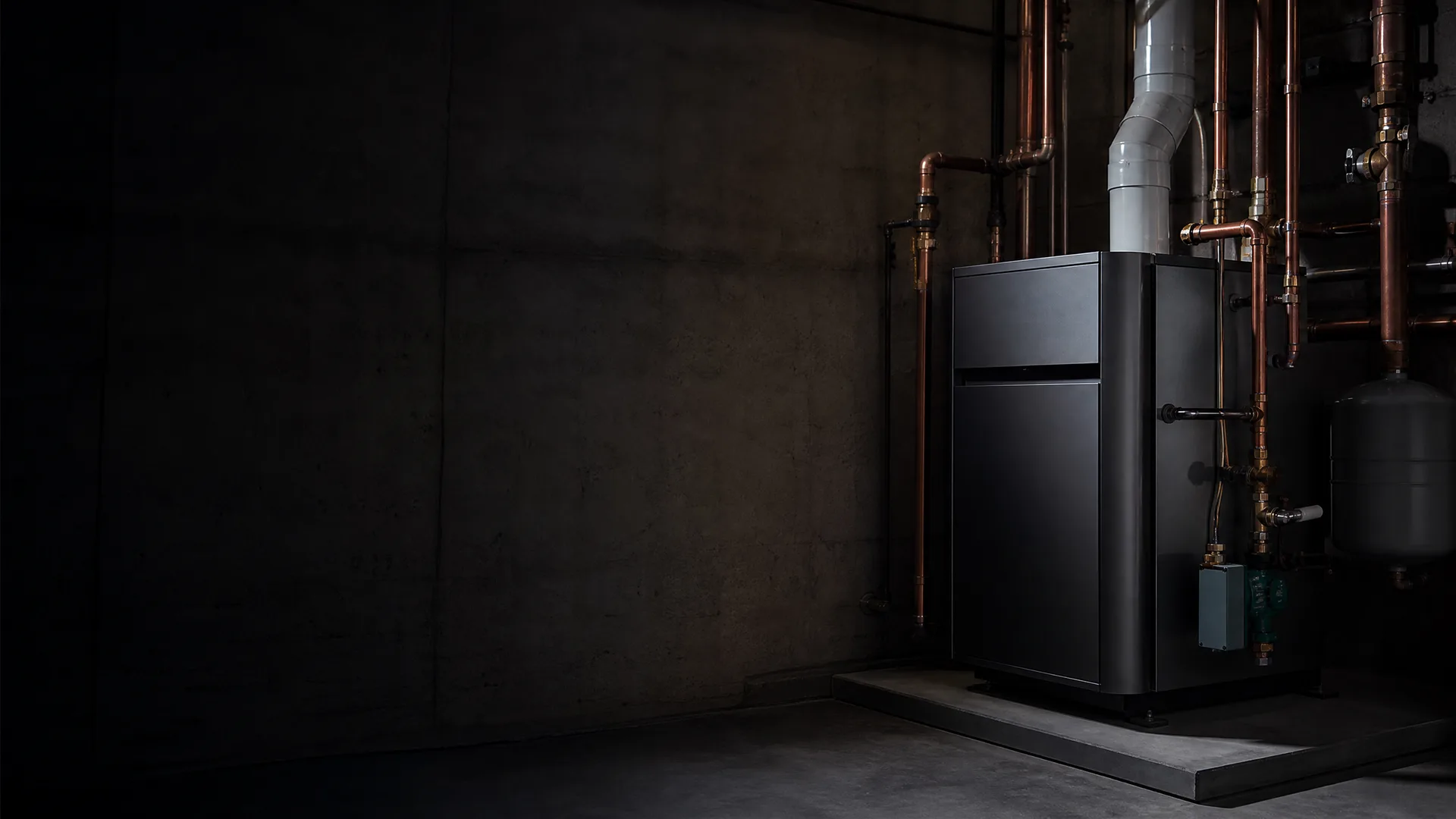
Tell a local repair pro what your boiler is doing.
Water on the floor around your boiler is never nothing. It might be a pressure relief valve doing its job because the system is overfilled, or it might be a crack working its way through the heat exchanger. Either way, a gas boiler running all winter in Wisconsin doesn't stop needing attention just because it's quiet most of the time.
A small leak now is worth checking before January, when that same boiler is the only thing standing between your house and a cold snap. Waiting until it fails outright, on a night when temperatures are low and every other furnace and boiler in the area might be getting serviced too, puts you at the back of a line you didn't need to be in.
With gas heat common across Wisconsin and electricity costing what it does here, a boiler that's losing water is also a boiler working harder than it should. That shows up on the gas bill before it shows up as a breakdown.
You don't have to figure out whether this is a valve, a seal, or something inside the exchanger. That's a judgment call for someone who can look at the pressure, check the water line, and trace where it's actually coming from. What you can do right now is get this in front of a contractor who handles boiler repair in your area and knows what Wisconsin winters ask of a heating system.
Send the details through below. Once that's done, the work of finding someone qualified is off your plate. A contractor who covers your area will follow up, and you can go back to watching the water level instead of wondering who to call.
Why is my boiler leaking water?
You just found water pooling near your boiler and you want to know what's causing it before you decide whether it can wait or needs attention now. Winter here runs on gas boilers keeping the house warm, and a leak feels urgent when the cold outside means you can't just shut the system off and wait. You want to know what part failed and whether it's serious.
A worn seal, a loose fitting, or a cracked tank is leaking water
Most leaks trace to one of a few spots. The pressure relief valve lets water out when the system holds too much pressure, and that's often a sign it's overfilled rather than broken. A circulator pump seal wears out over years of running and starts weeping at the shaft. Fittings and valves loosen slightly as the system heats and cools over and over, each winter adding to the wear. The one that matters most is a cracked heat exchanger or tank, since that part can't be patched and the boiler needs to be replaced. Wisconsin winters keep a gas boiler running for months straight, and that steady cycling is what pushes a weak seal or fitting toward failure.
Running the way it should
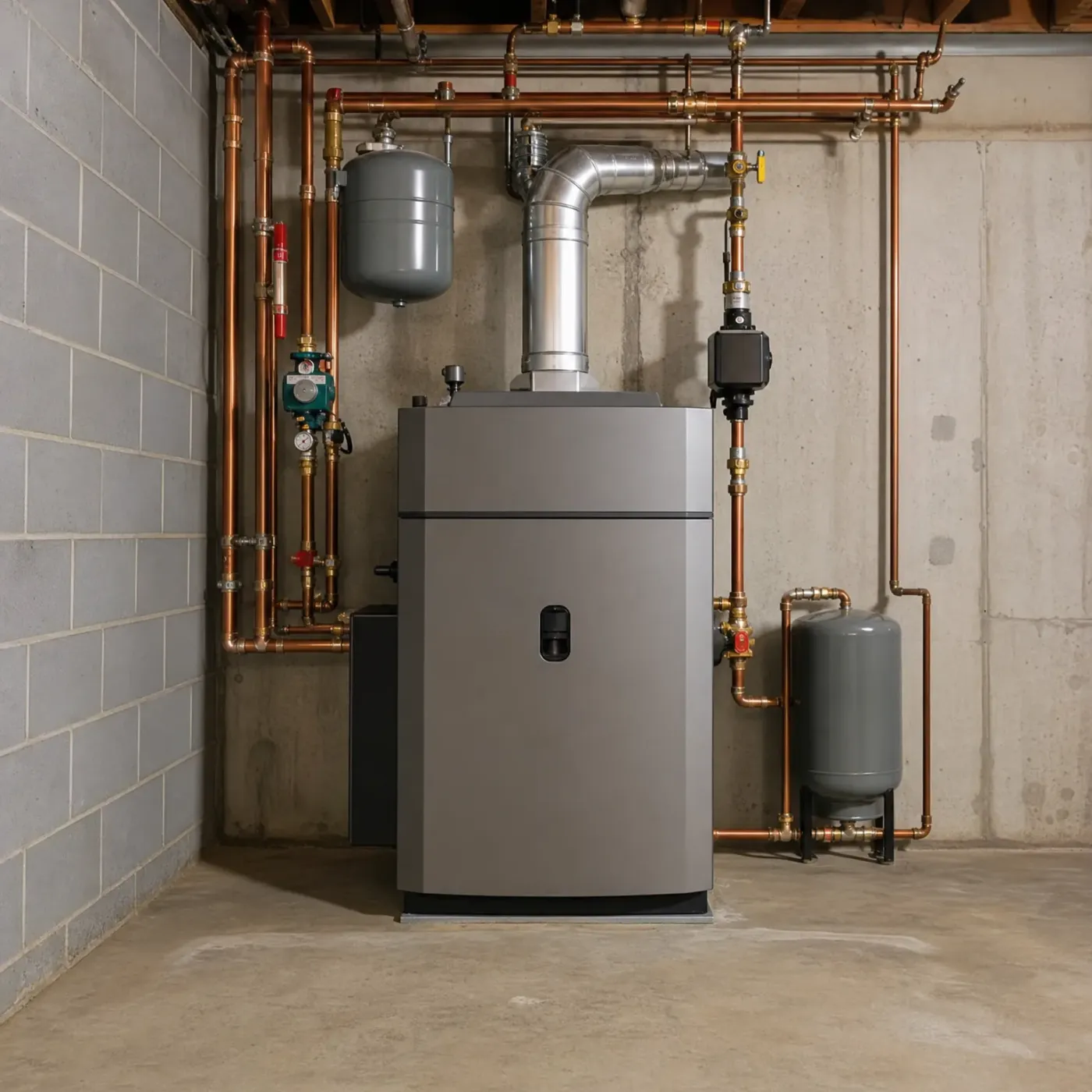
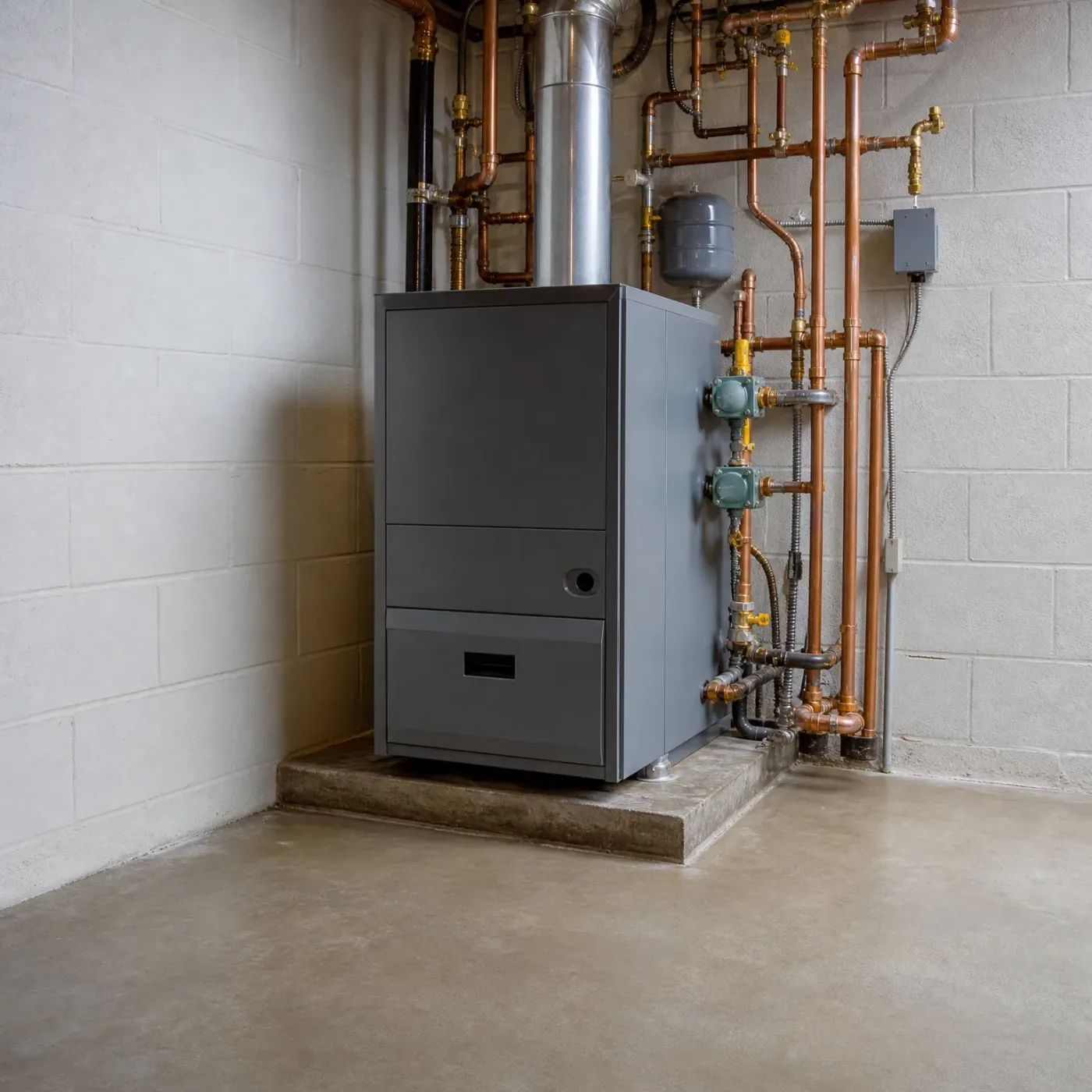
No puddle anywhere near the base. The pressure gauge sits where the manufacturer marks it, the expansion tanks hold their charge, and the pipe fittings stay dry to the touch. This is what a boiler looks like when nothing inside it has failed yet.
Something is letting go
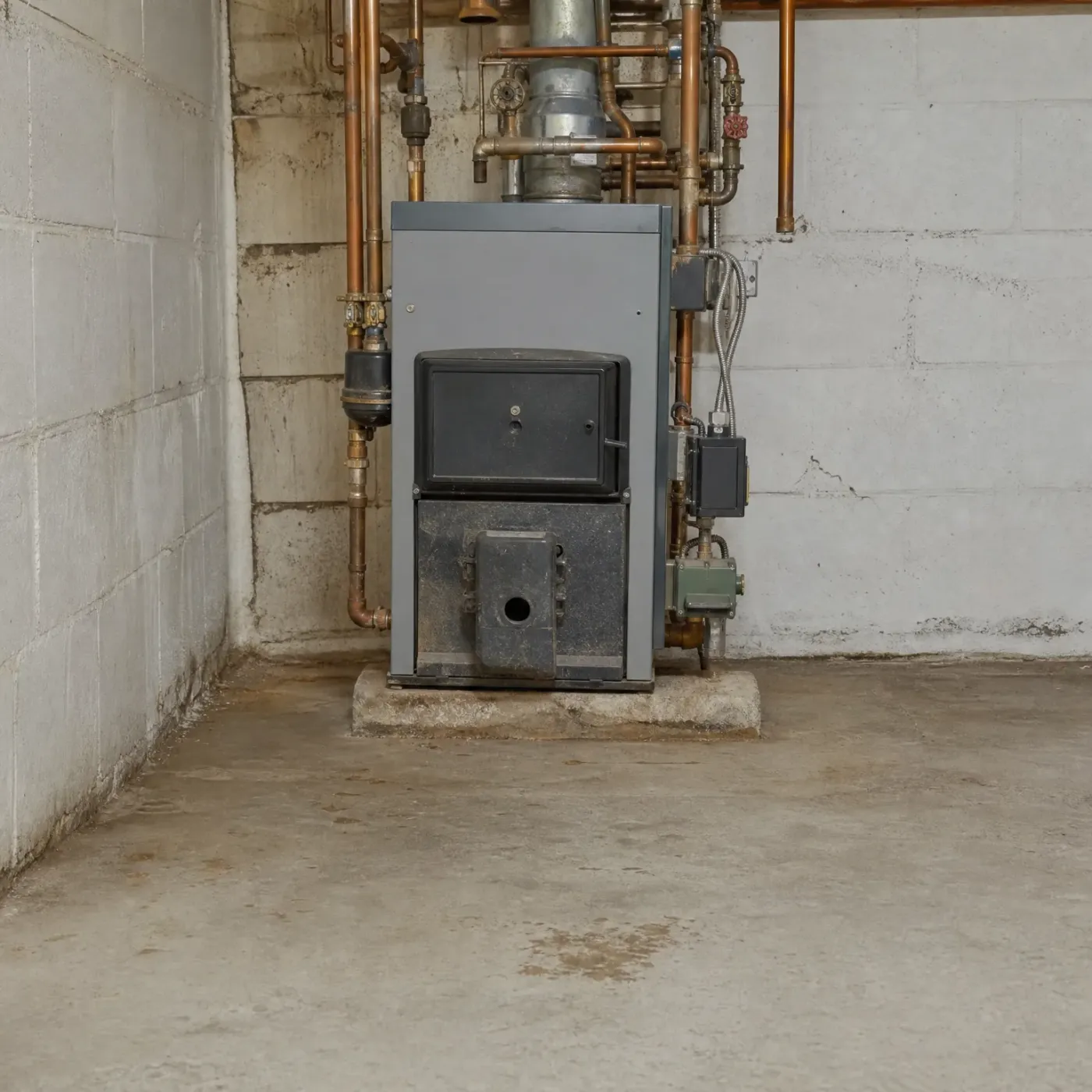
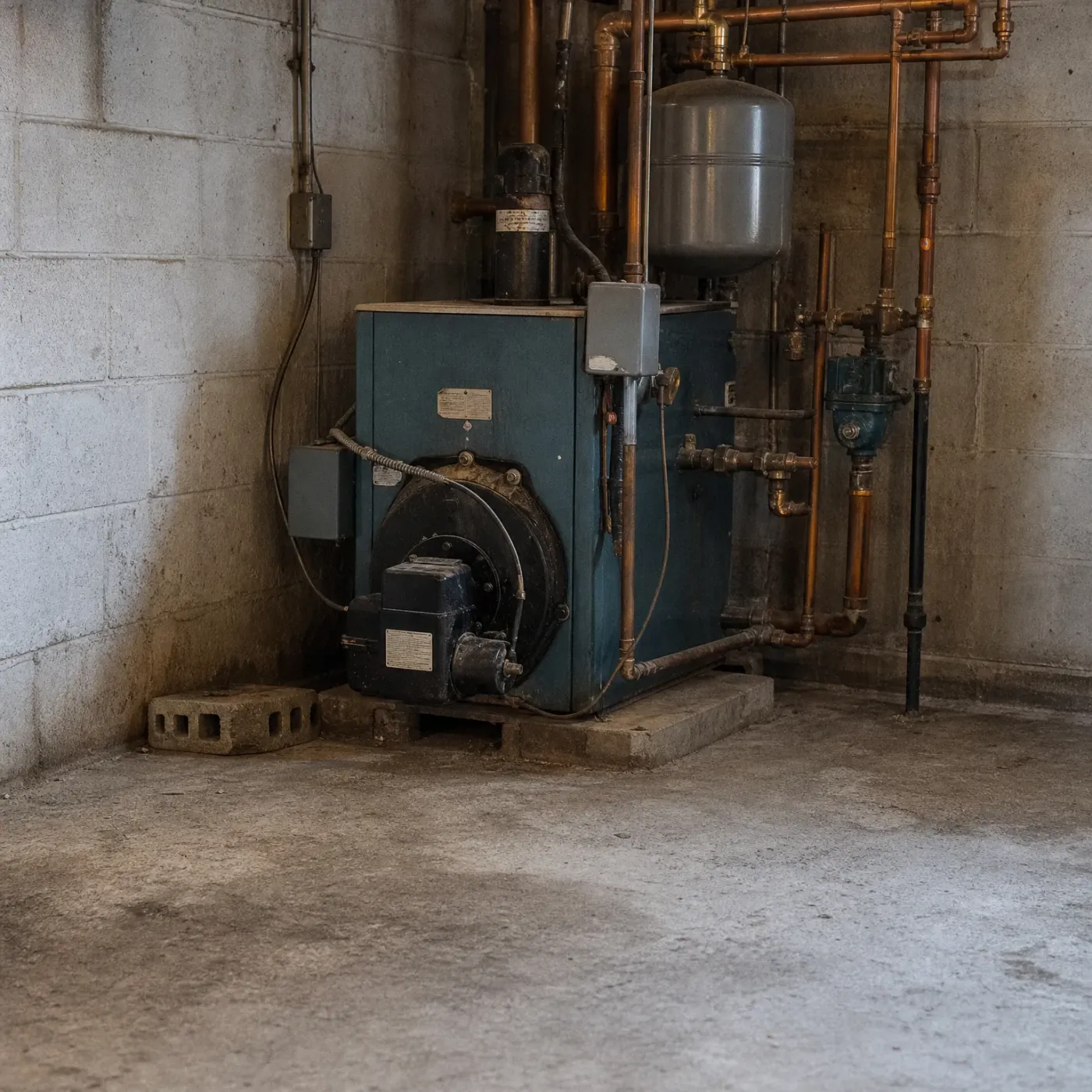
A leak like this usually starts small, a damp spot near a fitting or a valve that weeps when the system fires. Left alone, a loose connection can loosen further, and a crack in the heat exchanger only gets worse. Wisconsin winters don't give a failing boiler much time to wait.
A leaking boiler does not fix itself, and running it while water keeps finding its way out puts more than the floor at risk. That pressure relief valve discharging means something upstream is pushing the system past where it should sit, and left alone it keeps doing that until something gives. A hairline crack in the heat exchanger only widens with another week of heat cycles. Wisconsin winters don't let up once they start, and a boiler losing water is a boiler that can lose heat entirely at the worst time, in a house that gas is keeping warm against real cold. Getting a licensed contractor to look at it now, while you still have the option of a controlled repair instead of an emergency one, is what keeps this a minor afternoon instead of a cold house and a bigger bill. Send the request and let someone who does this for a living take it from here.
Most leaks trace back to one of three spots: the pressure relief valve, a pipe fitting that worked loose, or the heat exchanger itself. The first two are plumbing fixes. The third means the boiler is near the end of its life.
A relief valve or loose fitting gets repaired in a visit. A cracked heat exchanger usually means replacing the boiler, since the part that's failing is the one that holds the heat.
Before you get your boiler repairAfter you get your boiler repair
Pressure is what moves water through a boiler, and that pressure has to stay inside a fairly narrow range. The expansion tank is what keeps it there, giving the heated water somewhere to go as it expands instead of pushing against the relief valve. When that tank's bladder gives out, the relief valve starts doing the job the tank was supposed to do, and it opens because the system genuinely is over pressure, not because the valve is faulty. Fittings are a separate problem. They're torqued down tight at installation, but a boiler heats up and cools down every time it cycles, and that constant movement works metal against metal until a joint starts to weep. The feed valve complicates diagnosis either way. It's built to top off water automatically, so a small leak can go unnoticed for weeks while the feed valve quietly covers for it. By the time you see a puddle, the leak underneath it may have been running long before the floor showed it.
How a boiler actually loses water
The pressure relief valve sits near the top of the boiler and opens on its own once system pressure climbs past about 30 psi.
A boiler holds its pressure through a sealed expansion tank, and when that tank's bladder fails, pressure has nowhere to go but out the relief valve.
Pipe fittings tighten with a specific torque when installed, and years of heating up and cooling down can work them loose enough to weep water.
The heat exchanger carries water through metal that expands every time the burner fires, and repeated cycling can eventually open a hairline crack in it.
A leak at a fitting usually shows as a slow drip you can trace to one joint, while a cracked heat exchanger often shows as water pooling underneath with no single visible source.
The automatic feed valve that tops off system water can mask a slow leak for weeks by quietly replacing what's escaping, until it can't keep up anymore.
Water finds your floor
A boiler leak doesn't stay near the base for long. It spreads toward whatever's closest, your flooring, a nearby wall, anything stored in the utility room.
If the leak traces back to a bad expansion tank, pressure has nowhere to go but out. That strain doesn't stop on its own, and it only gets worse the longer the boiler runs.
Your boiler works hardest on the nights that average 13°F, running long stretches to keep the house warm while everyone sleeps. That's exactly when a strained relief valve or a weak fitting gets tested hardest, and a slow leak that seemed minor in October can turn into a bigger problem on the coldest nights.
NOAA nClimDiv 1991-2020 county normals weighted by homes
A boiler leaking water almost always comes down to one of three things: a relief valve releasing pressure it shouldn't have to hold, a fitting that worked loose, or a heat exchanger that's cracked. The first two get fixed. The third means replacement. Either way, the water on your floor is telling you something needs a look before the next cold night asks more of that system than it can give. You don't have to figure out which one it is. Send the form and a contractor who handles boiler repair in Wisconsin takes it from there, checking the valve, the fittings, and the exchanger to find exactly where it's coming from. Once that's sent, it's off your plate. No more wondering if it can wait, no more watching the puddle to see if it grows. Someone who does this for a living takes a look and tells you straight what's wrong and what it takes to dry that floor out for good.
A boiler pro near you
Send the request today and stop worrying about who to call.