Why your boiler makes a banging noise in Wisconsin

Step 1 of 3: Equipment

Why does my boiler make a banging noise?

That banging usually starts right after the boiler kicks on, and it can be loud enough to hear from another room. With the cold stretching from October through April here, you're not going to just live with that sound every night. It helps to know whether it's something that needs a repair call now or something that can wait.

It's almost always kettling, caused by mineral buildup on the heat exchanger

That bang is called kettling. Scale and sediment build up on the heat exchanger over time, and water trapped under that layer flashes into steam pockets that collapse with a knock you can hear through the house. Wisconsin's hard water speeds this up, so boilers here tend to scale faster than in places with softer supply. Left alone, the heat exchanger keeps overheating in spots, and that wears it out well before its time. It's not dangerous in the moment, but it won't fix itself, and running a gas boiler that hard all winter on a part that's struggling costs more to heat the same rooms.

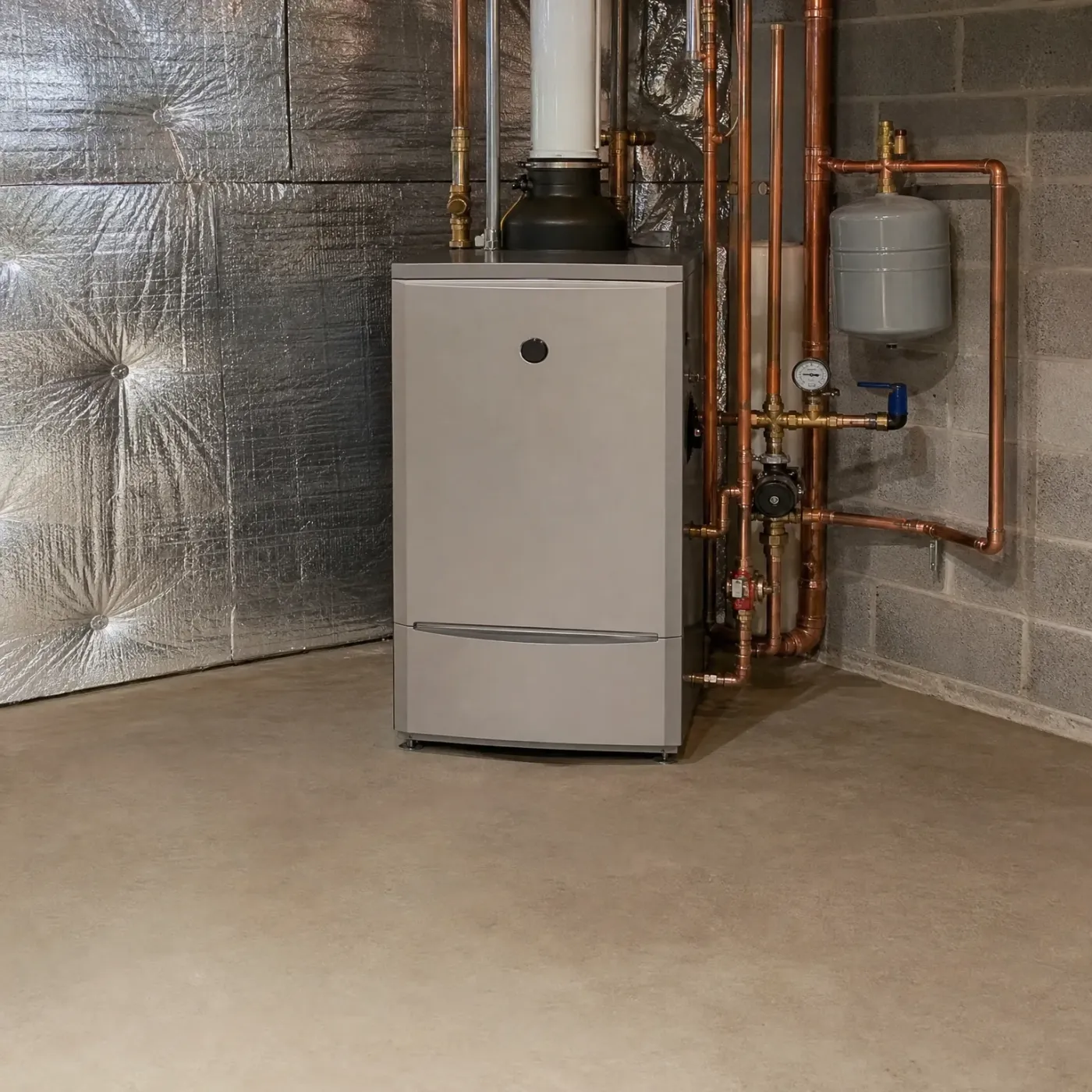
A gray residential boiler in a basement corner with copper piping, a circulator pump, pressure gauge, blue-handled valve and gray expansion tank against a concrete block wall, next to a foil-insulated wall.

Running quiet

A boiler that's heating evenly makes a low hum and a soft tick from the circulator pump, nothing you'd notice from upstairs. Water moves through the pipes smoothly, and the pressure gauge holds steady where it should. That's what the system is supposed to sound like all winter.

A gray boiler on a concrete block base in a basement, with copper piping, a metal flue, and a gray expansion tank mounted beside it against a concrete wall.

Banging and knocking

Trapped water flashing to steam against the walls of an old cast iron or steel boiler makes that bang, sometimes sharp enough to rattle the pipes it's bolted to. It tends to get worse over a Wisconsin winter, not better, especially once sediment builds up at the bottom of the tank.

A woman with dark hair in a bun wearing a cream knit sweater sits on a gray sofa in a bright living room, looking off to the side.
A woman wrapped in a knit blanket sits on a gray sofa in a living room, looking toward a bright window with houseplants and an armchair in the background.
A woman in a gray cowl-neck sweater sits on a light sofa with cushions, smiling and looking to the side, with a kitchen and window visible behind her.
A woman with dark hair in a bun, wearing a light linen shirt, sits on a sofa and looks to the side, with a window, houseplants and a kitchen with pendant lights blurred behind her.

What's causing the bang

Most of the time it's kettling. Mineral scale builds up inside the heat exchanger over years of use, and that layer traps water against the hot metal. The trapped water flashes to steam, and the steam pocket collapses with a bang you can hear through the house. Wisconsin's water varies by well and municipal supply, but any hardness at all adds to that buildup year over year. The other common cause is trapped air in the pipes, which knocks against fittings and elbows as the water tries to push past it. Either way, the noise is the boiler telling you something inside it isn't moving the way it should.

Why it gets worse by January

A boiler running October through April here cycles on and off far more than one running a couple months a year. Every cycle pushes water past that scale or air pocket again, so a bang that started faint in October can be sharp enough to wake someone up by January. Scale also insulates the heat exchanger from the water meant to carry its heat away, so the metal runs hotter than it should, which makes kettling worse the longer it goes uncorrected. A local contractor who services boilers all winter here has heard this exact pattern enough times to know what's building up inside yours before taking it apart.

A gray-haired woman in a cream knit sweater stands in a dimly lit kitchen at night, looking to her right, with a round loaf of bread in the foreground and a dark window and potted plant behind her.
A woman and a child wrapped together in a thick knitted blanket on a sofa, both with eyes closed, with a lit table lamp and houseplant in the dim background.
  1. Mineral scale builds a layer inside the heat exchanger.

  2. Water gets trapped between that scale and the hot metal.

  3. Trapped water flashes into a pocket of steam.

  4. The steam pocket collapses and sends a bang through the pipes.

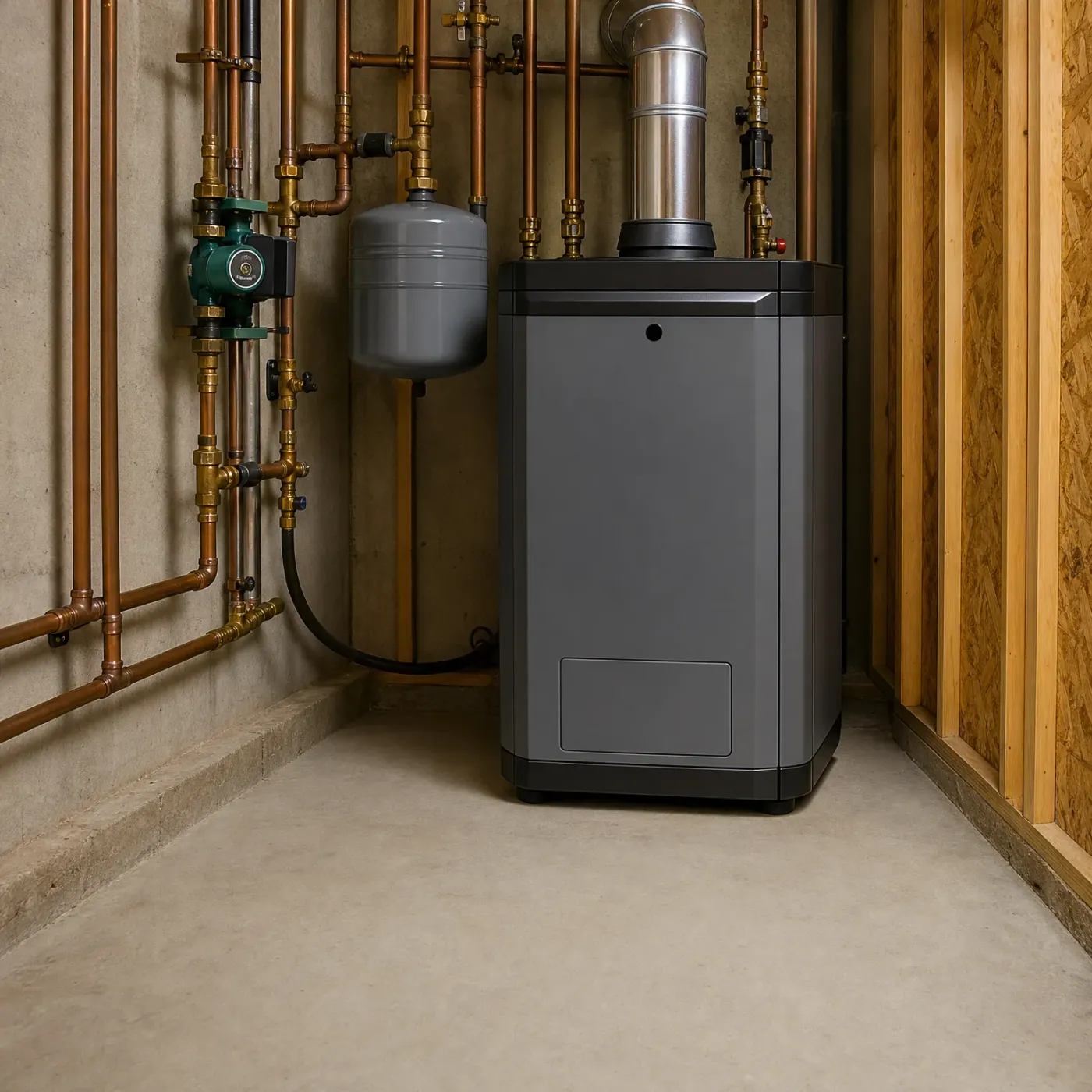
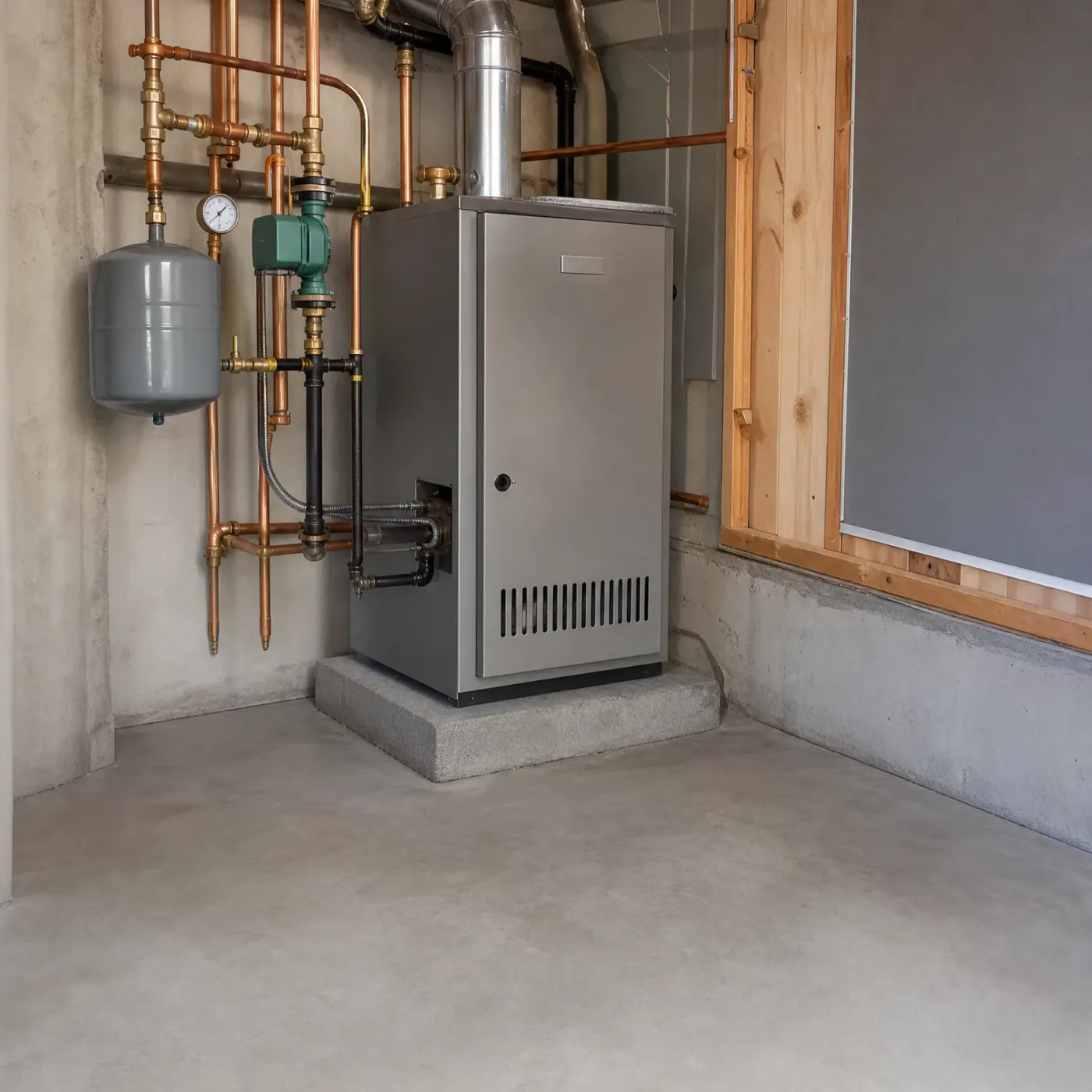
A gray floor-standing boiler with a metal flue pipe stands in a basement corner beside copper piping, brass valves, a green circulator pump, and a gray expansion tank on a concrete wall, with exposed wood framing and sheathing at right.
A boiler like this one is working through its heat cycle without strain, so the pipes and fittings stay quiet.
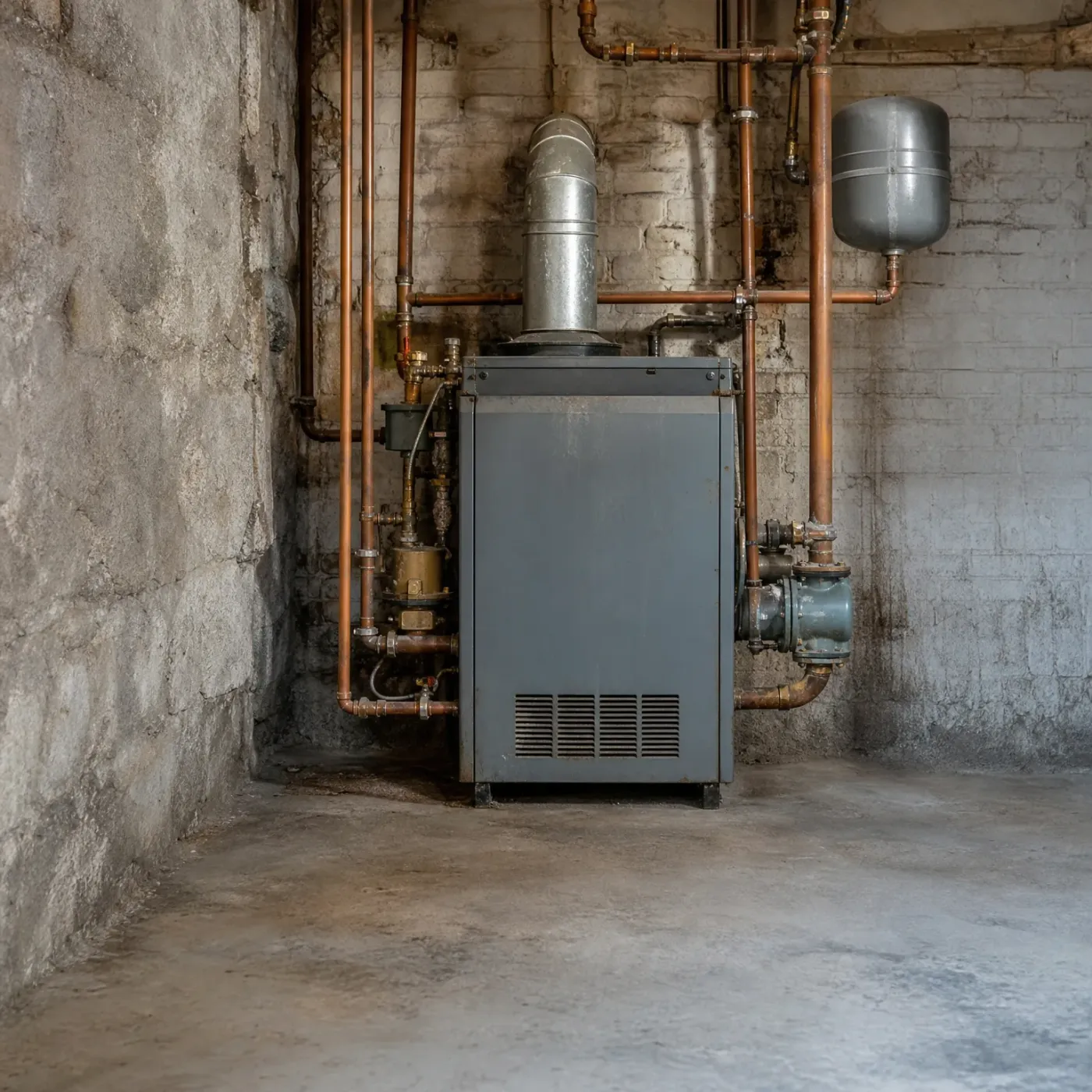
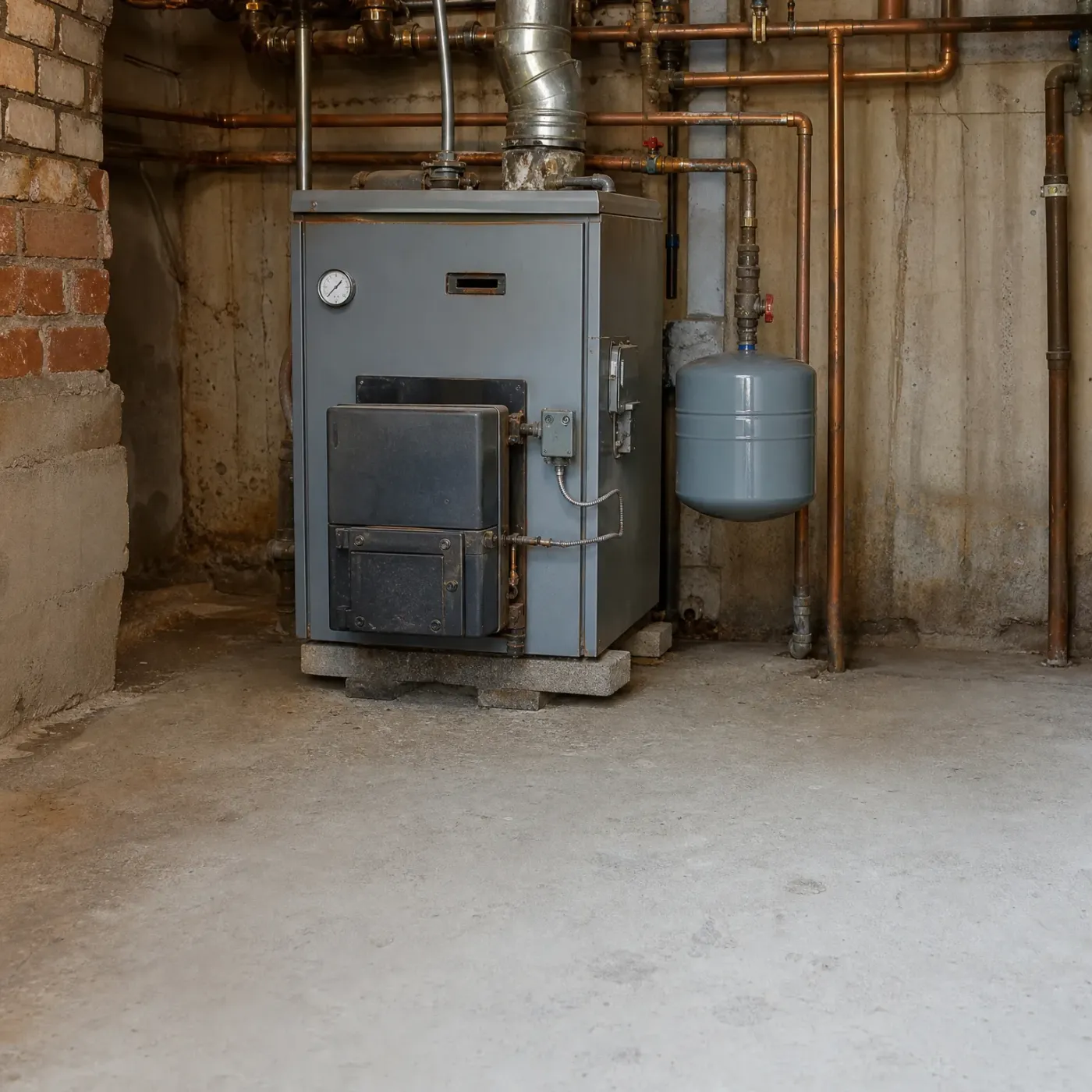
A gray boiler with a metal flue pipe and copper piping stands against a weathered painted brick basement wall, with an expansion tank mounted overhead and a bare concrete floor in front.
Cast iron holds heat well, but scale builds up inside it over the years, and that's when the banging starts.
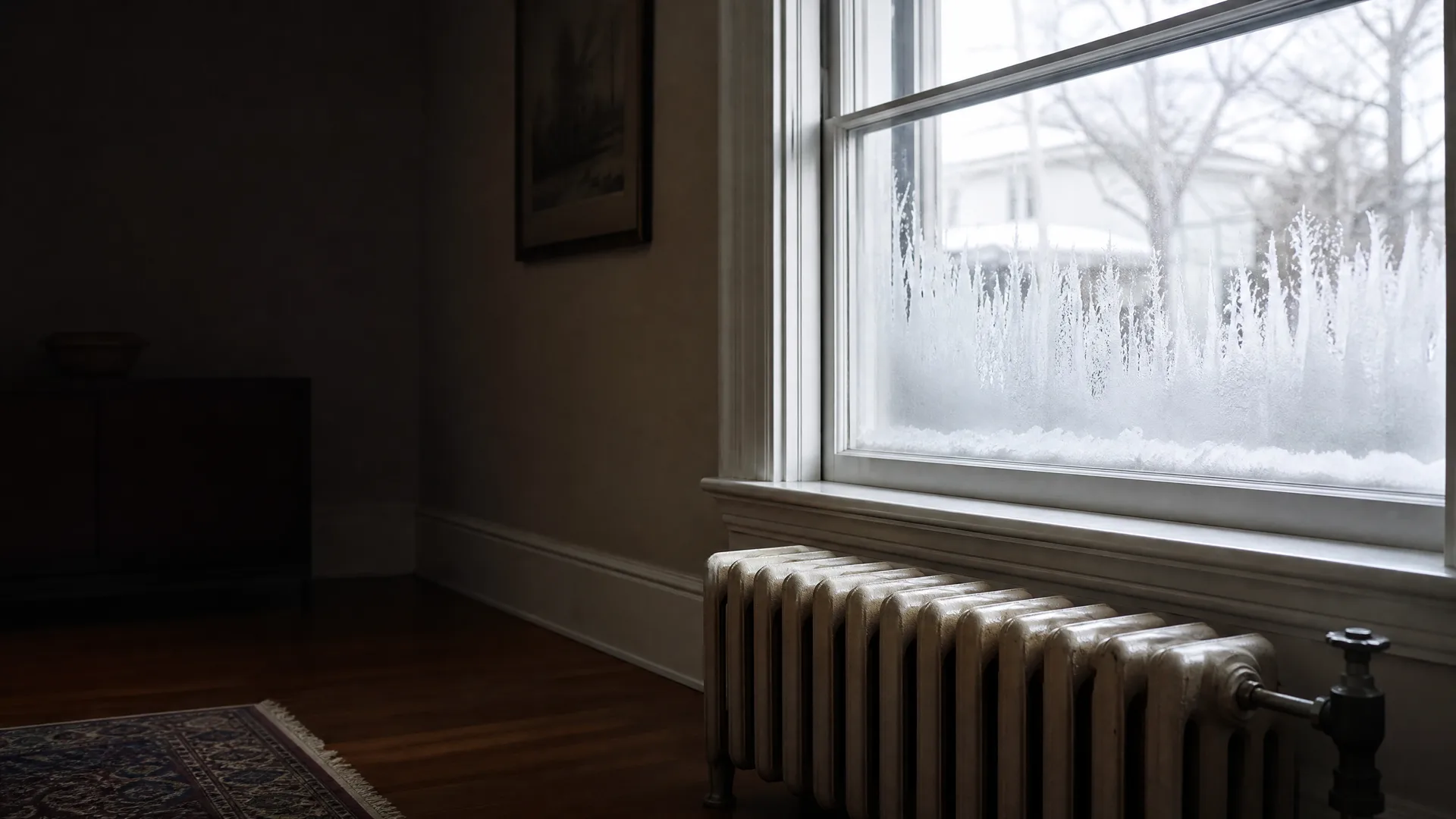
A cast-iron radiator with a valve sits beneath a frost-covered window in a dim room with dark wood floor, a patterned rug, a framed picture, and a low cabinet.

You're up before the house, and the living room is still dark except for the streetlight through the frost. The radiator under the window pops as it heats, the sound rattling off the cold glass. Ice has crept up the inside corners of the pane overnight, the kind that only forms when it's well below freezing out and the glass is the coldest thing in the room. You wait by the radiator with your coffee, listening for the next bang, wondering how many winters that kettling noise has left in this boiler before something in there gives out for good.

Get the right pro for your boiler

That banging gets worse the longer the scale sits in the heat exchanger. It won't go away on its own, and running the boiler through another Wisconsin winter with kettling underway puts more strain on the heat exchanger each time it fires. With gas heating most homes here and power priced the way it is, a boiler working harder than it needs to shows up on the bill before it shows up as a real breakdown. A local contractor who services boilers all winter has likely heard this exact bang in a dozen other houses nearby, and knows whether it's scale, low water flow, or something else in the system causing it. Getting matched with one contractor, someone who works this equipment every season in this climate, means you're explaining your situation once instead of fielding calls from several companies guessing over the phone. Worth sorting out before the cold really sets in and the boiler's running nonstop.

Letting it run as is

Some homeowners keep running the boiler as long as it still heats the house, figuring the noise is just something it does now. The kettling doesn't fix itself, and the scale layer only gets thicker with every cycle. Each winter the bang gets louder and the heat exchanger works harder to push heat through that trapped layer of water and steam. Eventually the exchanger can crack from the repeated strain, and that's a far bigger job than clearing scale out early. With gas prices what they are, a boiler fighting through scale is also burning more gas to do the same work.

Getting the scale cleared

A local contractor who works on boilers can flush the scale out of the heat exchanger before it cracks anything. Someone who services this equipment every Wisconsin winter has seen kettling plenty of times and knows where scale tends to build up first in these systems. Clearing it out brings the banging to a stop and lets the boiler heat the way it did when it was new, without water getting trapped against hot metal. It's a more straightforward repair than waiting until the exchanger fails outright, and it means not spending another cold month listening to the pipes bang.

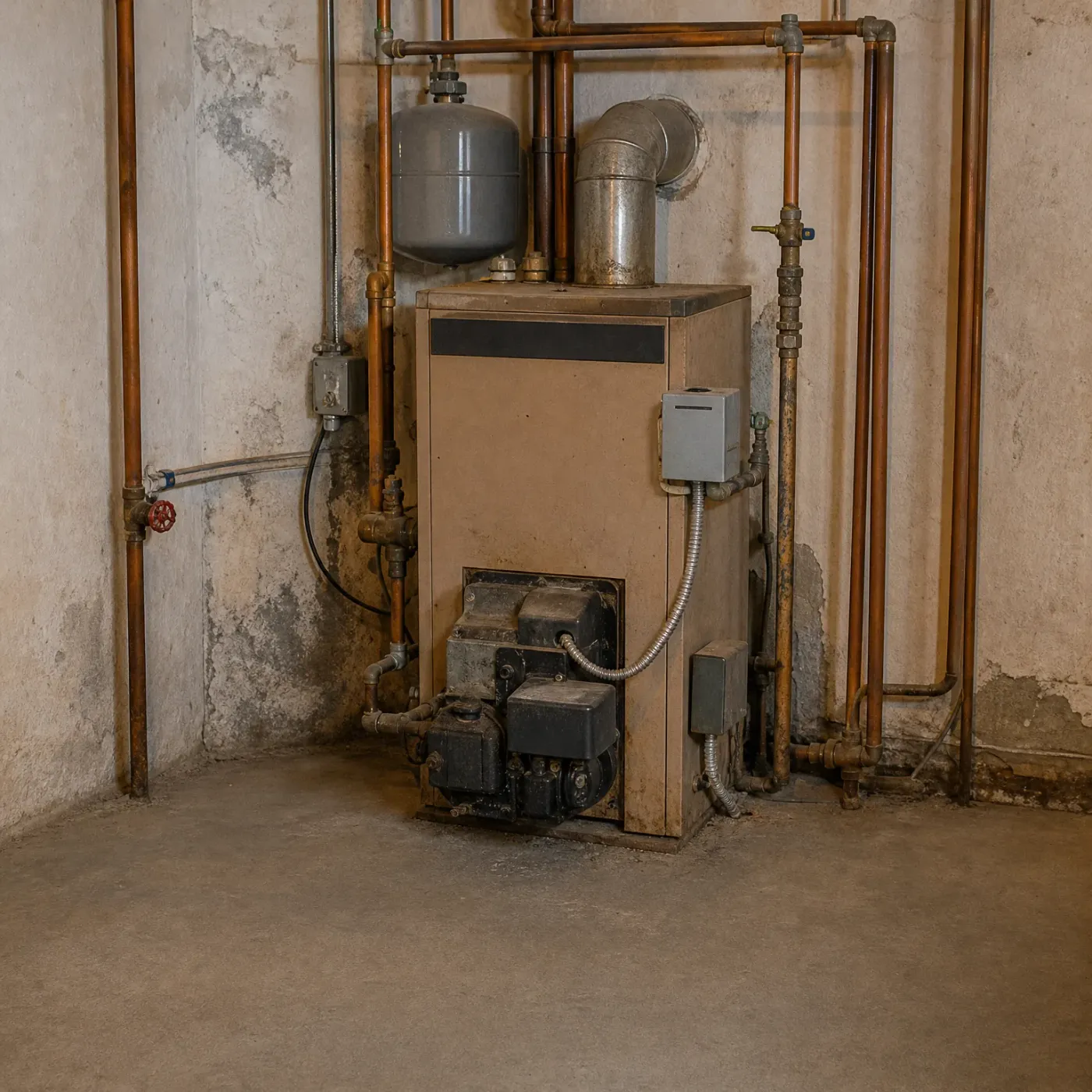
An older oil-fired boiler with a burner unit, flue pipe, expansion tank and copper piping stands in the corner of a concrete-floored basement with weathered plaster walls.
Before you get your boiler repair
A gray boiler on a concrete pad in a basement corner, connected to copper and black pipes with a gauge, circulator pump, and gray expansion tank, beside a wood-framed wall.
After you get your boiler repair

Winter nights average 13°F statewide

With overnight temperatures averaging 13°F across Wisconsin winters, your boiler is firing often and running long to keep the house warm through the night. A heat exchanger already coated in scale has to work through more of those cycles, and that's more chances for a bang.

NOAA nClimDiv 1991-2020 county normals weighted by homes

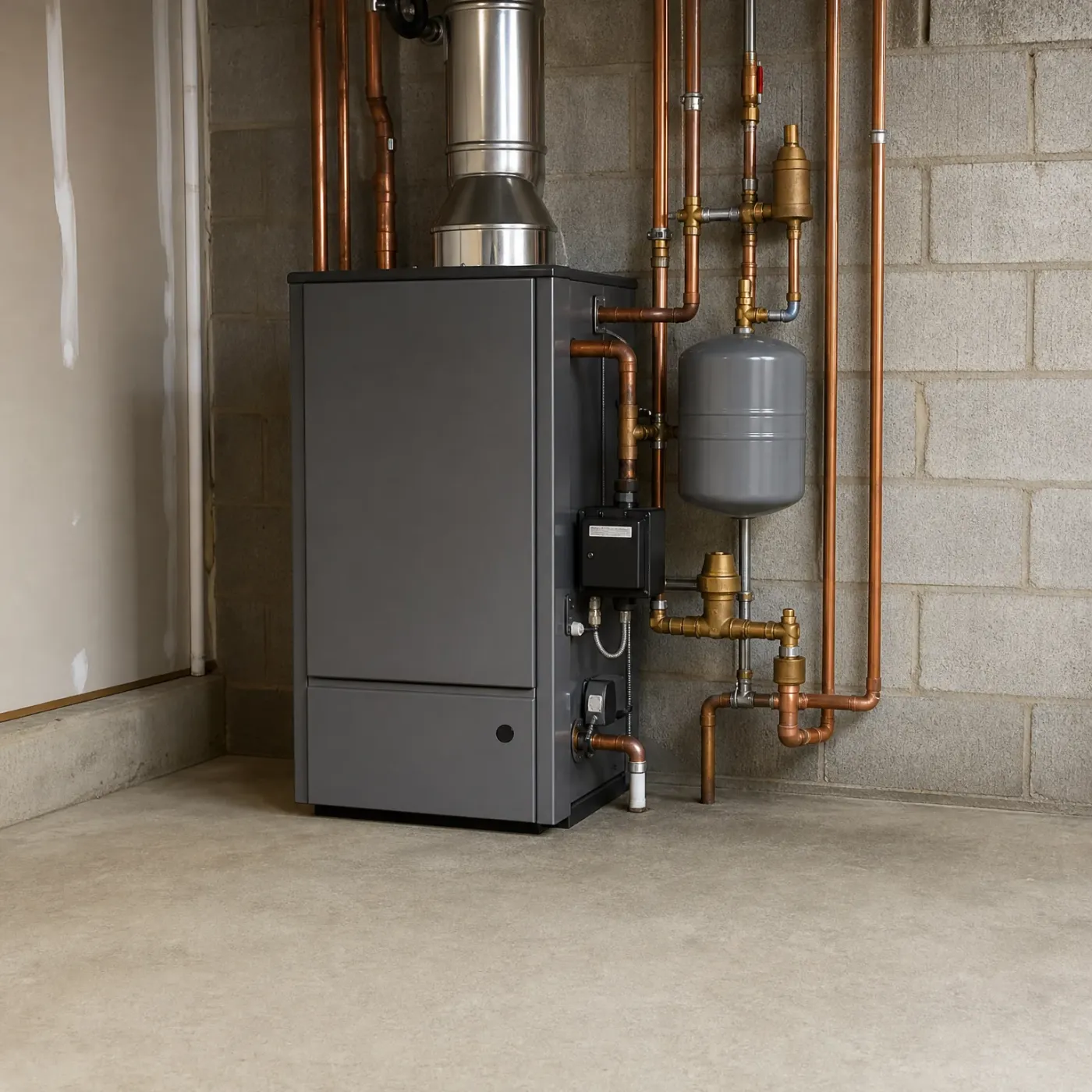
A gray floor-standing boiler with a metal flue stands against a concrete block wall, connected to copper pipes, brass valves and a gray expansion tank, on a bare concrete floor.

The copper piping, running clean

This is a boiler that's circulating water the way it's supposed to. The copper lines and brass fittings move water to the radiators without trapping it anywhere, and the expansion tank on the wall is keeping pressure steady. No scale, no banging, just heat getting where it needs to go.

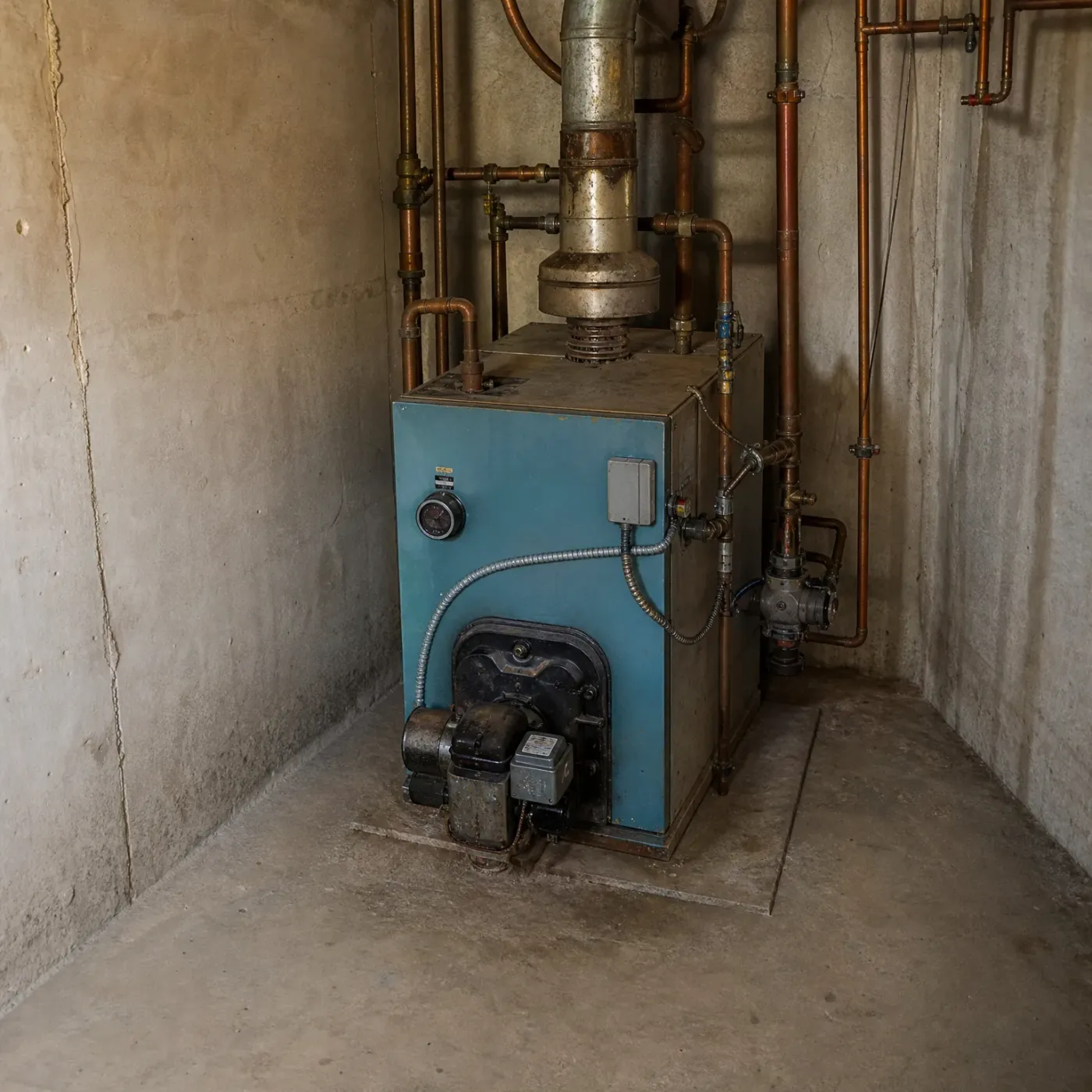
A blue oil-fired boiler with a burner unit and pressure gauge stands in a concrete basement corner, connected to copper pipes and a metal flue.

The older unit, wearing down

This teal boiler has been through a lot of winters, and the burner assembly up front has had to work harder each one. An oil-fired unit this age is a likely candidate for scale buildup inside the heat exchanger, which is what turns a quiet system into one that bangs every time it fires.

The bang comes from scale trapping water against the heat exchanger, and that layer doesn't thin out on its own. Someone needs to get into the boiler and clean the scale out, or in some cases replace the exchanger, before another Wisconsin cold snap puts more cycles through it. A contractor who services boilers around here all winter has likely heard this exact noise in a dozen other houses and knows where the scale tends to build first in a cast iron exchanger. When you request a match through this page, you're connected with one licensed local contractor, not a handful of companies calling you back at once, so you can talk through what you're hearing and get a straight read on what it'll take to quiet it down. Your house stays warm while that gets sorted out, and the radiators go back to the low hum and soft tick they're supposed to make instead of waking up everyone upstairs.

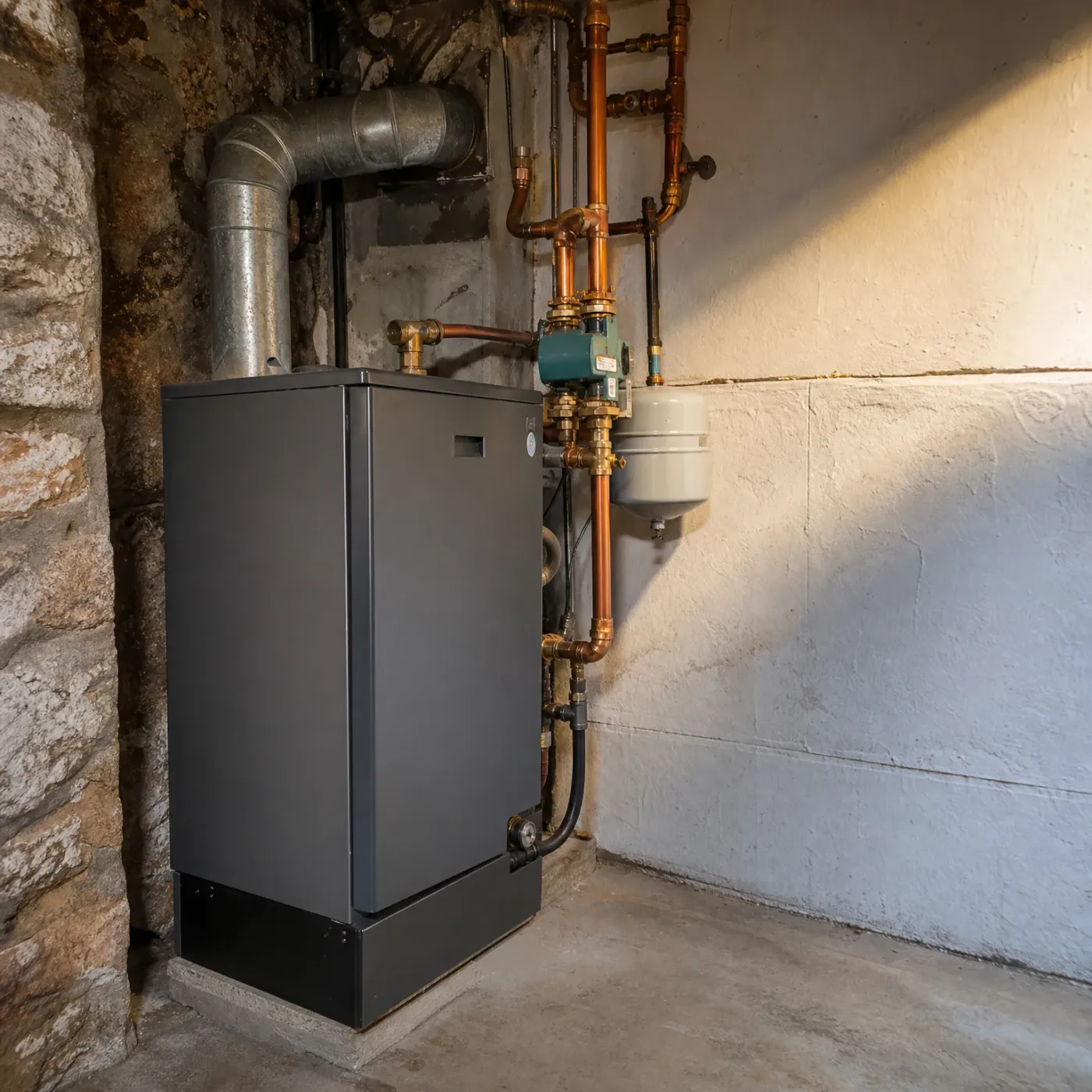
A dark gray boiler unit stands in a basement corner against a stone and painted concrete wall, connected to copper pipes, a circulator pump, an expansion tank, and a galvanized metal flue duct.

A pro who works on boilers

Find a boiler pro

The pro who reaches out is licensed in Wisconsin.

No fee to send it, and nothing to sign.