Why your radiators won't heat up in Wisconsin

Describe your boiler job, and a local pro who handles it gets in touch.

Get matched

Cold radiators usually mean air trapped in the line, not a failing boiler. Hot water pushes through the system and shoves air ahead of it toward each radiator. That air has to escape through the bleed valve, or it sits in a pocket at the top and blocks the water from filling the unit, so the bottom might warm up some while the rest stays cold. It happens more in Wisconsin because a boiler sitting idle through a long summer gives air time to work into the lines, then the first hard cold snap in fall asks the system to push full steam or hot water through all at once. If only one or two radiators are cold, bleeding them usually solves it. If the whole house stays cold, the problem is more likely low water pressure, a stuck zone valve, or a circulator pump that isn't moving water at all.

  1. Boiler fires and heats water moving through the supply pipe.

  2. Hot water pushes forward and forces trapped air ahead of it.

  3. Air collects at the radiator's high point, away from the valve.

  4. Trapped air blocks water from filling the radiator completely.

Why is one room still cold no matter how high you turn the heat

You bleed the radiator in the living room and it heats up fine, but the bedroom upstairs stays cool at the bottom while the top gets warm, or it never changes at all. You might hear a gurgle or knock in the pipes when the boiler kicks on. Touch the radiator and find one section hot and the next section cold, like there's a line drawn across it. That's air sitting in the spot the valve can't reach. Left alone, that room keeps burning gas to try to catch up, and the boiler runs longer than it should to heat a space that never gets there.

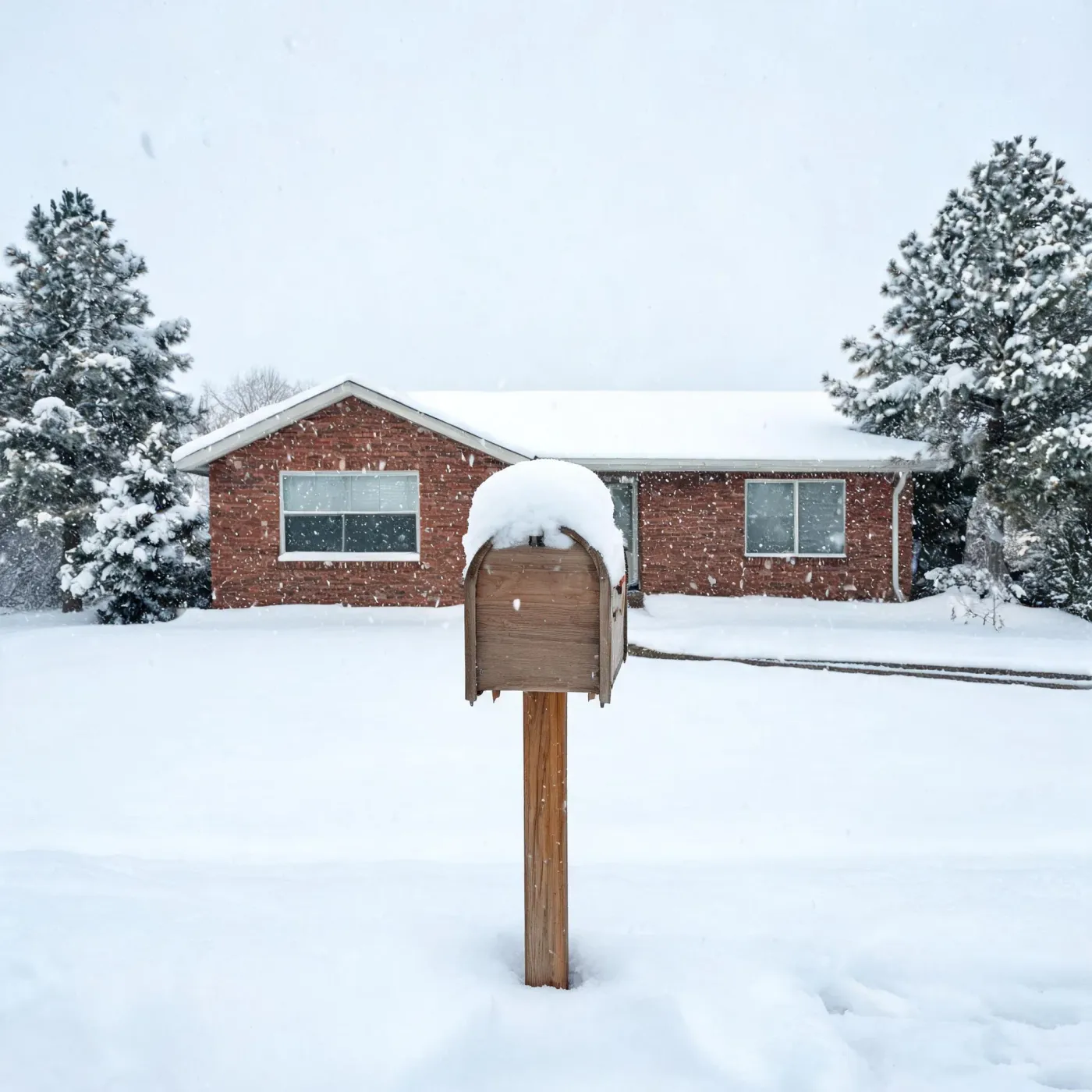
A wooden mailbox on a post topped with a thick layer of snow stands in a snow-covered yard in front of a single-story brick house with a snowy roof, flanked by snow-laden evergreen trees during falling snow.

On a January night here, the temperature averages 13°F statewide, according to NOAA. At that temperature your boiler runs long stretches just to hold a room at a normal setting, and it keeps cycling back on through the night. A radiator with trapped air was already filling partway with water instead of all the way. Push the boiler this hard and that partial fill shows up fast, as a cold patch or a room that never quite catches up while the rest of the house is warm. If bleeding it yourself hasn't fixed it, the problem may be further in the system than a valve, and a local contractor who works on boilers all winter can trace it room by room and tell you what's actually blocking the water.

NOAA nClimDiv 1991-2020 county normals weighted by homes

A local pro for your boiler repair

Your request goes to one pro, not a list of companies.

Sending the form costs nothing.

A man seen from behind raises his hand to wave at a woman standing in the open front doorway of a single-story house with gray shingle siding, white columns and a gabled porch entry.

A cold radiator in January is not a small thing here

A radiator that stays cool at the bottom is running on half the water it should hold. The boiler still fires the same, the pipes still carry the same heat, but that one room never catches up. You turn the thermostat higher, the boiler runs longer, and the rest of the house overheats while that room stays cold. In Wisconsin that gap shows up fast once the temperature drops.

Left alone, it does not fix itself. The air pocket stays put, the boiler keeps working harder than it needs to, and the gas bill carries that extra runtime all winter. A local contractor who services boilers through a Wisconsin winter has seen this exact pattern plenty of times, a fine radiator in every room but one, and knows where to check first. Getting matched with someone who works on your kind of system means you're dealing with one contractor who already knows what to look for, not a handful of unrelated callbacks.

A gray upholstered sofa with a textured cushion sits beside a dark round side table holding a vase of green foliage, with a table lamp and sheer-curtained window behind.
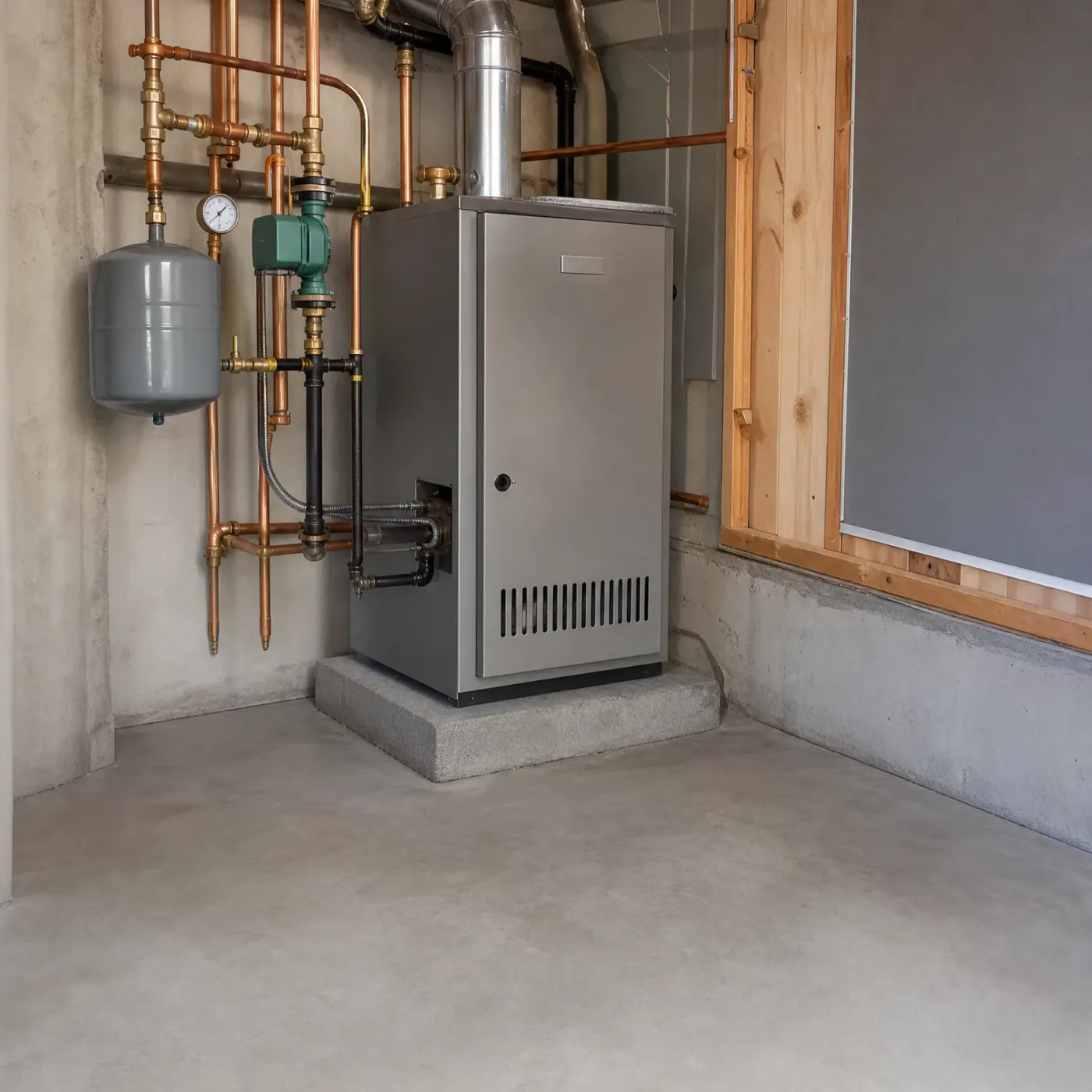
A gray boiler on a concrete pad in a basement corner, connected to copper and black pipes with a gauge, circulator pump, and gray expansion tank, beside a wood-framed wall.

The system working as it should

Water moves out through the supply pipe and comes back through the return, full loop, no interruption. The pump runs steady, pressure holds where the gauge says it should. Every radiator fed from this boiler fills completely and heats top to bottom.

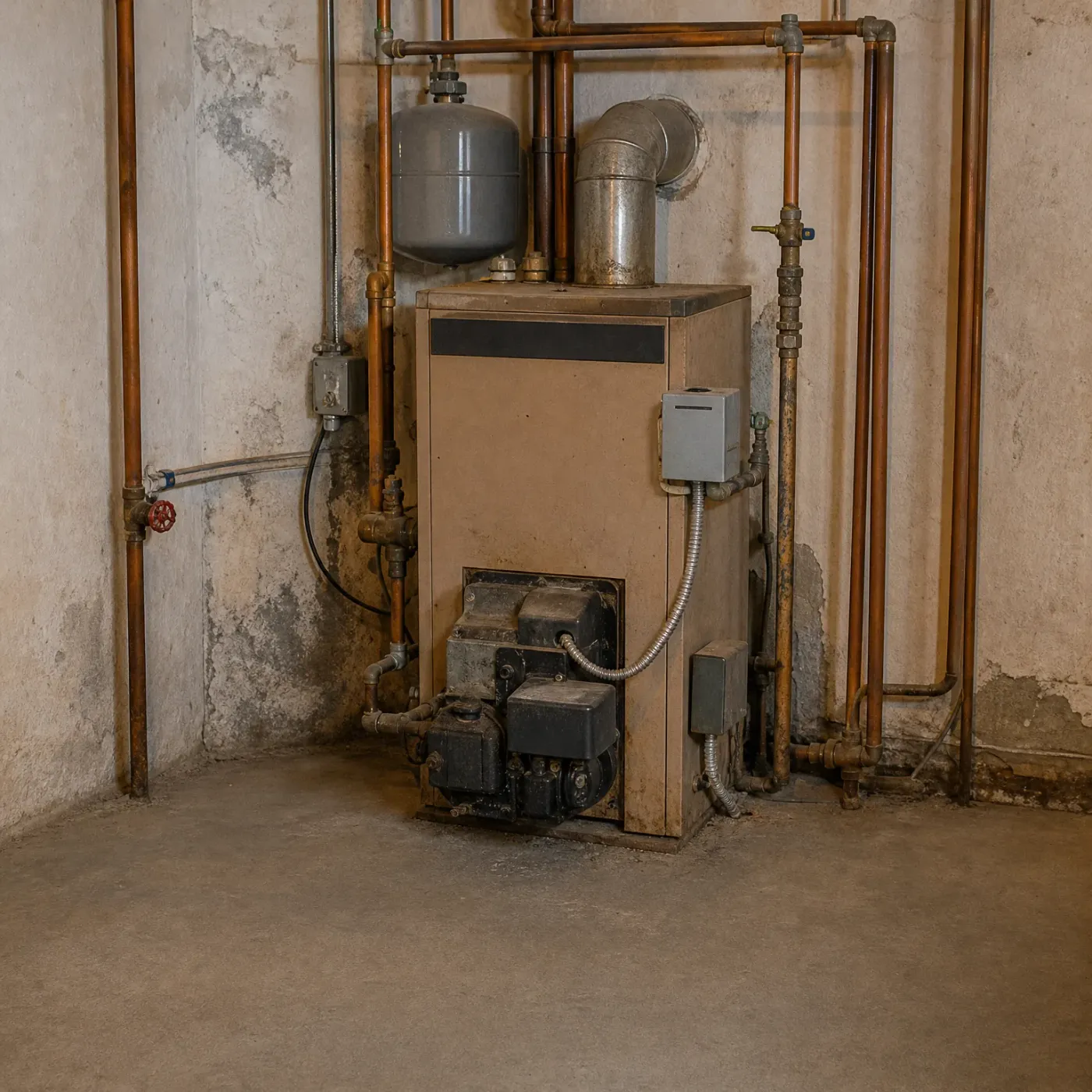
An older oil-fired boiler with a burner unit, flue pipe, expansion tank and copper piping stands in the corner of a concrete-floored basement with weathered plaster walls.

The system struggling to keep up

This boiler has to push water through more pipe, more fittings, more turns before it ever reaches a radiator. A pocket of trapped air anywhere along that run is harder to clear, and harder to track back to its source when a room upstairs won't heat.

Winter nights average 13°F statewide

At 13°F, a boiler is already working close to its limit to keep rooms comfortable. One radiator not filling all the way cuts into what little margin you have, and you'll feel it fastest in the room farthest from the boiler.

NOAA nClimDiv 1991-2020 county normals weighted by homes

What a cold radiator tells you

  • A cold radiator almost always means trapped air, not a boiler on its way out.
  • Bleeding the valve lets the air out and lets the radiator fill with water all the way to the top.
  • A radiator that never bleeds clear or won't hold heat after bleeding points to a pump or pressure problem instead.
  • At 13°F outside, a radiator running half full is the room that falls behind first.
  • Catching this now keeps one cold room from turning into a bigger repair on the boiler itself.
  • A local contractor who works on boilers all winter can tell air from a pressure issue in one visit.

Most of the time this comes down to air sitting where water should be. The fix is the bleed valve, and most homeowners can tell within a few minutes whether that solves it. Water hisses out once the air clears, the radiator fills, and the cold spot goes away for good.

If that doesn't happen, the problem moved past air. A radiator that bleeds dry and stays cool, or one that heats up and goes cold again within a day, is telling you something about pressure or circulation, not trapped air. Low system pressure keeps water from reaching the far radiators at all. A pump losing strength shows up the same way, usually in whichever room sits farthest from the boiler.

At 13°F, there isn't much spare capacity in the system to absorb a problem like this. A radiator running on half its water volume is the one that falls behind first, and it stays behind until someone deals with the actual cause.

This is exactly the kind of thing worth catching early rather than living with. A boiler tech who works on these systems all winter in Wisconsin can look at the radiator, check the pressure gauge, and tell you in one visit whether you're dealing with air or something in the pump or the pressure. That's a different call than the one for a full boiler problem, and it's worth knowing which one you're making before you pick up the phone.


A bearded man in a plaid flannel shirt stands in a kitchen looking out a window toward snow-covered shrubs, with a steaming mug on the windowsill and potted plants on a shelf behind him.
A smiling man with dark curly hair in a navy t-shirt sits on a gray couch indoors, with a large-leafed plant and a window in the background.

Boiler Repair

Get the right pro for your boiler

The pro who reaches out is licensed in Wisconsin.

A black-framed smartphone standing upright against a plain white background, its screen filled with solid green.
Step 1 of 3: Equipment